
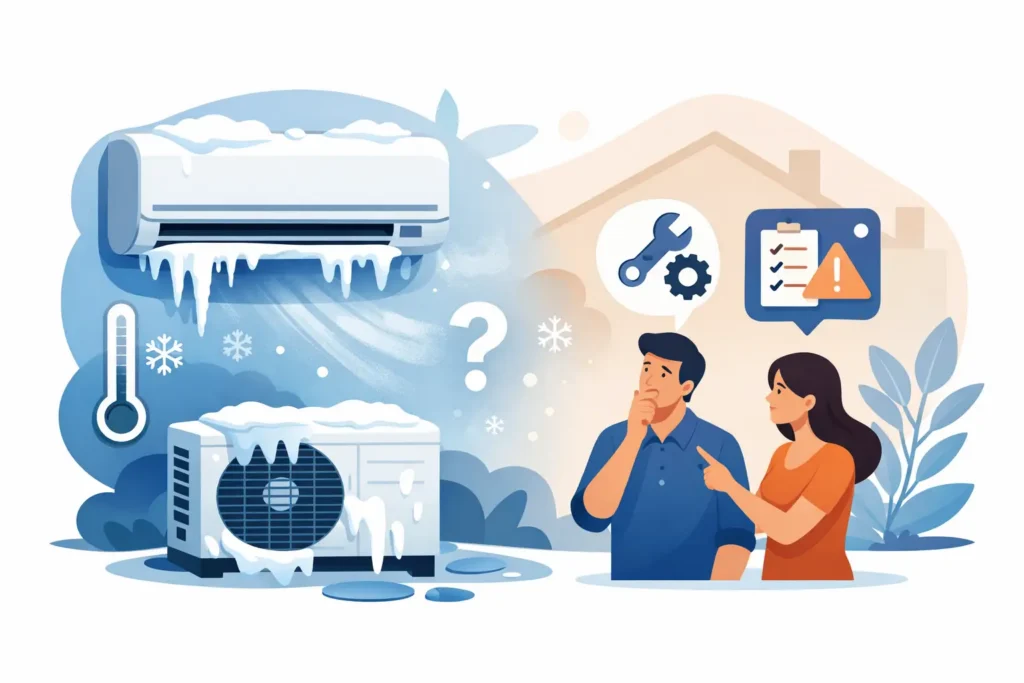
Ice on an air conditioner may look like a small problem, but it is usually a warning that your system cannot move heat the way it should. If you are asking, “why is my AC freezing,” the safest response is to turn the cooling off before the ice creates more strain on the compressor. In North Richland Hills and Fort Worth, a frozen AC can quickly turn into a no-cooling emergency when summer temperatures climb.
A frozen indoor coil, refrigerant line, or outdoor unit does not mean your air conditioner is making too much cold air. It means the evaporator coil has dropped below freezing while moisture in the air continues to collect on it. That moisture turns to ice, blocks airflow, and causes the problem to build on itself.
Why Is My AC Freezing in the First Place?
Most frozen AC systems come down to one of two issues: restricted airflow or a refrigerant problem. There are a few other possibilities, but these are the causes a qualified technician will usually investigate first.
A dirty air filter is restricting airflow
Your return filter does more than keep dust out of the house. It allows your HVAC system to pull enough warm indoor air across the evaporator coil. When the filter is clogged, the coil does not receive enough heat to stay above freezing. Condensation freezes on the coil, then the growing ice layer restricts airflow even further.
This is one of the few causes homeowners can often correct themselves. Check the filter and replace it if it is visibly dirty or if it has been in place longer than the manufacturer recommends. In many North Texas homes, especially those with pets, construction dust, or high summer use, filters may need attention more often than expected.
A clean filter will not solve every frozen AC problem. If the system freezes again after the filter is changed and the ice has fully melted, it is time for a professional diagnosis.
Closed vents, blocked returns, or duct problems are reducing circulation
Closing supply vents in unused rooms may seem like a reasonable way to lower energy use, but central AC systems are designed to move a certain amount of air. Too many closed vents can raise pressure in the ductwork and reduce airflow across the indoor coil. Furniture, rugs, curtains, and storage placed over return grilles can cause a similar problem.
Walk through the home and make sure supply vents and return grilles are open and clear. This is also worth checking in commercial spaces, where rearranged furniture, inventory, or office equipment can quietly block an air return.
Duct leaks, crushed flex duct, and improperly sized ductwork can also limit airflow, but those issues are not always visible. A technician can measure airflow and static pressure to determine whether the problem is inside the equipment or in the duct system.
Low refrigerant may be causing the coil to freeze
Refrigerant absorbs heat from inside your home and carries it outdoors. If the refrigerant charge is low, the pressure inside the evaporator coil drops. That lower pressure can make the coil cold enough to freeze moisture from the air.
A properly operating AC system does not use up refrigerant like a car uses fuel. Low refrigerant usually points to a leak, which means simply adding more refrigerant is not a lasting repair. The leak needs to be located and addressed, then the system should be charged according to the manufacturer’s specifications.
Signs that may accompany a refrigerant issue include weak cooling, ice on the larger insulated copper line, hissing sounds, longer run times, or higher electric bills. These symptoms can overlap with other problems, so refrigerant work should always be handled by a licensed HVAC professional.
The blower motor or indoor fan may not be doing its job
The indoor blower pushes household air across the evaporator coil. If the motor is failing, the fan speed is incorrect, the capacitor is weak, or the blower wheel is coated with dirt, airflow may fall below the level your system needs.
You might notice weak air from the vents, rooms that cool unevenly, or an air handler that sounds different than usual. Because a blower issue can involve electrical components and equipment access, it is best not to take the unit apart yourself. A service technician can test the motor, controls, capacitor, and airflow safely.
A dirty evaporator coil can hold heat back
Even with a fresh filter, an evaporator coil can collect dust over time. Dirt acts like insulation, preventing the coil from absorbing enough heat from the air moving through it. The result can be poor cooling, reduced efficiency, and eventually ice.
Coil cleaning is part of a thorough maintenance visit, but it is not always a simple spray-and-go task. The coil may be difficult to access, and using the wrong cleaner or forcing debris deeper into the fins can cause damage. Professional maintenance can catch this condition before it leaves your home uncomfortable on a hot day.
The thermostat setting or outdoor temperature may be a factor
Running a standard central AC system when outdoor temperatures are cool can sometimes lead to freezing. This is more common during mild spring nights, when someone sets the thermostat very low or runs cooling continuously while the outdoor temperature drops.
A thermostat problem can also keep the system running longer than it should. If the thermostat is not reading indoor temperature correctly, has a wiring issue, or is placed near a heat source, it may not cycle the equipment properly. The cause is not always the thermostat itself, but it should be part of the diagnosis.
What to Do When Your Air Conditioner Freezes
Do not keep running the AC in cooling mode and hope the ice will clear. Continued operation can send liquid refrigerant where it should not go and can put expensive stress on the compressor.
First, set the thermostat to OFF for cooling. If your thermostat has a fan setting, switch the fan to ON. Moving room-temperature air over the coil can help thaw it more quickly. Check that the filter is clean and that all accessible vents and returns are open and unobstructed.
Do not chip, scrape, or pry ice off refrigerant lines or the coil. The copper tubing and coil fins are easy to damage, and a small puncture can become a costly leak. Do not pour hot water into the equipment, either. Let the system thaw naturally, which may take several hours depending on how much ice has formed.
While the system is thawing, watch for water around the indoor air handler. A large amount of melting ice can overwhelm a drain pan or reveal a clogged condensate drain. If water is near electrical components, turn the system off completely and arrange service.
When a Frozen AC Needs Professional Repair
If replacing a dirty filter and restoring airflow solves the issue once, keep an eye on the system over the next few cooling cycles. If it freezes again, blows warm air, runs constantly, makes unusual noises, or shows ice on the refrigerant line, schedule an AC repair visit. Repeated freezing is not normal and rarely fixes itself.
A proper diagnosis should look beyond the ice. The technician should inspect filter condition, coil cleanliness, blower performance, duct airflow, refrigerant pressures, electrical components, thermostat operation, and condensate drainage. That approach identifies the reason behind the freeze rather than treating the visible symptom.
For older equipment, the right choice can depend on the repair. A straightforward airflow or electrical repair may be a sensible investment. A major refrigerant leak, failing compressor, or repeated breakdowns in an aging system may justify discussing replacement options and financing. Honest guidance should account for your equipment’s condition, repair cost, comfort needs, and long-term energy use.
Preventing Your AC From Freezing Again
The most reliable prevention is routine maintenance before the heavy cooling season begins. Replace filters on schedule, keep outdoor equipment clear of leaves and grass, avoid closing off too many vents, and have the system checked before summer demand exposes a small problem.
For homeowners and property managers in North Richland Hills, Haltom City, Hurst, Bedford, Euless, Watauga, and Fort Worth, Malcolm’s HVAC can inspect a frozen air conditioner, explain the cause clearly, and provide upfront options for repair or replacement. Getting the system checked early protects your comfort and may help prevent a much larger repair during the hottest stretch of the year.
A frozen AC is your system asking for attention. Turn off the cooling, let the ice melt, handle the simple airflow checks you can do safely, and call for help if the problem returns or the cause is not clear.