
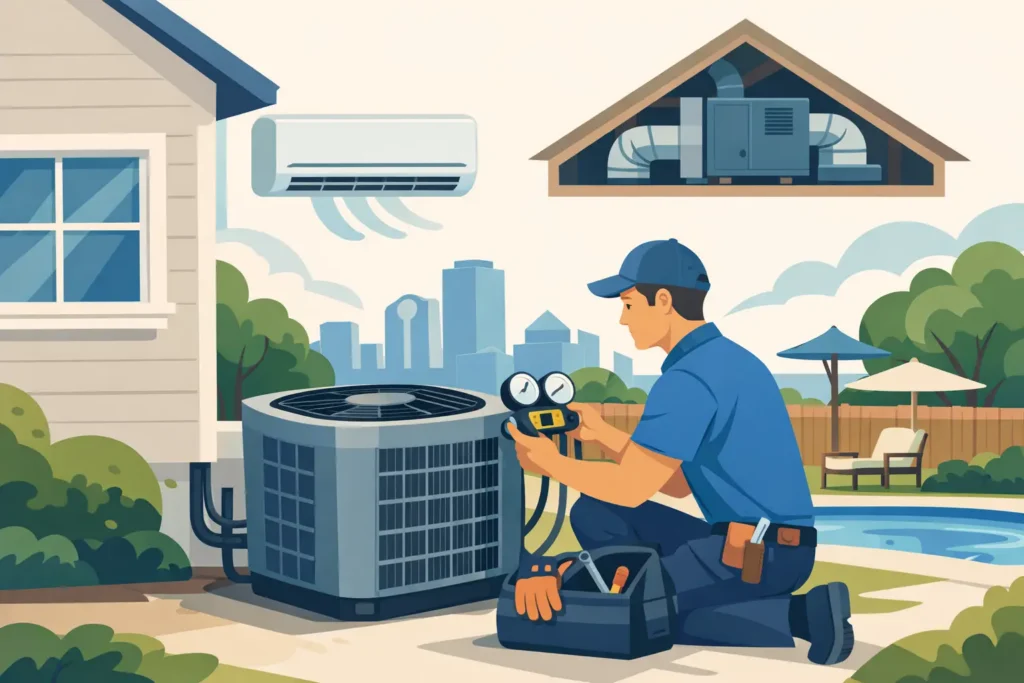
A North Texas air conditioner can run for hours without a break in July and August. That workload exposes small issues quickly: a clogged filter restricts airflow, a blocked drain can create water damage, and a dirty outdoor unit has to work harder to remove heat. This home AC maintenance guide focuses on the practical care homeowners can handle safely, along with the warning signs that call for professional service before a hot day turns into an emergency.
Why Regular AC Maintenance Pays Off in North Texas
Air conditioning maintenance is not about making an older system brand-new. It is about helping the equipment operate as efficiently and reliably as its condition allows. Clean airflow, clear drainage, and a properly maintained outdoor unit reduce unnecessary strain on parts that are expensive to replace.
For families in North Richland Hills, Fort Worth, and nearby communities, preventive care also makes budgeting easier. A seasonal service visit may uncover a worn capacitor, loose electrical connection, or drainage issue before it causes a no-cool call. It cannot prevent every breakdown, especially on aging equipment, but it gives you a better chance to make repair decisions on your schedule instead of during extreme heat.
Maintenance also affects indoor comfort. When airflow is restricted or the system is short cycling, rooms may cool unevenly, humidity can rise, and utility bills can climb. Those symptoms are easy to dismiss at first, but they are often the system’s early request for attention.
Home AC Maintenance Guide: What You Can Do Safely
A homeowner’s routine should be simple and safe. Turn off power to the system before cleaning around equipment, avoid opening sealed components, and never attempt refrigerant or electrical repairs yourself. The goal is to keep the system clean and visible so it can do its job.
Check and replace the air filter
The air filter is one of the most important and most overlooked parts of an HVAC system. A loaded filter limits the air moving across the indoor coil. That can make the house feel warmer, increase operating costs, and in severe cases contribute to coil freezing.
Check the filter monthly during heavy cooling season. Many homes need a replacement every one to three months, but the right schedule depends on the filter type, household size, pets, dust levels, and how often the AC runs. A home with several pets or ongoing construction nearby may need more frequent changes.
Use the filter size and airflow direction printed on the existing filter or return grille. Choosing the highest-rated filter is not always the best answer. Very dense filters can restrict airflow in systems not designed for them. If you have concerns about allergies, dust, or indoor air quality, ask a technician which filter rating fits your equipment and comfort goals.
Keep the outdoor condenser clear
The outdoor unit releases heat collected from inside your home. When leaves, grass clippings, dirt, or overgrown shrubs crowd the unit, heat cannot escape as easily. The compressor then has to work harder to cool the home.
Once a month, walk around the condenser and clear loose debris from the area. Keep plants and stored items at least 18 to 24 inches away from the sides of the unit, and leave open space above it. Do not stack boxes, cover the unit while it is running, or lean tools against the coil fins.
You can gently rinse surface dirt from the outside of the unit with a regular garden hose after shutting off power. Do not use a pressure washer. High pressure can bend the thin aluminum fins and reduce airflow. If the fins are badly bent, the coil looks heavily impacted with dirt, or you see oil residue around refrigerant lines, schedule professional service instead of trying to force a cleaning.
Watch the condensate drain
Your AC removes humidity from indoor air, and that moisture exits through a condensate drain line. In warm, humid weather, algae and buildup can clog that line. A backup may trigger a safety switch, shut down cooling, or cause water around the indoor unit.
Check around the indoor air handler, furnace closet, or attic drain pan for dampness, staining, rust, or standing water. If your drain line has an accessible exterior outlet, make sure water can flow freely when the AC is operating. Do not ignore a musty smell near the equipment. It may be related to a drainage issue or moisture problem that needs attention.
Some homeowners use approved drain treatments, but the best approach depends on how the line is configured. Harsh chemicals can damage components or create other problems. When in doubt, have the drain cleaned as part of professional maintenance.
Keep vents open and returns unobstructed
Supply vents deliver cooled air, while return grilles pull air back to the system. Furniture, rugs, curtains, and closed interior doors can interfere with that circulation. Walk through the house occasionally to make sure major vents and return grilles are not blocked.
It is tempting to close vents in unused rooms to save money. In many homes, that strategy can increase duct pressure and create uneven temperatures rather than meaningful savings. If certain rooms are consistently too warm, the answer may be ductwork, insulation, thermostat placement, or system sizing. A technician can help identify the real cause.
Test the thermostat and listen to the system
Set the thermostat a few degrees below the indoor temperature and confirm that cooling starts normally. Pay attention to major changes in operation: repeated starting and stopping, weak airflow, unusual buzzing, grinding, or a system that runs continuously without bringing the temperature down.
A thermostat does not need to be replaced just because it is older. However, inaccurate readings, blank screens, loose wiring, or poor placement near sunlight and heat-producing appliances can affect comfort. Smart thermostat upgrades can help some households manage schedules and energy use, but they work best when the underlying HVAC system is operating properly.
What Should Be Left to an HVAC Technician
Professional AC maintenance goes beyond a quick look at the equipment. A qualified technician can inspect electrical connections, test capacitors and motors, measure system performance, check refrigerant-related concerns, clean components properly, and identify wear that is not visible to a homeowner.
The indoor evaporator coil and outdoor condenser coil need careful handling. Both can collect dirt over time, but cleaning methods vary by system and access. The same is true for blower assemblies, control boards, refrigerant lines, and high-voltage electrical components. These are not good do-it-yourself projects, even for a handy homeowner.
Annual professional maintenance is a practical baseline for most central air systems. If your unit is older, has a history of repairs, cools a large household, or serves a commercial property, more frequent inspection may make sense. The right schedule depends on equipment condition and use, not a one-size-fits-all rule.
A Simple Seasonal Maintenance Routine
Before the heavy cooling season begins, replace or inspect the filter, clear the outdoor unit, test the thermostat, and look for visible drain concerns. This is also a good time to schedule a professional tune-up, before appointment availability tightens during the first major heat wave.
During summer, continue checking the filter and outdoor clearance monthly. Pay attention to comfort changes, especially if some rooms stop cooling as well as they did earlier in the season. A sudden utility bill increase can also be a useful clue, particularly if your household habits have not changed.
At the end of the cooling season, clear leaves and debris around the condenser. Do not wrap the unit in an airtight cover. Moisture can become trapped and encourage corrosion. If you use a cover, it should be breathable and designed for the equipment, or simply protect the top from falling debris without blocking the sides.
When Maintenance Becomes an AC Repair Call
Some problems should not wait for the next tune-up. Turn the system off and request service if you notice burning smells, a tripped breaker that keeps tripping, ice on refrigerant lines or the indoor coil, water leaking near the equipment, or loud metal-on-metal noises.
Call for help promptly if the AC blows warm air, cannot maintain the thermostat setting, or cycles on and off every few minutes. Continuing to run a struggling system can increase damage, especially if airflow, electrical, or compressor issues are involved. Before calling, check the thermostat setting, filter, and breaker once. After that, avoid repeated resets or improvised repairs.
For homeowners weighing a repair against replacement, age matters but it is not the only factor. Consider the repair cost, equipment condition, comfort problems, efficiency, and whether the system has needed repeated service. Clear diagnostic information and upfront options make that decision easier.
A little attention each month can keep a small airflow or drainage problem from becoming a major comfort interruption. If your system is showing warning signs or you want a professional set of eyes before the next stretch of Texas heat, Malcolm’s HVAC can help you make a practical plan based on your home, equipment, and budget.