
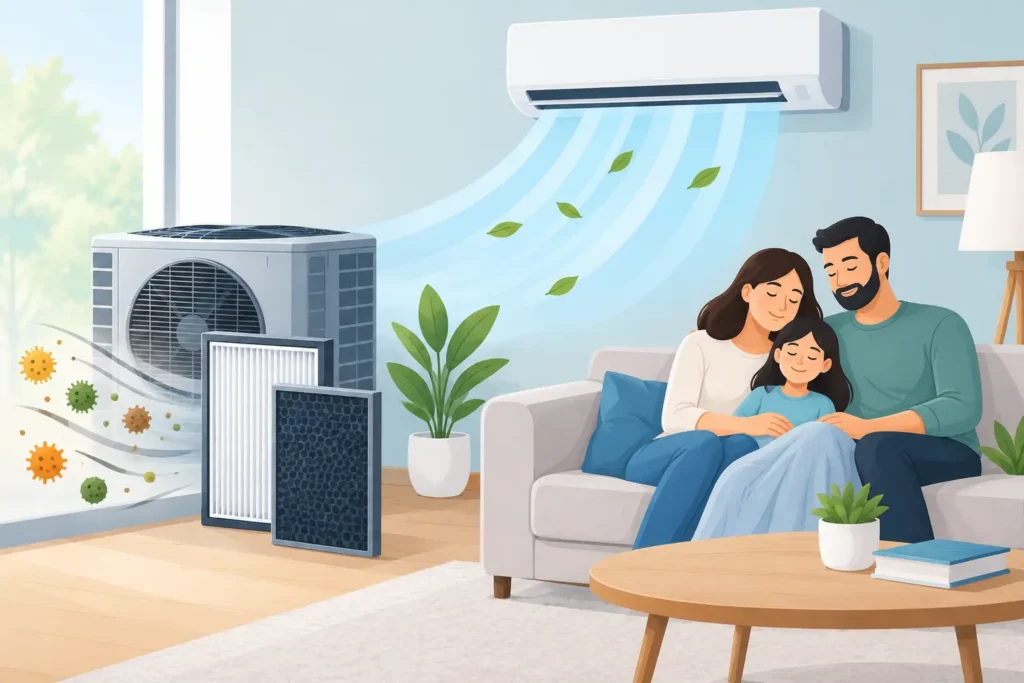
When allergy symptoms get worse indoors, the problem is often more than seasonal pollen. Your HVAC system moves air through every room, which means it can either help capture irritants or keep circulating them. The best HVAC upgrades for allergies focus on filtration, moisture control, and clean airflow without creating strain on your heating and cooling equipment.
For homeowners in North Richland Hills, Fort Worth, and nearby communities, the right solution depends on the home, the existing system, and what is triggering symptoms. A technician should look at the full system before recommending equipment. A powerful filter or purifier can help, but only when it is properly matched to your HVAC setup.
Start With a Better Whole-Home Air Filter
The simplest upgrade is often a higher-quality HVAC filter. Standard one-inch filters can catch larger dust particles, but many do little for the smaller airborne particles that can bother allergy sufferers, including pollen, pet dander, mold spores, and some dust-mite debris.
Filter performance is commonly measured by its MERV rating. A higher MERV rating generally captures smaller particles more effectively. For many homes, a MERV 8 to MERV 11 filter offers a meaningful improvement over a basic fiberglass filter. In households with significant allergies, a professionally selected MERV 11 to MERV 13 option may be appropriate.
More filtration is not always better. Filters that are too restrictive for the blower and duct system can reduce airflow, raise energy use, and put unnecessary pressure on equipment. That can lead to comfort problems and costly repairs. Before moving to a denser filter, have an HVAC professional confirm that your system can handle it.
A media air cleaner is often a stronger long-term option than relying on a basic filter slot. These larger cabinet-style filters install with the HVAC system and offer more surface area, allowing them to capture more particles while maintaining better airflow. They also usually need replacement less often than one-inch filters.
Add Air Purification Where It Makes Sense
A whole-home air purifier can supplement filtration by treating air as it passes through the system. This can be especially helpful in homes with pets, frequent dust buildup, recurring odors, or family members who are sensitive to airborne irritants.
Different purifiers work in different ways. Some use enhanced mechanical filtration, while others use electronic or ionization-based technology. UV lights are another option, but they are most useful for controlling microbial growth near damp HVAC components, such as the indoor coil or drain area. A UV light is not a replacement for a quality filter, regular maintenance, or moisture control.
Be cautious about any product that promises to eliminate every allergen or solve all indoor air concerns overnight. The right purifier should be selected based on your system, your home’s air quality concerns, and the manufacturer’s safety information. An experienced technician can explain the practical benefits and limitations before installation.
Control Humidity to Reduce Mold and Dust Mites
North Texas humidity can make indoor allergy issues harder to manage, particularly during warm, rainy stretches. High indoor humidity encourages mold growth and creates a better environment for dust mites. On the other hand, air that is too dry can irritate nasal passages and make allergy symptoms feel worse.
For most homes, indoor relative humidity is best kept around 30% to 50%. If the air regularly feels damp, windows sweat, or you notice musty odors, a whole-home dehumidifier may be worth considering. Unlike a portable unit that only affects one area, a properly installed whole-home dehumidifier works with the HVAC system to help manage moisture throughout the house.
A humidity issue can also point to an HVAC performance problem. An oversized air conditioner may cool the home too quickly without running long enough to remove adequate moisture. A clogged condensate drain, dirty evaporator coil, or poorly maintained system can also affect humidity control. Addressing the underlying issue may improve comfort before an additional upgrade is needed.
Seal Leaks and Keep Ductwork Clean
Leaky ductwork can pull dusty, unconditioned air from attics, garages, wall cavities, or crawlspaces and distribute it through the home. In a Texas attic, that may mean insulation fibers, dust, and outdoor pollutants entering the air stream. Duct sealing helps keep conditioned air where it belongs and can improve both indoor air quality and system efficiency.
Duct cleaning is not necessary for every home, and it should not be sold as a cure-all for allergies. It can be useful after major remodeling, visible contamination, pest activity, or years of heavy dust buildup. If the ducts are dirty because of a filtration problem, moisture issue, or air leak, those conditions need to be corrected as well. Otherwise, the buildup is likely to return.
Consider Fresh Air Carefully
Keeping a home tightly sealed can reduce outdoor pollen and improve energy efficiency, but homes still need healthy ventilation. Cooking, cleaning products, pets, and everyday activity add particles and odors indoors. In some situations, a controlled fresh-air ventilation system can improve indoor air quality by bringing in filtered outdoor air and exhausting stale indoor air.
This upgrade requires careful design. Bringing in outside air during a high-pollen day without proper filtration will not help an allergy-prone household. In the Fort Worth area, the system may also need to account for heat and humidity. The goal is controlled ventilation, not simply opening up the house to whatever is outdoors.
Choose the Right System Size During Replacement
If your air conditioner, furnace, or heat pump is nearing the end of its service life, replacement is a chance to improve more than energy efficiency. Proper equipment sizing, variable-speed blowers, and longer run times can support steadier temperatures, better filtration, and more consistent humidity removal.
A system that is too large may short-cycle, meaning it turns on and off frequently. That reduces its ability to dehumidify and may worsen comfort issues. A system that is too small may run constantly and still fail to keep up. A professional load calculation considers square footage, insulation, windows, orientation, ductwork, and other factors instead of relying only on the size of the old equipment.
Variable-speed equipment can be a worthwhile option for families managing allergies because it can move air more consistently at lower speeds. That allows air to pass through the filter more often and can help avoid the temperature swings common with single-stage systems. The added upfront cost is not right for every budget, but financing options can make a higher-efficiency, comfort-focused system more manageable.
Maintenance Makes Every Upgrade Work Better
Even the best indoor air quality equipment cannot perform as intended if the HVAC system is neglected. A dirty coil, clogged drain line, worn blower component, or overdue filter change can reduce airflow and create conditions that affect comfort and air quality.
For allergy-conscious households, filter changes should be based on the filter type, household conditions, and manufacturer guidance rather than a one-size-fits-all schedule. Homes with pets, frequent visitors, construction nearby, or multiple allergy sufferers may need more frequent attention. Regular professional maintenance also gives a technician the chance to check coils, drainage, airflow, and duct connections before small issues become bigger ones.
Which Allergy Upgrade Should You Choose?
For many homes, the best first step is a properly rated filter or media air cleaner paired with routine HVAC maintenance. If humidity is high, moisture control should move to the top of the list. If there are persistent odors, heavy pet dander, or recurring dust concerns, a whole-home purification option and duct inspection may be the better next step.
Malcolm’s HVAC can evaluate your equipment, airflow, and indoor comfort concerns to help you choose upgrades that fit your home and budget. Cleaner indoor air is rarely about one magic product. It comes from a system that filters effectively, controls moisture, and delivers dependable airflow when your family needs it most.