
A clean-looking home can still have air that feels dusty, stale, or irritating. In North Texas, high pollen counts, summer humidity, pet dander, outdoor dust, and frequent AC use can all affect what circulates through your rooms. Air purification for home HVAC gives homeowners a way to address those concerns at the system level, rather than relying only on a small portable unit in one room.
The right solution depends on your home, your existing equipment, and what you are trying to improve. A family dealing with pet odors has different needs than someone concerned about allergy symptoms, cooking smoke, or dust collecting around supply vents. The goal is not to buy the most expensive add-on. It is to choose an indoor air quality solution that works safely and effectively with your heating and cooling system.
How Air Purification for Home HVAC Works
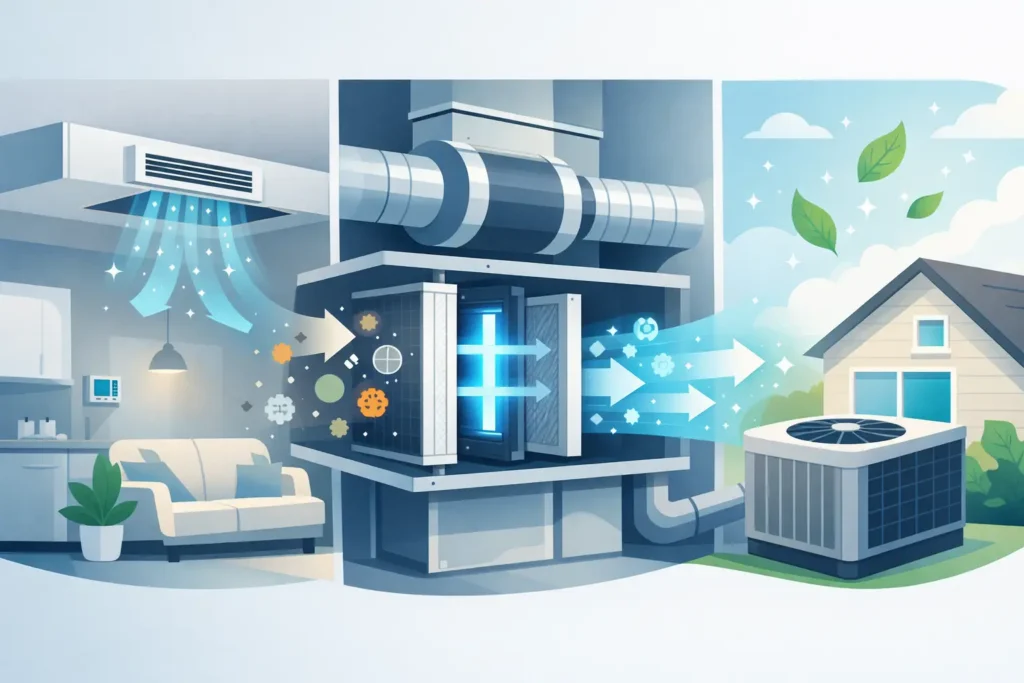
A whole-home air purification system is installed in or near your HVAC ductwork. As the furnace or air conditioner moves air through the system, the purifier helps capture, reduce, or treat certain airborne contaminants before conditioned air returns to the living areas.
That is different from a portable air cleaner. A portable unit can be useful in a bedroom, nursery, or home office, especially when it is properly sized for the room. But it only treats air that reaches that particular unit. A properly designed HVAC air purification setup can serve the areas connected to your duct system.
Most homes benefit from a layered approach. Filtration catches particles, while other equipment may help address odors, certain gases, or biological contaminants. Ventilation and humidity control also matter because no purifier can solve a moisture problem, dirty ductwork, a clogged drain line, or an HVAC system that is not maintained.
The Main Options for Whole-Home Air Cleaning
Upgraded HVAC Filters
For many homeowners, the best starting point is a better filter and a consistent replacement schedule. Standard filters are designed largely to protect HVAC equipment from larger dust and debris. Higher-efficiency media filters can capture smaller particles such as pollen, dust mites, pet dander, and some mold spores.
Filter efficiency is often described by a MERV rating. A higher number generally means the filter can trap finer particles, but higher is not automatically better. A filter that is too restrictive for your equipment can reduce airflow, strain the blower, and affect comfort. Your HVAC system should be evaluated before moving to a denser filter.
A well-fitted media cabinet and quality filter can make a noticeable difference without adding complicated equipment. It is also a practical choice for homeowners who want improved air quality with manageable ongoing costs.
Electronic Air Cleaners
Electronic air cleaners use electrical charges to collect particles as air passes through the system. Depending on the design, these units may capture fine dust, smoke particles, and allergens that can move past basic filters.
The trade-off is maintenance. Collection plates or cells usually need regular cleaning to keep performing as intended. Some older or poorly maintained electronic systems may also create unwanted byproducts, so the equipment selection and installation details matter. Ask your HVAC professional how the unit works, what maintenance it needs, and whether it is appropriate for your family and system.
UV Light Systems
UV lights are typically installed near the indoor coil or in areas where moisture can support biological growth. Their primary purpose is not to filter dust out of the air. Instead, they can help limit microbial growth on wet HVAC components, particularly the evaporator coil and drain pan.
This can be helpful in humid Texas conditions, where indoor coils may stay damp during long cooling seasons. A UV light may support cleaner system components and help reduce musty odors tied to growth around the coil. It will not replace a good filter, and it will not fix standing water, drainage issues, or neglected maintenance.
Activated Carbon and Odor Control
Particles and odors are not the same problem. A filter may capture visible dust while doing little for odors from pets, cooking, smoke, cleaning products, or volatile organic compounds. Activated carbon is designed to adsorb certain odors and gases.
Carbon options can be added through specialized filters or separate air-cleaning equipment. Their effectiveness depends on the amount of carbon, the type of contaminant, and how much air passes through the material. Thin carbon-coated filters may offer modest odor reduction, while heavier carbon media can provide more meaningful treatment but may require a larger setup and regular replacement.
Signs Your Home May Benefit From an HVAC Air Purifier
Indoor air quality concerns do not always have one obvious cause. Still, there are common signs that it is worth having your system and air-cleaning options reviewed.
You may notice dust returning soon after cleaning, persistent pet or cooking odors, uneven air freshness between rooms, or allergy symptoms that seem worse indoors. Families may also want additional filtration after a renovation, during wildfire smoke events, or when a household member has respiratory sensitivities.
These signs do not automatically mean you need a whole-home purifier. Leaky ducts, an oversized AC system, poor humidity control, old carpeting, inadequate ventilation, or a dirty coil can produce similar complaints. An honest inspection should identify the source before recommending equipment.
What Air Purification Cannot Do
Good indoor air quality equipment has limits. It cannot make up for an HVAC system with poor airflow, contaminated standing water, or a filter that has not been changed in months. It also cannot remove the need to control pollution at its source.
For example, if a bathroom has moisture damage, the moisture source needs repair. If cooking odors linger, using a properly vented range hood is often more effective than asking an air purifier to handle everything afterward. If outdoor air enters through gaps around doors, windows, or ducts, sealing those areas can reduce the workload on your HVAC system.
Be cautious about big claims. No residential system can promise sterile indoor air or eliminate every airborne contaminant. A dependable contractor should explain what a product is designed to address, how it will be maintained, and what results are realistic for your home.
Choosing the Right Setup for Your Home
Start by defining the concern. If dust and seasonal pollen are the main issue, an upgraded media filter may be enough. If musty odors appear when the AC runs, the indoor coil, drain system, humidity level, and possible UV options should be considered together. For pets, smoke, and recurring odors, filtration plus carbon treatment may make more sense.
Next, consider your equipment. Filter cabinet size, blower capacity, duct condition, return-air design, and system age all affect what can be added safely. Installation quality matters just as much as the device itself. A purifier that bypasses air around the filter, restricts airflow, or is placed incorrectly will not deliver the value you expect.
Maintenance should also be part of the decision. Ask how often filters, bulbs, cells, or carbon media need replacement or cleaning, and what those visits will cost over time. A lower-priced unit with expensive upkeep may not be the best value. On the other hand, a quality system that is easy to maintain can protect comfort and help keep your HVAC equipment cleaner.
Support Better Air With Routine HVAC Care
Air purification performs best when the rest of the HVAC system is working properly. Regular service should include checking filters, inspecting the coil and drain line, confirming airflow, and looking for duct leaks or moisture concerns. In Fort Worth-area homes, keeping the cooling system clean and properly drained is especially valuable through a long, humid summer.
Malcolm’s HVAC can help homeowners in North Richland Hills, Fort Worth, Haltom City, Hurst, Bedford, Euless, Watauga, and nearby communities sort through practical indoor air quality options without unnecessary pressure. A system evaluation can reveal whether you need a better filter, targeted air treatment, maintenance, or a combination of solutions.
The best next step is simple: pay attention to what your home is telling you. If the air feels dusty, smells stale, or seems to aggravate allergies, have the HVAC system checked before the problem becomes another source of discomfort.