
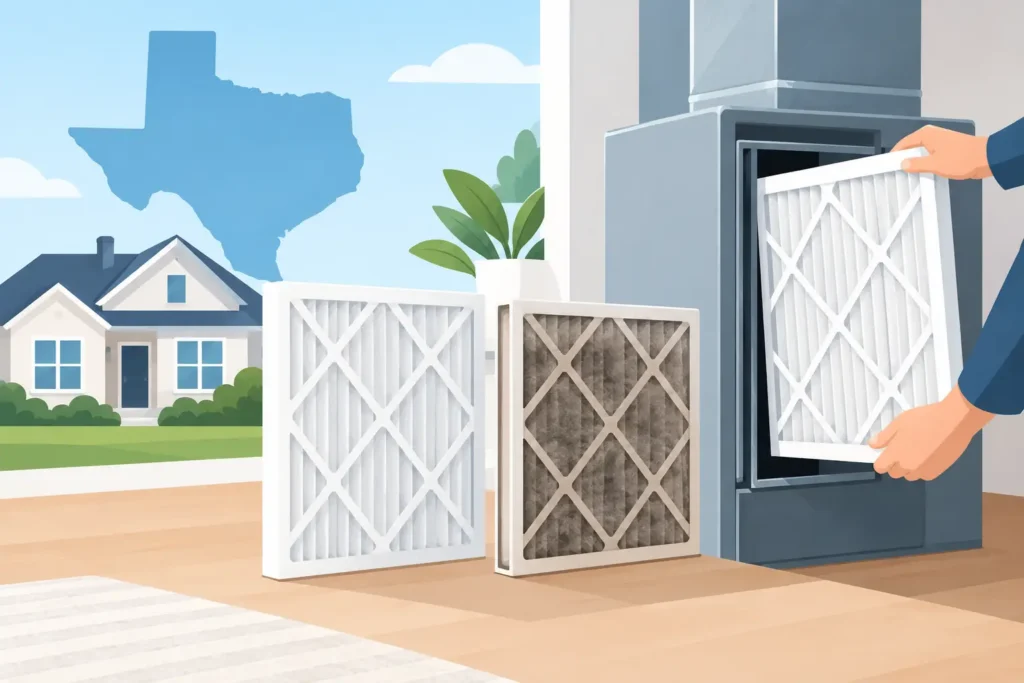
Your air conditioner may still cool and your furnace may still heat with a dirty filter in place, but that does not mean your HVAC system is operating well. In North Richland Hills and across Fort Worth, long cooling seasons, construction dust, pet dander, and seasonal pollen can load up a filter faster than many homeowners expect. Knowing when to replace air filter is one of the simplest ways to protect comfort, indoor air quality, and your heating and cooling equipment.
A clean filter allows the system to move air as designed. A clogged one makes the blower work harder, can leave rooms unevenly cooled or heated, and may contribute to avoidable repair calls. The good news is that most filter changes take only a few minutes once you know what to look for.
When to Replace Air Filter: A Practical Schedule
For many homes, checking the filter once a month is the right habit. How often you actually replace it depends on the type of filter, its thickness, your household, and how often the HVAC system runs.
A basic 1-inch fiberglass filter may need replacement about every 30 days. A pleated 1-inch filter often lasts 30 to 90 days, depending on its quality and the conditions in the home. Thicker 4-inch or 5-inch media filters can sometimes last six to 12 months, but the package rating is only a starting point. A busy home with pets and frequent AC use may need a change much sooner.
For a typical Texas household, plan on the shorter end of the recommended range during summer. When temperatures stay high, your air conditioner can run for hours each day. More runtime means more air passes through the filter, and more debris gets trapped in it.
Rather than relying only on a calendar reminder, inspect the filter regularly. If the material looks gray, dusty, or packed with hair, replace it. Holding it up to a light can help: if very little light passes through, it is likely time for a new one.
Signs Your HVAC Filter Is Already Overdue
Your filter may need attention before its scheduled replacement date. A few warning signs are easy to miss because they can look like a larger AC or furnace problem.
First, watch for weaker airflow at supply vents. If some rooms feel stuffy or take longer to cool, a restricted filter may be limiting airflow. A dirty filter can also make your system run longer than usual as it struggles to reach the thermostat setting.
More dust around vents, on furniture, or near return grilles is another clue. Filters do not remove every particle from the air, but a clean, properly fitted filter should capture a meaningful amount of common household dust and debris. If allergies seem worse indoors, a filter change is a sensible first step.
Listen to the system, too. Whistling near the return grille, a blower that sounds strained, or frequent cycling can point to an airflow issue. These symptoms do not always mean the filter is the cause, so do not assume a replacement will solve every problem. But checking the filter is a quick, low-cost place to start.
In more serious cases, a severely blocked filter can contribute to frozen evaporator coils in cooling mode or overheating concerns in heating mode. If you see ice on refrigerant lines, smell something burning, notice water around the indoor unit, or have no heat or cooling, turn the system off and request professional service. Installing a new filter alone may not correct the underlying issue.
What Changes the Replacement Frequency?
Every home has its own filter schedule. Pets are one of the biggest factors. Dogs and cats shed hair and dander that collect quickly, especially if the return grille is near areas where they sleep or play. Homes with one or more pets should usually inspect filters monthly and may need replacement every 30 to 60 days.
Allergies, asthma, or respiratory sensitivities can also justify more frequent changes. A higher-quality pleated filter may capture smaller particles than a basic filter, but there is a trade-off. Filters with very high MERV ratings can restrict airflow if the HVAC system was not designed for them. More filtration is not automatically better for every furnace or air handler.
Ask an HVAC professional which MERV range fits your equipment and indoor air quality goals. For many residential systems, a mid-range pleated filter provides a practical balance between filtration and airflow. If your family needs stronger particle control, options such as upgraded filtration or whole-home air purification may be more effective than simply choosing the most restrictive filter at the store.
Other reasons to change filters sooner include indoor smoking, recent remodeling, open windows during high-pollen days, nearby road dust, and a home that sits vacant for part of the year. Commercial properties may need a separate schedule because occupancy, operating hours, and building use can create much heavier filter loads.
How to Change an Air Filter Correctly
Changing the filter is straightforward, but the wrong size or direction can reduce its effectiveness. Start by turning off the thermostat or HVAC system. Then locate the filter compartment, which is commonly behind a return-air grille, inside the air handler, or near the furnace.
Check the size printed on the filter frame before buying replacements. Do not guess based on the grille opening. Filters are labeled with nominal dimensions, and a filter that is even slightly too small can allow unfiltered air around the edges. One that is too large may bend, fail to seat properly, or restrict airflow.
When inserting the new filter, find the arrow printed on the frame. The arrow should point in the direction the air is moving – typically toward the air handler or furnace. If you are looking at a wall or ceiling return grille, the arrow usually points inward, away from the living space.
Write the installation date on the filter frame or set a phone reminder. This small step removes the guesswork, especially during the high-demand months when it is easy to lose track of maintenance tasks.
Do Not Let a Filter Problem Hide a System Problem
A clean filter is preventive maintenance, not a cure-all. If you replace the filter and airflow is still poor, rooms remain hot, or the system continues running constantly, the cause could be a dirty coil, blower issue, duct leak, refrigerant problem, thermostat concern, or another equipment fault.
This is especially true for older systems. Years of dust buildup and normal wear can affect performance even when the filter is changed on time. Seasonal maintenance gives a technician the opportunity to inspect the full system, clean components that homeowners should not handle, and catch small problems before a summer breakdown or cold-weather heating failure.
For homeowners and property managers in North Richland Hills, Haltom City, Hurst, Bedford, Euless, Watauga, Richland Hills, and Fort Worth, Malcolm’s HVAC can help determine whether a filter change is enough or whether your equipment needs professional attention. Clear answers and upfront recommendations matter when comfort is on the line.
A fresh filter is a small investment with a real payoff: cleaner airflow, less strain on the equipment, and a better chance that your system is ready when a Texas afternoon turns brutally hot. Check it this month, and if anything about the airflow or system operation does not seem right, address it before it becomes an urgent repair.