
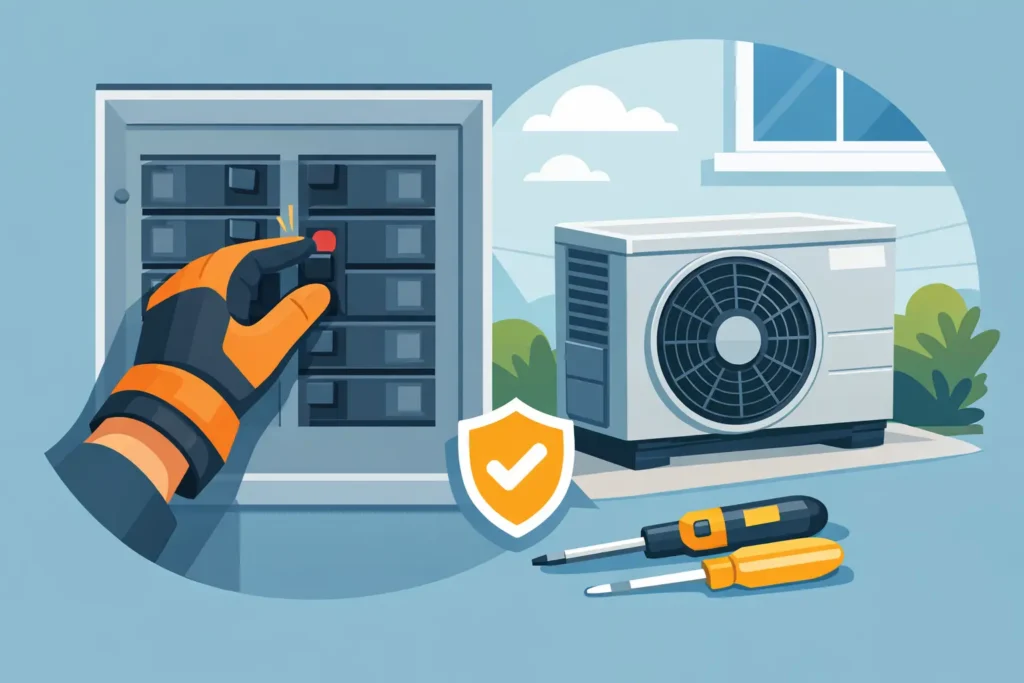
When the Texas heat is climbing and your air conditioner suddenly stops, the electrical panel is one of the first places many homeowners check. You may be able to reset a tripped AC breaker safely, but only if you understand what caused it to trip and when resetting it could make the situation worse.
A circuit breaker is designed to shut off power when it senses an overload, short circuit, or electrical fault. It is doing its job by protecting your home, wiring, and HVAC equipment. A single trip after a power surge or unusually heavy demand may be minor. A breaker that trips again, however, is a warning that deserves professional attention.
How to Reset a Tripped AC Breaker
Before touching the electrical panel, turn your thermostat to the Off position. This prevents the AC from immediately calling for power as soon as the breaker is restored. If you have a smart thermostat, make sure the cooling schedule is paused as well.
Find your home’s electrical panel, usually located in a garage, utility room, hallway, closet, or on an exterior wall. Look for the breaker labeled “AC,” “air conditioner,” “condenser,” or “HVAC.” Central air systems often use a double-pole breaker, which is wider than standard breakers and may have two connected switches.
A tripped breaker may sit between the On and Off positions. To reset it correctly, push the breaker firmly all the way to Off first. Then move it back to On. If it stays in place, wait about five minutes before turning the thermostat back to Cool and setting it a few degrees below the indoor temperature.
Listen and watch as the system starts. Your indoor blower may come on first, followed by the outdoor condenser unit. If the air conditioner runs normally and the breaker remains on, keep an eye on the system through the day. If the breaker trips again, leave it off and arrange an HVAC service visit.
Do not repeatedly flip a breaker in the hope that it will “catch.” Resetting it once is reasonable when there are no signs of danger. Resetting it over and over can stress electrical components and may create a larger repair issue.
Check the Outdoor AC Disconnect Too
Many homes have a separate electrical disconnect box mounted near the outdoor AC unit. This is not usually the same as the breaker panel. It allows a technician to safely cut power to the condenser during service.
If your breaker is on but the outdoor unit will not run, check whether the disconnect appears switched off or whether its pull-out handle is fully seated. Do not open wiring compartments or handle damaged parts. If the disconnect is hot, corroded, cracked, buzzing, or smells burned, leave it alone and call for service.
When You Should Not Reset the Breaker
A breaker trip is not always a simple nuisance. Stop and call a qualified HVAC professional or electrician if you notice a burning smell, smoke, sparking, scorch marks around the panel, a buzzing panel, melted insulation, or a breaker that feels hot. These symptoms can point to an electrical hazard that should not be handled with a quick reset.
You should also avoid resetting the breaker if the outdoor unit is sitting in standing water after severe weather, if rodents have damaged wiring, or if the unit has recently made loud grinding or humming noises. Water, damaged wires, and failing motors can all cause dangerous electrical faults.
If your AC breaker trips immediately after you reset it, keep it off. The problem is unlikely to resolve on its own, and continued resets can damage the compressor, capacitor, contactor, wiring, or breaker.
Why an AC Breaker Keeps Tripping
The most common cause is not always the breaker itself. Your air conditioner uses a large amount of electricity, especially during a North Richland Hills or Fort Worth summer. When a component begins to fail or airflow becomes restricted, the system may draw more power than it should.
A dirty air filter is one possible contributor. A severely clogged filter restricts airflow, which can cause the indoor system to work harder and potentially overheat. Replace disposable filters regularly, generally every one to three months depending on the filter type, household, pets, and system use.
A dirty outdoor condenser coil can also force the AC to work harder. Grass clippings, cottonwood, leaves, and dirt can block airflow through the coil. Keep at least two feet of clear space around the outdoor unit, but do not pressure wash the coil or bend its delicate fins.
Electrical parts are another frequent source of trouble. A weak capacitor, failing contactor, loose connection, worn compressor, or damaged wire can create an excessive electrical draw. In older homes, an undersized breaker, aging panel, or electrical connection issue may also be involved. These are diagnostic and repair jobs, not do-it-yourself fixes.
A Few Safe Checks Before Calling for AC Repair
After a single breaker trip, there are a few basic checks homeowners can make without opening equipment panels. Confirm that the thermostat is set to Cool, the temperature setting is below the room temperature, and the batteries are fresh if your thermostat uses them.
Next, inspect the air filter. If it is gray, packed with dust, or visibly blocked, replace it with the correct size and type. Check supply vents and return grilles inside the home, too. Furniture, rugs, and closed doors can reduce airflow where the system needs it most.
Walk outside and look at the condenser from a safe distance. Clear loose leaves and debris from around the unit. Do not insert objects through the grille, remove access panels, or touch electrical components. If the unit is iced over, turn cooling off at the thermostat and call for help rather than forcing it to run.
These quick checks can address simple airflow issues, but they cannot identify the electrical reason a breaker tripped. A professional diagnostic visit can measure voltage, amp draw, capacitor performance, refrigerant-related operating conditions, and the condition of major components.
Is It the AC Breaker or the Furnace Breaker?
Central HVAC systems can have more than one breaker. The outdoor air conditioner typically has a dedicated high-voltage double-pole breaker. The indoor air handler or furnace may have a separate breaker because it powers the blower motor, controls, and other indoor components.
If your AC will not cool but the thermostat screen is blank and the indoor blower will not run, the issue may involve the indoor equipment breaker rather than the outdoor AC breaker. If the blower runs but the outside unit does not, the condenser breaker, disconnect, or outdoor equipment is more likely involved.
The distinction matters, but it is still best not to guess. Incorrectly resetting unrelated breakers can make troubleshooting harder, especially in commercial properties or homes with updated electrical panels that are not clearly labeled.
How to Prevent Future Breaker Trips
Regular maintenance is the best way to reduce surprise AC shutdowns. A seasonal tune-up gives a technician the chance to clean coils, inspect electrical connections, test starting components, check drain systems, and catch wear before it becomes an after-hours problem.
Homeowners can help by changing filters on schedule, keeping the outdoor unit clear, avoiding closing too many supply vents, and paying attention to changes in performance. Longer cooling cycles, warm air from vents, humming outside, frequent short cycling, and rising electric bills are all reasons to schedule service before the breaker starts tripping.
For older equipment, repair versus replacement depends on the system’s age, condition, efficiency, and the cost of the needed repair. A dependable technician should explain those options clearly, including whether a targeted repair is sensible or whether a newer system would provide better long-term value.
Get Help Before a Small Electrical Issue Grows
A tripped breaker may be a one-time event, but repeated trips are your AC system asking for attention. Malcolm’s HVAC helps homeowners and property managers across North Richland Hills, Fort Worth, Haltom City, Hurst, Bedford, Euless, Watauga, and nearby communities diagnose cooling and electrical concerns with straightforward recommendations and upfront options.
If your breaker will not stay on, your AC is blowing warm air, or you see any sign of electrical damage, keep the system off until it can be inspected. A prompt repair can protect your comfort, your equipment, and your home when the next hot Texas afternoon arrives.