
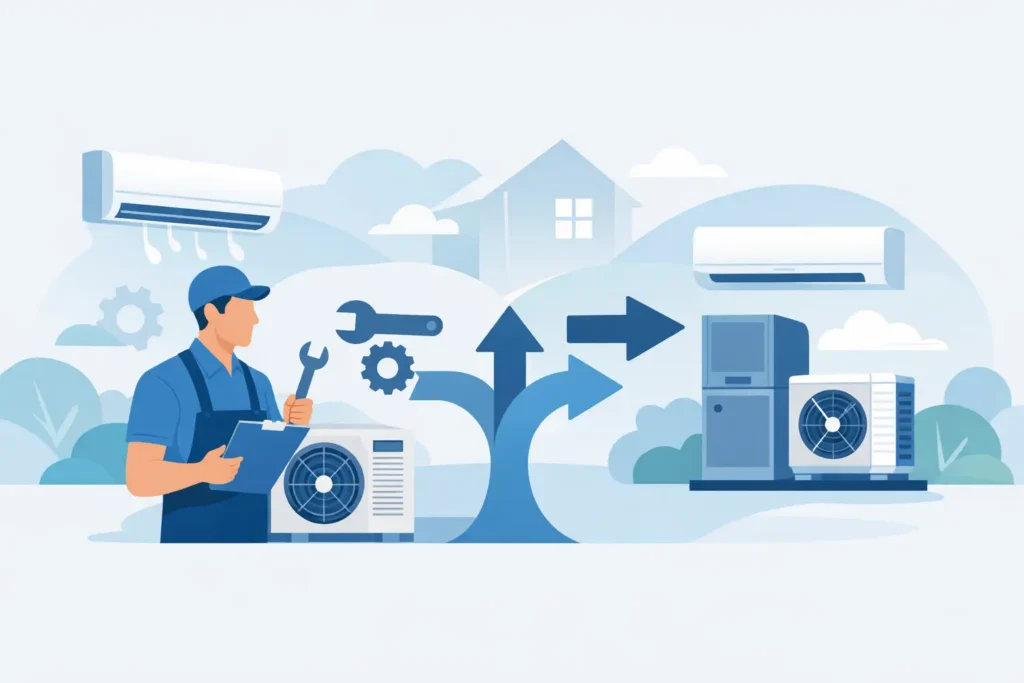
A Texas summer rarely gives a struggling air conditioner time to fail gracefully. When warm air starts coming through the vents, the system runs nonstop, or a furnace quits on the first cold night, homeowners need more than a quick guess. They need clear HVAC repair and replacement guidance that protects comfort, budget, and long-term reliability.
For families and property managers in North Richland Hills, Fort Worth, Haltom City, Hurst, Bedford, and nearby communities, the right answer depends on what is actually happening inside the system. A dependable repair may restore years of service. In other cases, putting more money into aging equipment only delays a larger problem.
HVAC Repair and Replacement Starts With a Real Diagnosis
A broken HVAC system does not automatically need to be replaced. Many common problems can be repaired effectively, including failed capacitors, worn contactors, thermostat issues, clogged drain lines, damaged blower components, and some electrical faults. A technician should inspect the equipment, identify the cause of the failure, and explain the repair before recommending a major investment.
That diagnosis matters because the symptom is not always the problem. An air conditioner that will not cool may have a simple airflow restriction, but it could also have a refrigerant leak, compressor trouble, or ductwork issue. A furnace that cycles on and off may have a dirty flame sensor, a venting concern, or a control-board problem. Replacing equipment without understanding the source of the issue can leave comfort problems unresolved.
For commercial properties, diagnosis is equally important. Uneven temperatures in an office, retail space, or rental property may point to equipment trouble, but zoning, thermostat placement, insulation, occupancy, and maintenance history can all affect performance. The best solution is the one that addresses the actual cause, not simply the most expensive option.
When Repair Is Usually the Better Choice
Repair is often the practical choice when a system is relatively new, has been maintained consistently, and has not required frequent major service. If the issue is isolated and the equipment still heats or cools efficiently, a targeted repair can be the most affordable way to restore comfort.
A repair may make sense when the system is under 10 years old, the repair cost is reasonable compared with replacement, and there are no signs of recurring compressor, heat exchanger, or refrigerant problems. Parts availability also matters. If a repair uses readily available, manufacturer-approved parts and the rest of the unit is in good shape, there is little reason to replace a system prematurely.
Homeowners should also consider the time of year. If an air conditioner needs a moderate repair in early spring and has otherwise performed well, repairing it may provide a comfortable season while allowing time to plan for a future replacement. The same can be true for a furnace repair before winter. A thoughtful plan is usually better than an emergency decision made during an extreme weather event.
That said, the cheapest repair is not always the least expensive choice over time. A low-cost fix that must be repeated every few months can become more frustrating and costly than a replacement planned around the household’s needs.
Signs It May Be Time for HVAC Replacement
Age is one of the strongest indicators. Most central air conditioners, heat pumps, and furnaces can provide reliable service for many years, but wear adds up. In North Texas, long cooling seasons can put significant demand on air conditioning equipment. A system approaching or exceeding its expected service life deserves a closer look when major repairs arise.
Frequent breakdowns are another warning sign. One repaired part does not mean a system is finished. But if service calls have become routine, or if multiple expensive components are failing, replacement may offer better value and fewer disruptions.
Pay attention to comfort, too. Rooms that stay hot, weak airflow, rising energy bills, unusual noises, excessive humidity, and equipment that runs for long periods can all indicate declining performance. These symptoms can sometimes be repaired, but they can also show that the system is undersized, improperly installed, or no longer operating efficiently enough for the home.
A cracked heat exchanger in a gas furnace deserves immediate attention because it can create a safety concern. Significant compressor failure, major refrigerant leaks in older equipment, and obsolete parts can also shift the balance toward replacement. A qualified technician should explain the issue plainly, including whether repair is safe, available, and likely to last.
How to Compare Repair Costs With Replacement Value
The familiar idea of replacing a system when a repair costs half the price of new equipment can be a useful starting point, but it is not a rule. A $2,000 repair on a newer, high-efficiency system may be sensible. A $900 repair on a 16-year-old unit with a history of problems may not be.
Instead, consider the repair in context. How old is the equipment? Has it needed repeated service? Is it still efficient? Will the repair solve the core problem or only get the system running temporarily? Can the equipment use available parts and refrigerant? How long do you plan to stay in the property?
Replacement has a higher upfront cost, but it can reduce service calls, improve efficiency, and provide warranty protection on new equipment. It can also improve comfort when the new system is correctly sized and installed. Financing can help homeowners and businesses spread that investment over time rather than choosing a less suitable option simply because it costs less today.
No two homes have the same needs. A family planning to stay in their North Richland Hills home for another decade may value lower operating costs and long-term reliability. A property owner preparing a rental for sale may make a different decision. Honest recommendations should account for those realities.
Replacement Is More Than Choosing a New Unit
A new HVAC system can only perform as well as its design and installation allow. Before installation, the contractor should consider square footage, insulation, windows, ceiling height, duct condition, household size, and comfort concerns in specific rooms. Selecting a larger unit without proper calculations can lead to short cycling, poor humidity control, and unnecessary wear.
Ductwork deserves attention as well. Leaks, crushed sections, poor return-air design, and inadequate insulation can waste conditioned air and make a new system appear underpowered. In some homes, duct improvements, a thermostat upgrade, or indoor air quality equipment can make a meaningful difference alongside replacement.
For heat pumps, the decision may involve how the system will handle both cooling and winter heating. For furnaces, efficiency ratings, fuel type, venting requirements, and compatibility with the existing air conditioner or coil all matter. The right choice should be explained in clear terms, with upfront pricing and options that fit the property rather than a one-size-fits-all package.
Preventing Emergency HVAC Decisions
Most HVAC emergencies begin as smaller performance changes. A filter that stays dirty too quickly, a new rattling sound, water around the indoor unit, or an unexplained increase in utility bills should be checked before the system fails on the hottest or coldest day of the year.
Seasonal maintenance helps catch those issues early. Cleaning components, checking electrical connections, testing safety controls, inspecting drains, confirming airflow, and measuring system operation can extend equipment life and reduce unexpected repairs. Maintenance cannot prevent every failure, but it gives homeowners better information and more time to choose between repair and replacement.
Changing filters on schedule also matters. A neglected filter restricts airflow, stresses the blower, reduces comfort, and can contribute to frozen evaporator coils. The right schedule depends on the filter type, pets, household activity, and indoor air quality needs, but checking it monthly is a simple habit that can prevent avoidable strain.
Get a Recommendation You Can Use
When your heating or cooling system needs attention, ask for the diagnosis, repair options, expected service life, and replacement alternatives in plain language. You should know what failed, what the repair is intended to accomplish, and what risks remain with older equipment. There should be room to ask questions without pressure.
Malcolm’s HVAC helps homeowners and businesses across the Fort Worth area make those decisions with practical recommendations, upfront pricing, and responsive service. Whether the answer is a straightforward repair, a planned equipment upgrade, or a full system replacement, the goal is the same: dependable comfort without surprises.
If your system is showing early warning signs, address them while you still have options. A timely visit can turn a stressful breakdown into a well-informed decision that keeps your home or property comfortable through the next Texas season.