
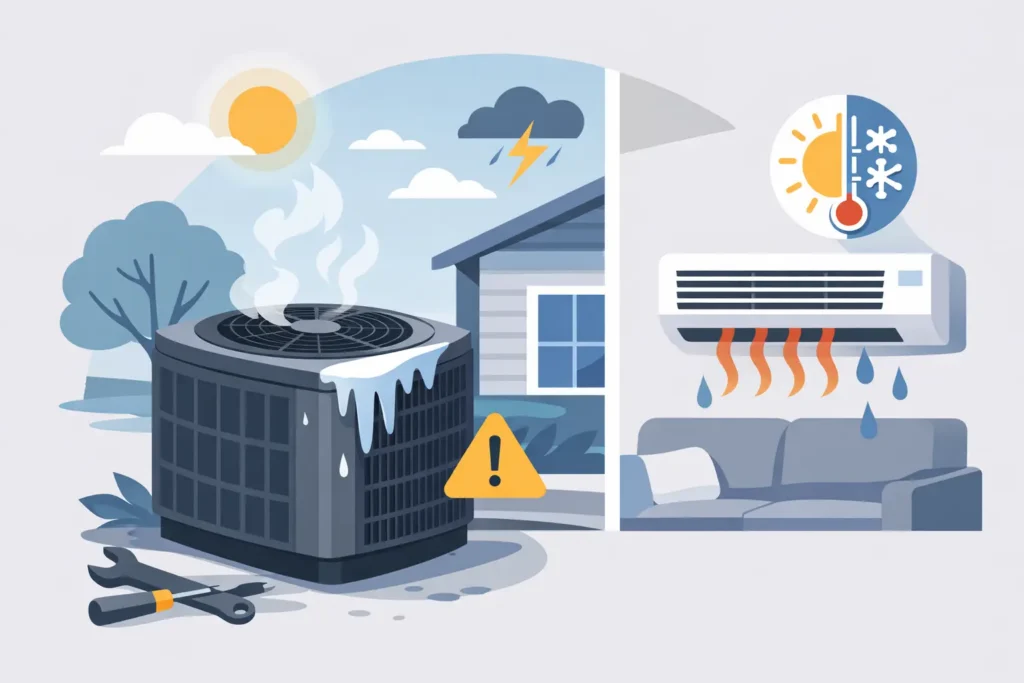
When your AC quits in the middle of a North Texas heat wave, the question gets urgent fast: what causes a central air unit to stop working, and is it something simple or a sign of a bigger repair? The answer depends on where the failure starts – power, airflow, refrigerant, controls, or aging parts can all shut a system down.
Some problems are minor and safe to check on your own. Others need professional diagnosis right away, especially if the unit is short cycling, tripping breakers, leaking, or blowing warm air. Knowing the difference can save you time, stress, and the cost of letting a small issue turn into a major one.
What causes a central air unit to stop working most often?
In most homes, the most common causes are surprisingly basic. A tripped breaker, a clogged air filter, a thermostat setting issue, or a drain safety switch can all make it seem like the whole system failed. That is why a complete diagnosis matters – the outdoor unit, indoor air handler, thermostat, electrical components, and condensate drain all work together, and one weak point can stop cooling altogether.
The hard part is that different problems can create the same symptom. If your AC will not turn on, that could point to power loss, a failed capacitor, a faulty contactor, or thermostat communication trouble. If it runs but does not cool, airflow restrictions, low refrigerant, frozen coils, or a worn compressor may be involved.
Thermostat and power problems can stop cooling completely
Before assuming the equipment itself has failed, start with the controls. A thermostat with dead batteries, incorrect mode settings, or a calibration issue can prevent the system from calling for cooling. It sounds simple, but it is one of the first things technicians check because it causes a lot of unnecessary panic.
Power issues are also common. A breaker may trip after a surge, a disconnect box near the condenser may be switched off, or a blown fuse could keep one part of the system from operating. Sometimes the indoor unit has power while the outdoor condenser does not, which leaves you with air moving through the vents but no actual cooling.
If breakers trip more than once, do not keep resetting them. Repeated trips usually point to an electrical fault, failing component, or overworked motor that needs service.
Restricted airflow creates bigger problems than most homeowners expect
A clogged filter is easy to overlook, but poor airflow can cause an entire chain reaction. When not enough warm indoor air passes over the evaporator coil, the coil can get too cold and freeze. Once that happens, the system cannot cool properly, and it may stop working altogether.
Dirty return vents, blocked supply registers, collapsed duct sections, and blower motor issues can create the same result. In homes with pets, remodeling dust, or heavy summer usage, airflow problems show up even faster. What starts as weak performance can turn into ice buildup, water leakage, and compressor strain.
Frozen evaporator coils are a common reason an AC stops working
If you are wondering what causes a central air unit to stop working after it seemed to struggle for a while, frozen coils are high on the list. You might notice weak airflow, warm air from the vents, or ice on the refrigerant line near the indoor unit.
Frozen coils are usually not the root problem by themselves. They are a symptom. The real cause may be a dirty filter, low refrigerant, a blower problem, or a dirty evaporator coil that is no longer exchanging heat the way it should.
Turning the system off can help the ice thaw, but that does not fix the source of the trouble. If the unit keeps freezing, it needs a proper inspection before more damage is done.
Low refrigerant or a refrigerant leak changes how the system performs
Your central AC does not use up refrigerant the way a car uses fuel. If refrigerant is low, there is usually a leak somewhere in the system. That leak can reduce cooling power, lower efficiency, and eventually lead to frozen coils or compressor damage.
Common warning signs include longer run times, hissing sounds, warm air, or uneven cooling. Some systems keep running in this condition, which makes the problem harder to catch early. Others stop cooling so noticeably that it feels like the unit suddenly died.
Refrigerant issues are not a DIY repair. The system must be leak tested, repaired, and charged to manufacturer specifications. Simply adding more refrigerant without fixing the leak is a temporary patch, not a real solution.
Capacitors, contactors, and motors wear out over time
Many central air failures come down to parts that simply wear down in Texas heat. The capacitor helps start and run motors. The contactor helps send voltage to the outdoor unit. Fan motors and blower motors keep air moving where it needs to go. When one of these components weakens, the system may buzz, struggle to start, shut off unexpectedly, or stop entirely.
This is one reason older systems become less reliable even if they still cool on mild days. Components can operate right on the edge of failure. Then a stretch of extreme heat pushes them past it.
The trade-off with part replacement depends on system age and condition. Replacing a failed capacitor on a well-maintained system often makes sense. Replacing multiple electrical parts on an aging unit with compressor wear is a different conversation.
Drain line clogs can trigger a safety shutdown
A central air system pulls humidity from indoor air, and that moisture has to drain away properly. If the condensate drain line clogs with algae, sludge, or debris, water can back up into the drain pan. Many systems have a safety switch that shuts the AC off to prevent water damage.
To a homeowner, it can look like the unit just stopped for no reason. In reality, it is doing exactly what it was designed to do – protect your home. If you see standing water around the indoor unit or notice the system shutting down during humid weather, the drain system may be the culprit.
Compressor trouble is one of the more serious causes
The compressor is the heart of the cooling cycle. When it fails, the system may hum without starting, trip breakers, blow warm air, or stop running altogether. Compressor problems can result from age, overheating, electrical issues, low refrigerant, or damage caused by other neglected repairs.
This is where timing matters. A unit that has been running with dirty coils, restricted airflow, or low refrigerant may end up with compressor failure that could have been prevented. Once the compressor is involved, repair costs rise quickly, and replacement may be the more practical option depending on the age of the equipment.
What causes a central air unit to stop working in older systems?
With older equipment, the answer is often wear plus deferred maintenance. Insulation breaks down on wires. Coils get dirty. Motors lose efficiency. Connections loosen. Drain lines clog more often. None of these issues are unusual by themselves, but together they make the system more vulnerable to sudden shutdowns.
That does not always mean replacement is the only answer. Some older units can still be repaired economically if the major components are sound. But if breakdowns are becoming frequent, energy bills are climbing, and comfort is inconsistent, continued repairs may stop being the best value.
What you can check before calling for AC repair
There are a few safe things to look at before scheduling service. Check that the thermostat is set to cool and the temperature is below room temperature. Make sure the air filter is clean. Confirm the breaker has not tripped and the system switch near the indoor unit is on. Look for blocked vents and visible ice on the refrigerant line or indoor coil area.
If those basics do not solve it, or if you notice burning smells, loud buzzing, repeated breaker trips, water leaks, or no cooling at all, it is time for professional help. Continuing to run a struggling system can turn a manageable repair into a much more expensive one.
For homeowners and property managers in North Richland Hills, Fort Worth, and nearby communities, fast diagnosis matters just as much as the repair itself. Malcolm’s HVAC sees this often – what looks like a dead AC can sometimes be a simple fix, but waiting too long is what tends to make the problem bigger.
The best next step is not guessing. If your central air unit has stopped working, get it checked before the heat puts more strain on the system and on your home.