
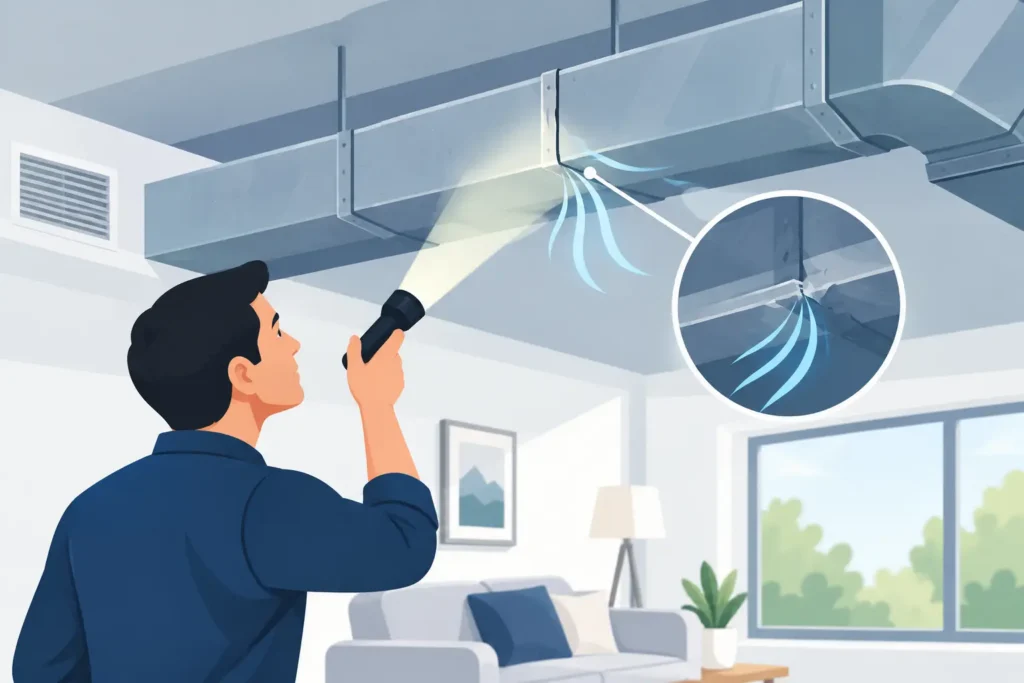
A bedroom that never cools down, even when the thermostat says 72, is not always an air conditioner problem. In many North Richland Hills and Fort Worth homes, conditioned air is escaping through gaps, loose connections, or damaged ductwork before it reaches the room. Learning how to spot duct leaks can help you address comfort problems sooner and avoid paying to heat or cool spaces you do not use.
Duct leaks are often hidden in attics, crawl spaces, garages, and wall cavities, so homeowners rarely see the opening itself. What they do notice are changes in comfort, air quality, and monthly utility costs. The clues below can help you decide whether your duct system needs a professional inspection.
Why leaky ducts affect more than one room
Your ductwork is the delivery system for heated and cooled air. When joints separate or flexible ducts tear, the system has to run longer to meet the thermostat setting. In a Texas attic, lost cool air can be replaced by extremely hot attic air pulled into the duct system through return-side leaks.
That creates a few connected problems. Some rooms become difficult to cool or heat, energy bills rise, and the equipment may experience more wear from longer run times. Leaks can also pull dust, insulation fibers, and humid outdoor air into your home. The result is not simply wasted energy. It can be a home that feels less comfortable and less clean.
Signs that tell you how to spot duct leaks
A single symptom does not prove there is a duct leak. An undersized HVAC system, clogged filter, poor insulation, closed vents, or aging equipment can cause similar issues. But when several signs appear together, ductwork deserves a closer look.
Uneven temperatures from room to room
Walk through your home while the system is running. If the living room feels comfortable but a back bedroom, bonus room, or upstairs space stays noticeably warmer in summer or colder in winter, there may be a supply duct problem serving that area.
Some temperature variation is normal, especially in rooms with large windows, high ceilings, or direct afternoon sun. A difference that persists after adjusting vents and changing the filter is more concerning. Pay attention if a room used to be comfortable and has gradually become harder to condition.
Weak airflow at one or more vents
Hold your hand a few inches from each supply register while the blower is on. Air should feel reasonably consistent among rooms of similar size. Very weak airflow from one vent can point to a crushed flex duct, disconnected section, closed damper, or a leak before the air reaches the register.
Do not block returns or close multiple supply vents to force more air into one room. That workaround can increase static pressure and create other system problems. It is better to identify why the airflow changed.
Higher utility bills without a clear reason
A higher summer bill can be normal during a stretch of 100-degree weather. What matters is whether your energy use climbs more than expected compared with similar weather, while your comfort gets worse. Leaky ducts make the system work harder without delivering the full benefit inside the home.
Compare bills from the same season year to year if possible. Also consider recent changes, such as a new room addition, more people at home during the day, or an older system nearing replacement. Duct leakage may be one part of the picture rather than the only cause.
Dusty rooms and dirty vents soon after cleaning
Supply and return leaks can draw dust from attics, garages, crawl spaces, and wall cavities into the airflow. If you clean frequently but dust returns quickly around registers, furniture, and floors, the duct system may be pulling in unfiltered air.
A dirty air filter can contribute to dust and restricted airflow too. Replace it first, using the filter type and change interval recommended for your system. If the issue continues with a clean filter, a technician can inspect the return ducts, connections, and filter rack for gaps.
Musty odors, humidity, or insulation debris
A musty smell when the HVAC system starts may come from excess moisture, dirty components, or air being drawn from an unconditioned area. Likewise, unexpected humidity can develop when return ducts pull hot, humid attic or outdoor air into the system.
Visible insulation fibers or fine debris near vents deserve prompt attention. This does not automatically mean your ducts are leaking, but it is a good reason to schedule an inspection. Indoor air quality concerns are best handled by finding and correcting the source, not just covering up odors.
Noises from the attic, walls, or ceiling
Rattling, whistling, or a noticeable rushing sound can occur when air escapes at a loose duct connection. Flexible ducts may also make noise when they sag, kink, or shift. Listen when the system turns on and off, especially near ceiling registers and access points.
Some operational noise is expected. Loud banging, persistent scraping, or a burning smell is not a DIY diagnosis situation. Turn the system off if you believe there may be an electrical or mechanical safety issue and contact an HVAC professional.
Where homeowners can safely look
If you can enter your attic or utility area safely, a visual check may reveal obvious issues. Look for ducts that are disconnected from a metal collar, visibly crushed, torn, hanging low, or surrounded by dark dust marks at a joint. Dust staining can show where air has been escaping over time.
Check accessible registers as well. A loose register boot or a gap between the ceiling or wall and the register can allow air to leak into the cavity around it. These small gaps may not explain major comfort problems on their own, but they are worth noting.
Use caution in attics. Texas attics can become dangerously hot, and stepping off a framing member can damage the ceiling or cause injury. Never handle wiring, disturb insulation unnecessarily, or crawl near equipment if you are unsure of the area. Commercial properties may have larger, more complex duct systems that should be evaluated by a trained technician from the start.
What not to use for duct repairs
Standard cloth duct tape is not a lasting solution for HVAC ductwork, despite its name. Heat, dust, and age cause the adhesive to fail. A proper repair may involve approved mastic sealant, compatible foil tape, new insulation, a reconnecting collar, or replacement of a damaged duct section.
The right fix depends on the duct material and location. A small accessible joint can sometimes be sealed efficiently. Older, poorly routed, undersized, or severely damaged ductwork may need more extensive repair or replacement. Adding sealant without correcting sagging, crushed sections, or poor design will not restore proper airflow.
When a professional duct inspection makes sense
Schedule an HVAC inspection when uneven comfort, weak airflow, higher bills, and dust continue after basic maintenance. It is also wise to have ducts checked after pest damage, water intrusion, remodeling work, or a sudden change in system performance.
A technician can inspect accessible ducts, test airflow, look for disconnected runs, evaluate return and supply conditions, and rule out equipment issues that can mimic a duct leak. This matters because replacing an air conditioner or furnace without addressing significant duct problems can leave the new equipment struggling with the same comfort complaints.
For homeowners and property managers in North Richland Hills, Fort Worth, and nearby communities, Malcolm’s HVAC can help identify whether duct leaks, equipment performance, filtration, or another issue is affecting comfort. Clear findings and upfront recommendations make it easier to choose a repair that fits the property and budget.
If one room has become the place everyone avoids during summer or winter, do not keep compensating with thermostat changes. A careful duct inspection can turn that frustrating comfort problem into a specific repair plan.