
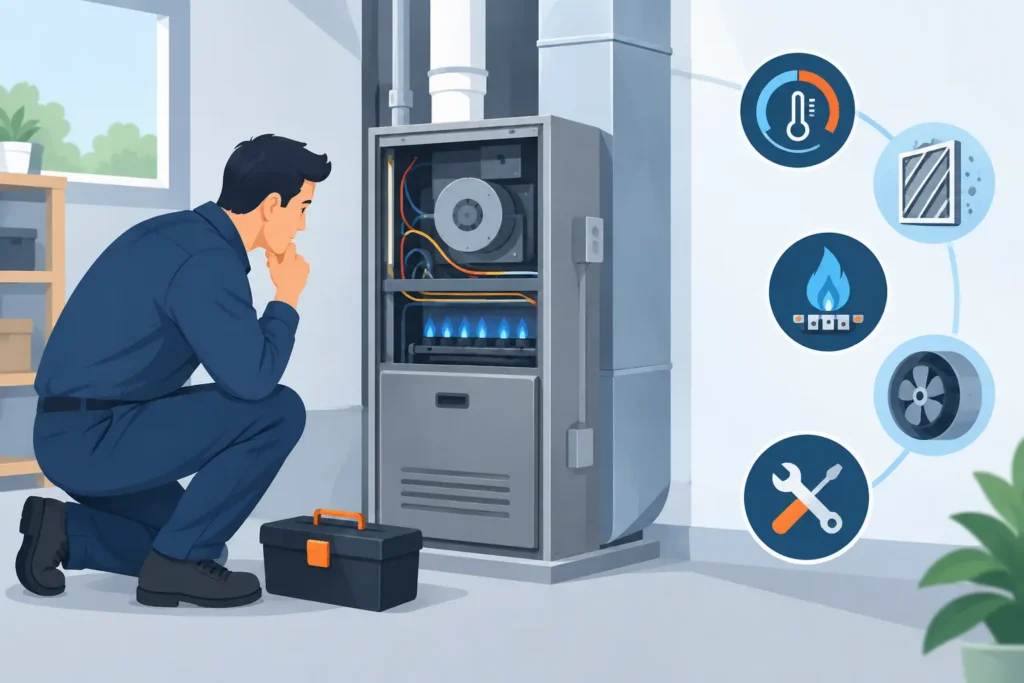
A furnace that turns on, runs for a few minutes, shuts off, then starts again soon after is not just annoying. It can leave parts of your home chilly, raise your utility bill, and put extra wear on expensive equipment. If you are asking, why is furnace short cycling, the answer may be as simple as a clogged filter or as serious as an overheating or venting problem.
Short cycling is worth addressing early. A furnace is designed to complete steady heating cycles, not repeatedly start and stop before it has warmed the home. The faster you identify the cause, the better your chances of avoiding an inconvenient breakdown during a North Texas cold snap.
What Furnace Short Cycling Looks Like
Most furnaces run for roughly 10 to 15 minutes at a time, though the actual cycle length depends on outdoor temperatures, insulation, thermostat settings, and the size of the system. During unusually cold weather, a furnace may run longer. During mild weather, it may run for shorter periods.
Short cycling is different. The burner and blower may shut down after only two to five minutes, then restart again shortly afterward. You may hear frequent clicking from the thermostat, notice uneven temperatures between rooms, or find that the furnace never quite reaches the temperature you selected.
One brief, unusual cycle does not always mean there is a major problem. But if it happens repeatedly over several hours or days, the system needs attention.
Why Is Furnace Short Cycling? Common Causes
The cause depends on what tells the furnace to shut down. Sometimes the thermostat is ending the call for heat too early. In other cases, the furnace’s safety controls are stopping operation to prevent damage or unsafe conditions.
A dirty air filter is restricting airflow
A clogged filter is one of the most common and most fixable reasons for short cycling. Your furnace needs adequate airflow to move heat through the system. When the filter is packed with dust, pet hair, or debris, heat can build up inside the furnace.
The high-limit switch may then shut off the burners to protect the heat exchanger from overheating. The blower may continue running for a moment, and the furnace may restart once it cools. That repeating pattern is classic short cycling.
Check the filter monthly during heating season. If it looks gray, coated, or difficult to see through, replace it with the correct size and type recommended for your system. A very high-restriction filter can also create airflow issues in some homes, so it is wise to ask a technician which filter rating fits your equipment.
Closed vents or blocked return grilles are trapping heat
A furnace can overheat even with a clean filter if supply vents are closed throughout the home or return-air grilles are blocked by furniture, rugs, or storage. Closing a vent in an unused room may seem like a smart way to save energy, but your duct system was designed for a certain amount of airflow.
Open the supply vents, make sure return grilles have clear space around them, and check that interior doors are not preventing air from circulating. If one room is consistently too hot or too cold, the better answer may be ductwork adjustments, insulation improvements, or a thermostat solution rather than closing multiple vents.
The thermostat is in the wrong location or needs service
A thermostat located near a sunny window, kitchen, fireplace, supply vent, or drafty exterior door can read the wrong temperature. It may sense warmth too quickly and shut the furnace off before the rest of the home is comfortable. Loose wiring, failing batteries, calibration issues, or a malfunctioning thermostat can create similar symptoms.
Before assuming the furnace itself is failing, compare the thermostat reading to a reliable indoor thermometer placed nearby. Replace batteries if applicable, confirm the system is set to Heat and Auto, and make sure no heat source is affecting the thermostat. Thermostat replacement is often straightforward, but compatibility matters, especially with multi-stage furnaces and heat pump systems.
The furnace is overheating because of an equipment problem
Airflow trouble is not always visible from the outside. A dirty blower wheel, failing blower motor, damaged capacitor, undersized return duct, or restricted evaporator coil can keep the system from moving enough air. Even though the air conditioner is not running in winter, the indoor coil above many furnaces can still collect dirt that restricts airflow.
A technician can measure temperature rise, static pressure, blower performance, and safety-switch operation to identify the real issue. Repeatedly resetting the furnace or ignoring an overheating condition can damage internal components and shorten the life of the heat exchanger.
A flame sensor or ignition issue is shutting down the burners
If the burners ignite briefly and then go out within seconds, the furnace may not be proving that a proper flame is present. A dirty flame sensor is a common culprit. The control board starts the burners, fails to receive the right flame signal, and shuts down the gas as a safety measure.
This is not a do-it-yourself cleaning job for most homeowners. The sensor must be handled correctly, and the technician should also check ignition components, burner operation, wiring, and the furnace’s diagnostic codes. A trained repair professional can determine whether the issue is a dirty sensor, a failing igniter, gas supply concern, or another control problem.
The venting or pressure switch has a problem
High-efficiency furnaces use PVC vent pipes and a pressure switch to confirm combustion gases can vent safely. A blocked intake or exhaust pipe, water buildup in a condensate line, damaged vent connection, or failing inducer motor may prevent the furnace from completing a normal cycle.
Do not cover or alter furnace vents, and keep outdoor intake and exhaust terminations clear of leaves, nests, ice, and other debris. If you smell gas, notice soot, see a yellow or flickering flame instead of a mostly blue flame, or a carbon monoxide alarm sounds, turn the system off if it is safe to do so, leave the area, and seek immediate professional help.
The furnace may be oversized
A furnace that is too large for the home can heat the area around the thermostat very quickly and shut off before heat reaches farther rooms. The result can be frequent starts, uneven comfort, and unnecessary wear on the system.
Oversizing is not solved by simply lowering the thermostat. A contractor should evaluate the home using a proper load calculation that considers square footage, windows, insulation, ductwork, ceiling height, and local climate. In some cases, duct improvements or thermostat adjustments help. In others, replacement with properly sized equipment is the long-term solution.
Safe Steps to Take Before Calling for Furnace Repair
Start with the basics: check or replace the air filter, set the thermostat a few degrees above the current room temperature, confirm vents and return grilles are open, and verify the furnace switch and circuit breaker are on. If you have a standard furnace filter installed backward, correct the airflow direction according to the arrow printed on the frame.
You can also note what happens during a cycle. Does the blower start but the burners never light? Do the burners light and go out right away? Does the furnace run several minutes before shutting down? Those details help a technician narrow down the problem more quickly.
Avoid repeatedly turning the furnace on and off, bypassing safety switches, or opening sealed combustion components. Gas furnaces contain electrical, fuel, and venting systems that need proper testing tools and training.
When Short Cycling Needs Prompt Professional Attention
Schedule service soon if a clean filter and open vents do not correct the problem, if the furnace is making unusual noises, or if it cannot maintain a comfortable temperature. Call for urgent help when you smell gas, see signs of water leaking around the furnace, hear booming at ignition, or receive a carbon monoxide alert.
For homeowners and property managers in North Richland Hills, Fort Worth, Haltom City, Hurst, Watauga, and nearby communities, Malcolm’s HVAC can diagnose the source of short cycling and explain repair options with upfront pricing. Whether the answer is a simple maintenance correction or a larger equipment decision, the goal is the same: dependable heat without guessing.
A furnace that runs in calm, complete cycles is easier on your budget, your equipment, and your peace of mind. Address the pattern now, before a small interruption in comfort turns into a no-heat call on the coldest night of the season.