
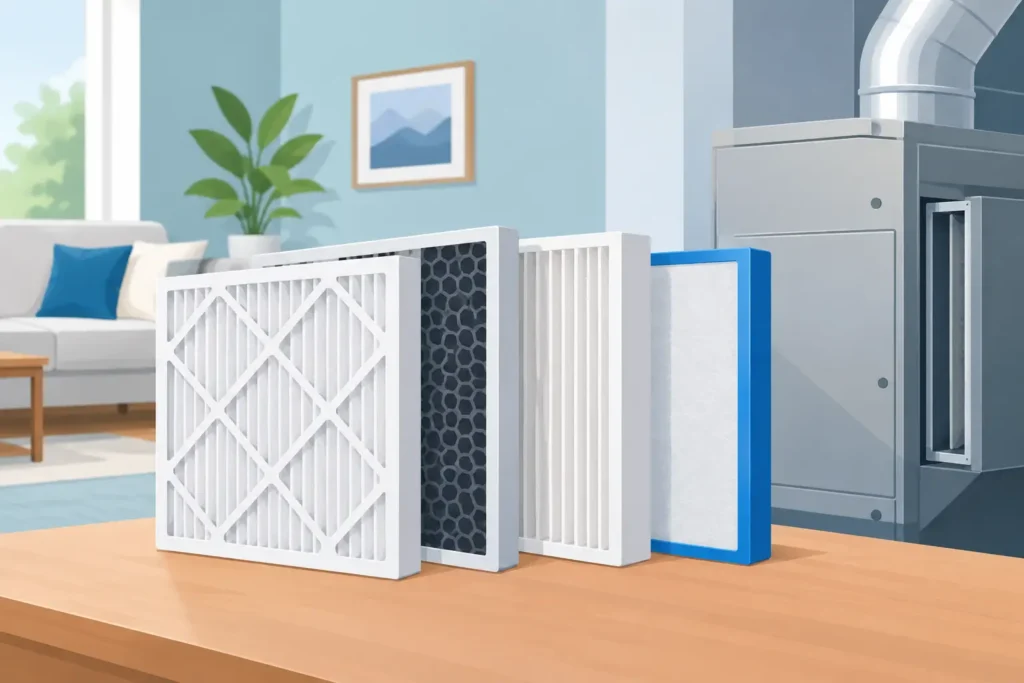
A filter is one of the least expensive parts of your heating and cooling system, but the wrong one can create an expensive problem. A filter that is too restrictive can reduce airflow, raise energy use, and put unnecessary strain on your AC or furnace. One that is too basic may allow more dust, pollen, and airborne particles to circulate through your home. Knowing how to select an HVAC filter helps protect both your comfort and your equipment.
For homeowners and property managers in North Richland Hills and Fort Worth, filter selection matters year-round. North Texas heat puts a heavy demand on air conditioners, while pollen, dust, pet dander, and changing weather can affect indoor air quality in every season. The best filter is not automatically the most expensive one. It is the filter that fits your system correctly and matches your household’s needs.
Start With the Correct HVAC Filter Size
Before looking at brands or ratings, find the size your system requires. Most disposable filters have their nominal size printed along the frame, such as 16 x 20 x 1, 20 x 25 x 1, or 16 x 25 x 4. The final number is the filter depth, and it is just as important as the length and width.
Use the size listed on your existing filter only if it fit properly. If the old filter was bent, loose, or difficult to install, measure the filter slot or ask an HVAC technician to confirm the correct dimensions. Actual filter measurements are often slightly smaller than the printed nominal size, so buying by an exact tape-measure measurement can lead to confusion.
A filter should slide into the return grille or filter cabinet without forcing it. Gaps around the frame allow unfiltered air and dust to bypass the media. A filter that is too large may buckle or restrict airflow. If your home has more than one return grille, check each location. They may not all use the same size or type of filter.
How to Select an HVAC Filter by MERV Rating
MERV stands for Minimum Efficiency Reporting Value. It tells you how effectively a filter captures particles of different sizes. In simple terms, a higher MERV rating catches smaller particles, but it can also create more resistance to airflow.
For many homes, a MERV 8 filter is a dependable starting point. It captures common household dust, lint, pollen, and mold spores while allowing good airflow in most properly maintained residential systems. It is often a practical choice for homes without major allergy or respiratory concerns.
A MERV 11 filter is a common step up for families dealing with pets, heavier dust, seasonal allergies, or more frequent indoor air quality concerns. It can capture finer particles than a MERV 8 filter and may help reduce the amount of dust that settles around the house. However, it should only be used if your system can handle it without airflow problems.
MERV 13 filters capture even smaller particles and are sometimes appropriate for households with stronger air quality needs. They can be helpful in certain homes, but they are not automatically right for every system. Older equipment, undersized return ducts, dirty coils, or weak blower performance can make a high-MERV filter too restrictive. That restriction can contribute to frozen AC coils, reduced cooling, short cycling, and higher utility bills.
For most residential HVAC systems, MERV 8 to MERV 11 offers a sensible balance of filtration and airflow. If someone in the home has asthma, significant allergies, or other respiratory concerns, speak with an HVAC professional before moving to a higher rating. Better filtration may need to be paired with system improvements or a dedicated indoor air quality solution.
Do not choose by MERV alone
A high MERV rating is only one part of the decision. Filter thickness, system design, duct condition, and maintenance all affect performance. A 4-inch or 5-inch media filter, for example, usually has more surface area than a 1-inch filter. That larger surface area can provide effective filtration with less pressure drop and can often last longer between changes.
If your system uses a deeper media cabinet, do not replace it with a thin 1-inch filter just because it is easier to find. The cabinet was designed for a specific filter configuration. Using the wrong depth can leave gaps, reduce filtration, or allow the filter to shift out of place.
Match the Filter to Your Household
Your home life should guide your filter choice. A one-person household with no pets has different needs than a busy home with two dogs, young children, and allergy sufferers. Think about what is actually moving through your air, not just what the filter packaging promises.
A basic pleated filter is usually a good fit for a typical home. Pleated filters generally capture more particles than flat fiberglass filters and provide better protection for HVAC equipment. Fiberglass filters are inexpensive, but they tend to catch less dust and may not offer the level of protection most homeowners want for a central air system.
Homes with pets typically benefit from a quality pleated filter, often in the MERV 8 to MERV 11 range, provided the equipment supports it. Pet hair and dander can load a filter quickly, especially during shedding seasons. The filter may need to be changed more often even if it does not look completely dirty.
For allergy concerns, start by confirming the system is clean and operating properly. A better filter can help, but it will not solve every indoor air issue. Leaky ducts, dusty return grilles, high humidity, dirty evaporator coils, and inadequate ventilation can all affect the air you breathe. In some cases, a whole-home air cleaner, UV treatment, humidity control, or duct repair may be a better investment than simply choosing the highest-rated filter on the shelf.
Commercial properties need the same balance, but on a larger scale. Offices, retail spaces, and rental properties often have greater occupancy, more frequent door traffic, and multiple HVAC units. Property decision-makers should use the filter specifications recommended for each unit and create a regular replacement schedule rather than waiting for comfort complaints.
Check the Airflow Arrow Before Installation
Every HVAC filter has an airflow arrow printed on its frame. That arrow must point toward the equipment and away from the return side of the system. If the filter is installed in a wall or ceiling return grille, the arrow generally points into the duct. If it is installed at the air handler or furnace, the arrow points toward the blower.
Installing a filter backward can reduce its effectiveness and may cause the filter media to sag or fail sooner. It takes only a few seconds to check, and it is one of the easiest ways to avoid a preventable service issue.
Also make sure the filter frame is fully seated. Do not bend the filter to make it fit, and do not run the system without a filter while waiting for a replacement. Operating without one allows dust to collect on the blower, coil, and other components that are much harder and more costly to clean.
Know When to Change Your Filter
There is no single replacement schedule that works for every household. A 1-inch filter commonly needs attention every 30 to 90 days. Homes with pets, smokers, construction dust, frequent system use, or allergy concerns may need changes every 30 days. Thicker media filters may last six months or longer, depending on the product and home conditions.
The calendar is helpful, but your system can also tell you when a filter is overdue. Watch for weaker airflow from supply vents, longer cooling or heating cycles, more dust around the home, unusual whistling at the return grille, or a filter that appears gray and loaded with debris. Do not wait until the filter is completely clogged.
Set a reminder on your phone or write the installation date on the filter frame. This small habit can support better comfort, lower strain on your HVAC system, and fewer surprise breakdowns during a Texas heat wave.
When a Filter Problem Needs Professional Help
If a new filter seems to make airflow noticeably worse, do not keep experimenting with increasingly thinner or cheaper options. The issue may be an undersized return, a dirty indoor coil, a blower problem, damaged ductwork, or an HVAC system that needs maintenance. Likewise, if filters become dirty unusually fast, there may be excess dust entering through duct leaks or return-side gaps.
Malcolm’s HVAC can help homeowners and businesses in North Richland Hills, Fort Worth, and nearby communities identify the right filter setup for their equipment and indoor air goals. A quick professional evaluation can prevent the common mistake of treating a system problem as a filter problem.
Choose a properly sized, well-fitted filter with a MERV rating your equipment can support, then replace it on a schedule that matches your home. That straightforward approach gives your family cleaner air and gives your heating and cooling system the airflow it needs to do its job.