
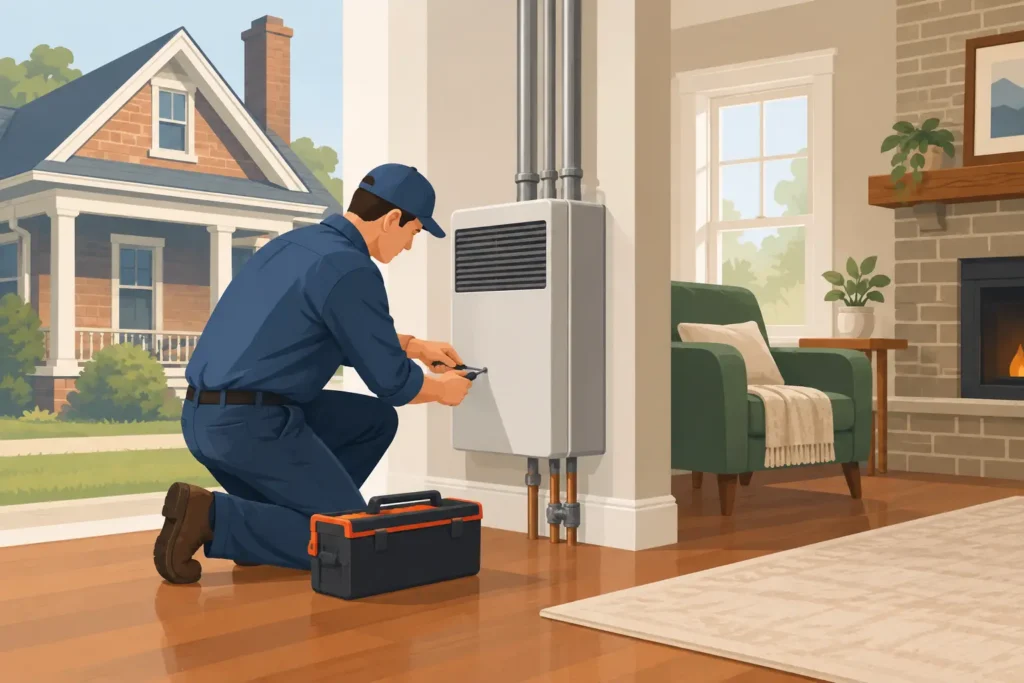
Older homes across North Richland Hills and Fort Worth have character that new construction cannot copy, but they can also hide heating challenges behind walls, attics, and crawl spaces. Heater installation for older homes is not simply a matter of replacing one unit with another. The right system has to work with the home’s ductwork, electrical capacity, insulation, layout, and safety requirements so your family gets reliable warmth without unnecessary energy costs.
A professional evaluation before installation can prevent the most common mistake: choosing equipment based only on the square footage listed on a real estate page. A home built decades ago may have additions, drafty rooms, undersized ducts, or insulation levels that change what it needs from a heating system.
Start With the Home, Not the Heater
A heater should be sized for how your house actually performs on a cold North Texas night. Oversized equipment can heat rooms quickly but cycle on and off too often. That short cycling wastes energy, creates uneven temperatures, and can add wear to major components. An undersized system may run for long stretches without keeping up when temperatures dip.
A qualified HVAC technician uses a load calculation to look beyond square footage. Window type and direction, ceiling height, insulation, air leakage, foundation type, room additions, and the number of occupants all affect the result. This step is especially valuable in older homes, where two rooms with the same dimensions may hold heat very differently.
If one bedroom stays cold while the living room gets too warm, the answer may not be a bigger furnace. It could be a duct issue, missing return air, poor attic insulation, or an air leak around older windows and doors. Identifying the cause first helps you invest in the right fix.
Check Ductwork Before Heater Installation for Older Homes
Many older homes in the Fort Worth area have ductwork that was designed for equipment with different airflow requirements. Metal ducts may be undersized, flex duct may be sagging or damaged, and connections in the attic can leak heated air before it reaches the rooms that need it.
During a replacement project, the duct system should be inspected for condition, sizing, insulation, and leakage. A new high-efficiency heater cannot deliver its full benefit through poorly performing ducts. In fact, restricted airflow can shorten equipment life and lead to comfort complaints after what should have been a major upgrade.
Duct repairs do not always mean replacing everything. Sometimes the practical solution is sealing accessible joints, correcting a crushed run, adding insulation, or improving return-air pathways. In other homes, a larger duct modification is the sensible choice because it protects the new system and improves comfort throughout the house.
Homes without existing ducts have different options. A ductless mini-split heat pump can heat individual rooms or additions without opening every wall and ceiling. This approach can be a strong fit for converted garages, enclosed porches, guest rooms, and older houses with limited attic access. It may not be the best single solution for every larger home, so the layout and the number of indoor units deserve careful consideration.
Electrical, Gas, and Venting Requirements Matter
Older electrical panels were not always built to support modern HVAC equipment alongside today’s appliances, electronics, and electric vehicle chargers. If you are considering an electric furnace or heat pump, the technician should verify that the panel has adequate capacity and that the required circuits can be installed safely. An electrical upgrade can add cost, but ignoring capacity limitations is not an option.
For gas furnace replacement, the gas line, shutoff, combustion air, venting route, and flue materials all need review. High-efficiency condensing furnaces use different venting methods than many older furnaces. They also produce condensate that must be drained properly. A system that looked simple to replace can require changes to meet current installation and safety standards.
This is why a like-for-like quote is not always the whole story. Upfront pricing should account for the work required to install the system correctly, not just the cabinet sitting in the utility closet or attic. Clear explanations help homeowners compare options without surprises during installation.
Choose the Heating System That Matches Your Goals
There is no one best heater for every older home. Fuel availability, monthly budget, existing infrastructure, comfort preferences, and long-term plans all play a role.
A gas furnace remains a practical and familiar choice for many local homeowners with natural gas service. It provides strong heat output and may allow a more straightforward replacement when compatible gas and venting infrastructure already exists. Efficiency ratings and variable-speed blower options can improve comfort, but the equipment still needs proper duct design and maintenance.
A heat pump offers both heating and cooling in one system. Modern heat pumps perform well in North Texas winters and can be an efficient option for homes that rely heavily on air conditioning for much of the year. Some homeowners choose a dual-fuel setup that pairs a heat pump with a gas furnace. The heat pump handles milder weather efficiently, while the furnace takes over when conditions call for stronger heat.
Electric resistance heat can be appropriate in certain situations, particularly when gas is unavailable or as supplemental heat. However, operating costs can be higher than other options depending on electricity rates and the home’s insulation. The lowest installation price is not always the lowest cost over the life of the system.
Plan for Efficiency Beyond the Equipment Rating
A high efficiency rating is useful, but it does not erase heat loss from an older house. Before or alongside installation, consider the improvements that help the system do its job: attic insulation, weatherstripping, sealed penetrations around plumbing and wiring, properly functioning fireplace dampers, and window repairs.
These upgrades can reduce drafts and improve room-to-room comfort. They may also allow for more appropriately sized HVAC equipment. However, do not assume every older window must be replaced before installing a heater. A trusted technician can help identify the upgrades most likely to make a measurable difference, rather than pushing work that does not fit your priorities or budget.
Indoor air quality should be part of the conversation, too. Older homes can have dust, pet dander, attic leakage, or humidity concerns that affect comfort. Better filtration, duct sealing, and appropriate humidity control may be worthwhile additions, especially for households with allergies or respiratory sensitivities.
What to Expect During Installation
A well-planned installation begins with an in-home assessment and a written explanation of the recommended equipment and required modifications. Before work starts, ask how the old unit will be removed, whether permits are needed, what duct or electrical work is included, and how the new system will be tested.
On installation day, technicians should protect work areas, remove the old equipment safely, install the new system according to manufacturer requirements, and verify airflow, temperature rise, drainage, controls, and safety features. For gas equipment, combustion and venting checks are essential. For heat pumps, refrigerant operation and thermostat setup should be verified in both heating and cooling modes.
Before the crew leaves, you should understand how to use the thermostat, where the filter is located, how often it should be changed, and what maintenance the system needs. Keep the installation paperwork, model numbers, and warranty information in a safe place. Scheduling seasonal maintenance is one of the best ways to protect a new heating investment.
Budgeting for an Older Home Upgrade
The final cost of heater replacement can vary widely because the installation conditions matter as much as the equipment itself. Duct repairs, electrical work, venting changes, thermostat upgrades, permits, and accessibility can all affect the price. While a repair may make sense for a newer system with a limited issue, repeated repairs on an aging heater can become money spent delaying an inevitable replacement.
Ask for options at more than one efficiency and feature level. A straightforward system may be the right answer for a homeowner planning to move soon, while a family staying for years may benefit from quieter operation, improved efficiency, or a dual-fuel design. Financing can also make a necessary replacement more manageable without settling for a system that does not fit the home.
For homeowners in North Richland Hills, Haltom City, Richland Hills, Watauga, Bedford, Euless, Hurst, and Fort Worth, Malcolm’s HVAC can assess the whole heating picture, explain the trade-offs clearly, and provide dependable installation recommendations. The best next step is a professional home evaluation that treats your older house as the individual home it is, so the new heater delivers comfort you can feel when you need it most.