
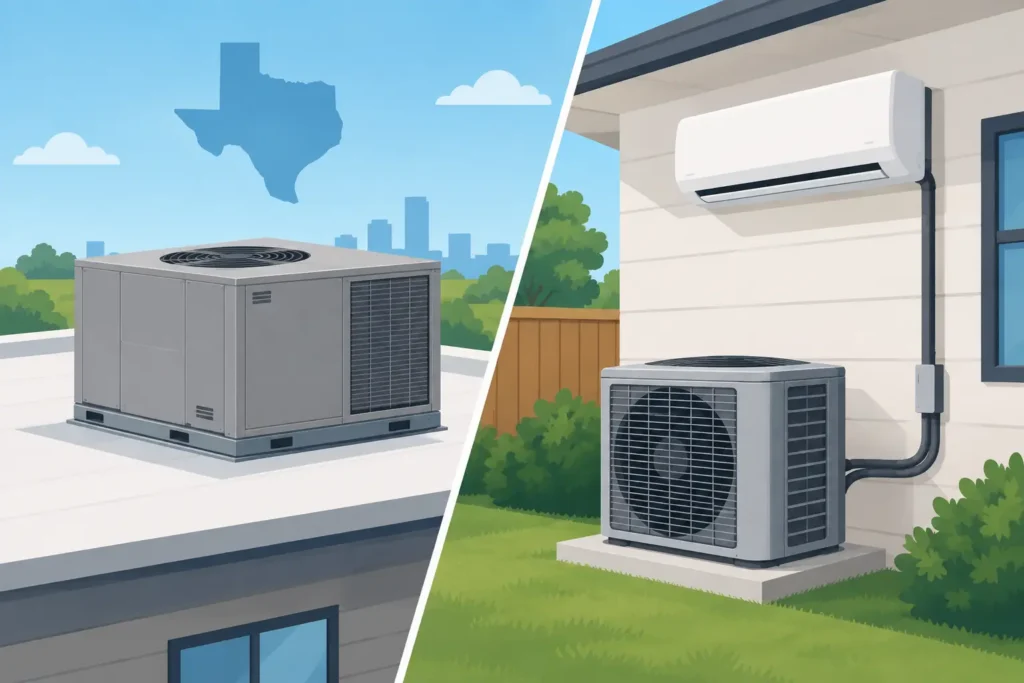
A failed air conditioner in a North Texas summer leaves little room for guesswork. When it is time to replace the equipment, the package unit versus split system decision affects where the equipment sits, how service is performed, what installation may cost, and how your home feels through every season. Neither option is automatically right for every property. The best choice comes down to your building layout, existing ductwork, budget, comfort goals, and long-term service needs.
For homeowners and property managers in North Richland Hills, Fort Worth, and nearby communities, a clear explanation matters. You should be able to compare your options without pressure or confusing technical language.
What Is a Package Unit?
A package unit combines the main heating and cooling components in one outdoor cabinet. Depending on the model, that cabinet may include an air conditioner and gas furnace, a heat pump and air handler, or an all-electric heating and cooling setup. It is usually installed on a concrete pad beside the building or on the roof of a commercial property.
Conditioned air travels from the outdoor unit through ductwork and into the building. Since the major components are housed together, there is no separate indoor furnace, air handler, or evaporator coil taking up room in a closet, attic, garage, or utility area.
Package units are common in homes with limited indoor mechanical space and in commercial buildings with rooftop HVAC equipment. They can be a practical fit for certain ranch-style homes, mobile homes, additions, small offices, retail spaces, and properties designed around a rooftop system.
What Is a Split System?
A split system separates the equipment into indoor and outdoor sections. The outdoor condenser or heat pump handles heat transfer, while the indoor portion includes an evaporator coil and either a furnace or air handler. Refrigerant lines connect the two components.
This is the setup many North Texas homeowners recognize: an outdoor AC unit beside the house and a furnace or air handler in the attic, closet, garage, or dedicated utility space. A heat pump split system follows a similar layout, with the heat pump providing both cooling and heating.
Because the equipment is divided, a split system can offer more flexibility in system design. It can also pair with a high-efficiency furnace, variable-speed air handler, upgraded thermostat, zoning equipment, or indoor air quality accessories when the home and budget call for them.
Package Unit Versus Split System: The Main Differences
The most obvious difference is location. A package unit keeps nearly all major equipment outdoors, while a split system places some equipment inside the building. That distinction affects installation, service access, noise, usable space, and exposure to weather.
With a package unit, technicians can often access the primary components from one location. That can simplify routine inspections, especially when the unit sits at ground level with proper clearance. However, an outdoor cabinet is exposed year-round to sun, heavy rain, wind, debris, and the occasional North Texas hailstorm. Roof-mounted units also require safe roof access and can add labor to repairs or replacement.
A split system protects its indoor components from outdoor weather, but it requires adequate indoor space and a serviceable installation location. An attic furnace can work well, for example, but cramped attics, extreme attic heat, or difficult access can make maintenance more involved. The outdoor condenser still needs protection from damage, good airflow, and regular cleaning.
Cost Depends on More Than the Equipment Price
It is tempting to compare replacement quotes by looking only at the price of the new unit. The equipment is important, but installation conditions can change the total investment considerably.
A package unit may be a cost-effective replacement when the property already has a compatible package system, accessible ducts, and a suitable pad or roof curb. Keeping the same equipment style can limit changes to duct connections, electrical work, gas piping, or the roof opening.
A split system may cost more or less depending on what is already in place. Replacing an existing split system with a similar configuration is often straightforward. Changing from a package unit to a split system, or the other way around, can require significant modifications. The project may involve duct redesign, structural work, new refrigerant line routing, electrical upgrades, indoor equipment space, and permits.
Efficiency ratings can also affect the upfront price. Higher-efficiency equipment generally costs more initially, but it may reduce energy use over time when properly sized and installed. The right question is not simply, “Which system is cheapest?” It is, “Which system gives this property dependable comfort and reasonable operating costs for the years ahead?”
Which Option Is Better for North Texas Heat?
Both system types can cool a Texas home effectively when they are correctly sized, installed, and maintained. The cabinet style alone does not determine whether you will feel comfortable in July or whether your electric bill will be manageable.
Proper sizing is especially important in the Fort Worth area. An oversized system may cool quickly but cycle off too soon, leaving humidity control and even temperatures behind. An undersized system may run for long periods without keeping up during severe heat. A qualified contractor should evaluate the home or building, insulation, windows, sun exposure, duct condition, occupancy, and airflow before recommending capacity.
In many homes, duct problems create more comfort trouble than the choice between a package or split system. Leaky attic ducts, poor return-air pathways, crushed flex duct, and unbalanced rooms can waste conditioned air and put extra strain on either type of equipment. Addressing those concerns during replacement can make a noticeable difference.
When a Package Unit Makes Sense
A package unit is often worth considering when indoor space is limited or the property already uses an outdoor or rooftop package system. It can also be the logical choice for a commercial building where rooftop units keep equipment away from customer and work areas.
For a homeowner, the biggest benefit may be freeing up an indoor closet, garage corner, or attic space. For a property manager, having the major equipment in one exterior location can simplify planning for service, provided access is safe and the unit is maintained consistently.
That said, a package unit is not automatically the better choice just because it looks compact. Ground-level placement needs a stable pad, drainage, airflow clearance, and protection from lawn equipment. Rooftop placement needs a sound curb, secure access, and attention to roof condition around the unit.
When a Split System Makes Sense
A split system is often a strong choice for homes that already have an indoor furnace or air handler and an outdoor condenser. It is also a good fit when you want more options for efficiency, heating performance, filtration, humidity management, or indoor air quality upgrades.
For example, a homeowner replacing an aging furnace and AC may choose a matched split system with a variable-speed blower for more consistent airflow. A heat pump split system may be appealing for households that want efficient electric heating during much of the year, while retaining supplemental heat for colder weather if needed.
The trade-off is space and access. Before selecting this option, make sure the indoor equipment location is large enough, properly drained, ventilated where required, and reachable for future maintenance. A lower equipment price does not help if routine service becomes difficult or if attic access creates unnecessary labor costs over the system’s life.
Maintenance Is Part of the Decision
Whether you choose a package unit or split system, regular maintenance helps protect performance, efficiency, and equipment life. Filters should be changed on schedule, drains should be kept clear, electrical connections and refrigerant performance should be checked, and coils should be cleaned when needed.
Package units need particular attention to outdoor debris, cabinet condition, weather exposure, and airflow around the unit. Split systems need attention at both the indoor and outdoor components, including the condensate drain, blower area, evaporator coil, furnace or air handler, and outdoor condenser.
For commercial properties, preventive maintenance can be especially valuable. A system failure can interrupt employees, customers, tenants, inventory conditions, and daily operations. Planning maintenance before peak cooling season gives decision-makers more time to address worn parts rather than reacting to an unexpected shutdown.
Make the Choice Based on Your Property, Not a Rule of Thumb
The right system starts with an honest assessment of what your building needs. A good HVAC recommendation should account for equipment age, repair history, duct condition, indoor space, accessibility, energy goals, and the scope of installation work. It should also include clear pricing and an explanation of what is and is not included.
If you are weighing a package unit versus split system in North Richland Hills or the greater Fort Worth area, ask for a property-specific evaluation rather than a one-size-fits-all answer. Malcolm’s HVAC can help you compare practical options, understand the work involved, and plan a replacement that supports dependable comfort when Texas weather is at its toughest.