
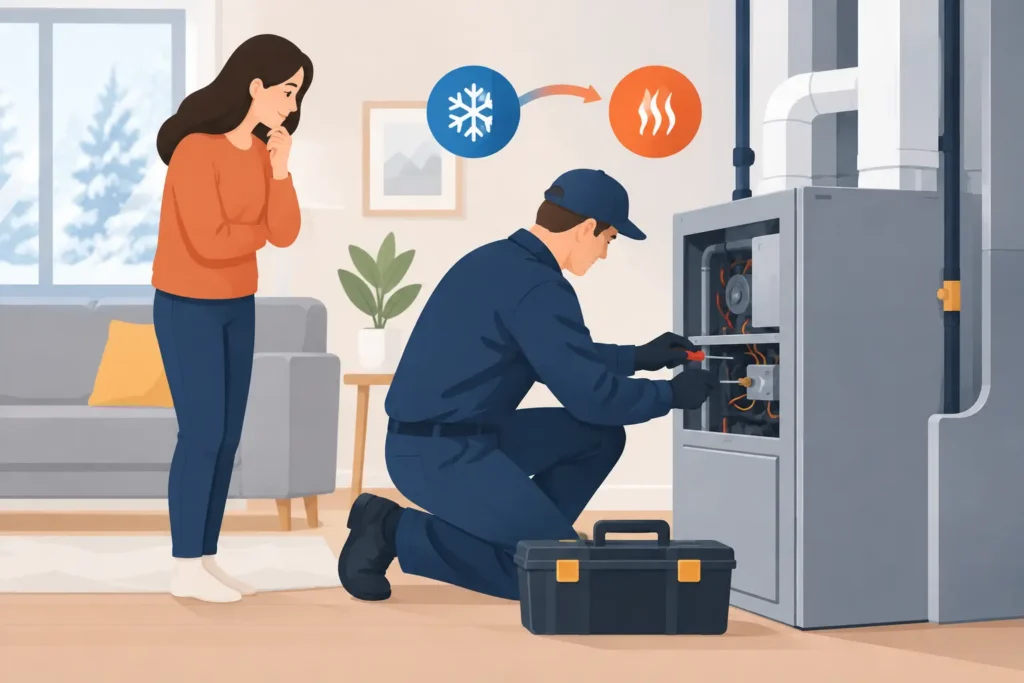
A heater can stop working at the worst possible time: during a cold North Texas night, before guests arrive, or when a business needs to open in the morning. When your system will not produce heat, emergency heater service helps you move from uncertainty to a safe, practical solution. The goal is not just to get warm again. It is to identify the problem, protect your property, and avoid a repair that turns into a bigger expense.
For homeowners and property managers in North Richland Hills, Fort Worth, Haltom City, Hurst, Bedford, Euless, Watauga, and nearby communities, a fast response matters. Still, not every heater issue requires the same next step. Knowing what to check, when to turn the system off, and when to call a qualified technician can make a stressful situation much easier to manage.
When Do You Need Emergency Heater Service?
A heater that will not start is frustrating, but it becomes urgent when it affects safety, health, or the building itself. If temperatures are dropping and there is no dependable source of heat, families with young children, older adults, pets, or anyone with health concerns should treat the issue seriously. The same is true for commercial properties where cold indoor conditions can affect employees, customers, inventory, or plumbing.
Call for emergency heater service right away if you smell gas, notice smoke, see sparks, hear loud banging or screeching, or suspect a carbon monoxide problem. Leave the building if you smell gas or a carbon monoxide alarm sounds, then contact emergency services or your gas utility from a safe location. Do not try to restart the furnace, light a pilot, or troubleshoot electrical components in those situations.
Other problems may not be dangerous, but still deserve prompt professional attention. These include a furnace that blows cold air, cycles on and off repeatedly, trips the breaker, leaks water around a heat pump, or leaves parts of the building much colder than others. A system that runs constantly without reaching the thermostat setting can also signal a repair need, especially when it is driving up energy use.
What to Do Before the Technician Arrives
A few safe checks can sometimes reveal a simple issue and can also give your HVAC technician useful information. Start with the thermostat. Make sure it is set to Heat, the temperature is set higher than the current room temperature, and the batteries are not dead. If your thermostat has a schedule or an app connection, confirm that it has not switched to an energy-saving setting by mistake.
Next, check the air filter. A severely clogged filter can restrict airflow and cause a furnace to overheat and shut down. If the filter is dirty and you have the correct replacement, install a clean one. Do not run the system without a filter, since that can allow dust and debris into sensitive equipment.
You can also look at the electrical panel for a tripped breaker and make sure the furnace switch is on. For a gas furnace, check whether the gas supply valve appears to be open, but do not adjust gas lines or attempt repairs yourself. If your furnace has a visible error code, take a photo of the display or write down the blinking light pattern. That detail can help speed up diagnosis.
Avoid repeatedly turning the system off and on. Constant reset attempts can put additional strain on equipment and may hide a problem that needs attention. If there is any burning smell, unusual noise, water near electrical components, or concern about gas, turn the system off if it is safe to do so and wait for professional guidance.
Common Reasons a Heater Stops Working
Heating systems fail for many reasons, and the right repair depends on the equipment and the symptoms. A furnace may have an ignition failure, a faulty flame sensor, a worn blower motor, a bad capacitor, or a control board issue. A heat pump may struggle because of a defrost problem, refrigerant issue, outdoor unit malfunction, or damaged electrical component.
Sometimes the problem starts with maintenance that was postponed. Dirty filters, clogged drain lines, worn belts, loose electrical connections, and neglected burners can lead to reduced performance over time. Other failures are simply a result of age. As parts wear down, an older furnace can become less reliable and more costly to keep repairing.
That does not mean replacement is always the answer. A quality diagnostic should separate a repairable failure from a system that is no longer a smart long-term investment. The technician should explain what failed, why it matters, what the repair involves, and what your options look like before work begins.
Furnace Problems and Heat Pump Problems Are Different
Many homes in the Fort Worth area use gas furnaces, while others rely on heat pumps or dual-fuel systems. The symptoms can look similar, but the repair approach is different. A gas furnace involves combustion, venting, ignition, and safety controls. A heat pump moves heat from outside air and relies on refrigerant, electrical components, airflow, and defrost operation.
This matters because a heat pump may produce air that feels less hot than furnace air while still operating normally. On a cold day, however, it should still maintain a comfortable indoor temperature. If it cannot keep up, runs nonstop, or has heavy ice buildup, it needs professional evaluation.
What a Professional Emergency Heating Visit Should Include
When heat is out, homeowners deserve more than a quick guess. A proper service visit begins with listening to what happened: when the issue started, whether the system made unusual noises, whether it has failed before, and what steps have already been taken. From there, the technician should inspect the equipment, test key components, verify safe operation, and identify the root cause.
For a furnace, that may include checking the filter, blower, ignition sequence, flame sensor, pressure switch, burners, venting, electrical connections, and safety controls. For a heat pump, the inspection may include the thermostat, indoor and outdoor units, capacitors, contactors, defrost controls, refrigerant-related performance, and airflow.
Upfront communication is especially valuable during an urgent call. You should know the recommended repair, expected cost, and whether the repair is likely to restore dependable operation. If replacement is worth considering, the conversation should be clear and pressure-free. In some cases, repairing a newer system makes the most financial sense. In others, repeated breakdowns, poor efficiency, or expensive major components can make a replacement a better use of your budget.
Staying Safe and Comfortable While You Wait
If your heater is down but there is no immediate safety hazard, focus on holding heat inside the home. Close curtains and blinds, keep exterior doors shut, and gather household members in one or two occupied rooms rather than trying to heat the entire house with temporary solutions. Dress in layers and use blankets as needed.
Use portable electric space heaters carefully. Keep them on a flat, stable surface, at least three feet from bedding, curtains, furniture, and other flammable materials. Plug them directly into a wall outlet, not an extension cord or power strip, and never leave one running unattended. Do not use an oven, stove, grill, or fuel-burning appliance as a heat source indoors.
For businesses, consider whether certain areas can be temporarily closed, whether sensitive equipment needs protection, and whether water lines in colder spaces need attention. A property manager may need a different plan than a homeowner, particularly in larger buildings with multiple tenants or vulnerable systems.
Preventing the Next Heating Emergency
The best time to address a heating problem is before the first cold snap exposes it. Seasonal maintenance gives a technician the chance to find worn parts, clean critical components, check airflow, and verify that the system is operating safely. It also gives you a clearer picture of your heater’s condition before you are forced to make a decision under pressure.
Homeowners can help between visits by changing filters regularly, keeping supply and return vents open, clearing storage away from indoor equipment, and paying attention to small changes in performance. A new rattle, delayed startup, uneven heating, or an unexplained jump in utility costs is worth addressing early.
Malcolm’s HVAC provides practical heating support for homeowners and businesses across North Richland Hills and the greater Fort Worth area, with urgent assistance available when comfort cannot wait. When your heater starts acting differently, an early call can often protect your comfort, your equipment, and your peace of mind before a cold night turns into an emergency.