
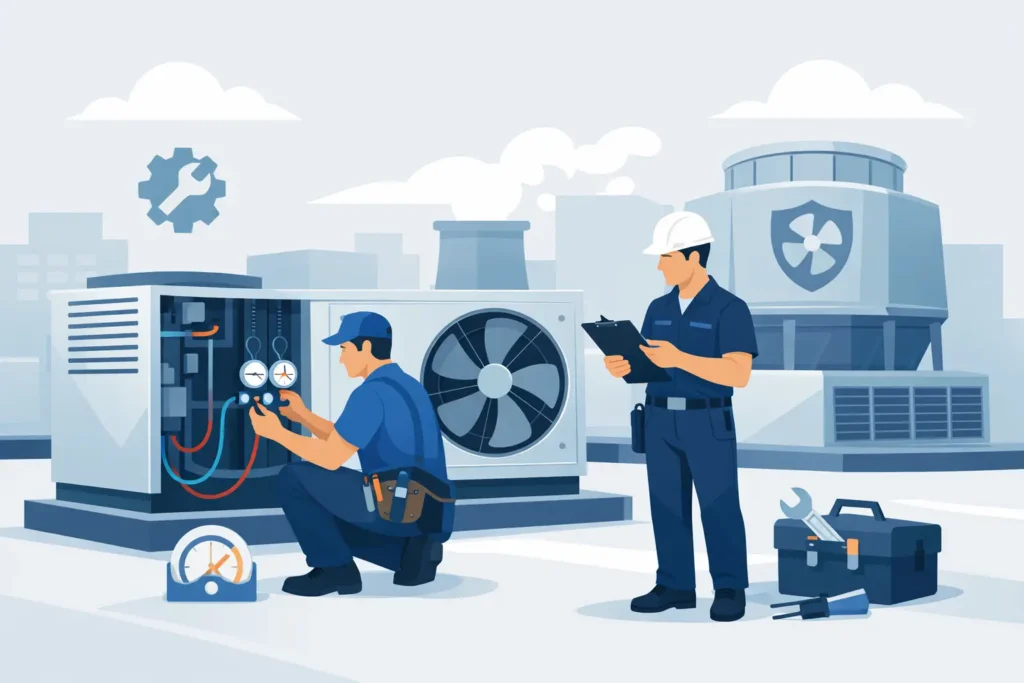
A failed rooftop unit on a hot Fort Worth afternoon does more than make a building uncomfortable. It can send customers home, slow down employees, affect inventory, and force a business owner or property manager into an expensive emergency decision. Commercial HVAC maintenance services are designed to prevent that situation by finding small issues before they become costly disruptions.
For businesses in North Richland Hills, Fort Worth, Haltom City, Hurst, Bedford, Euless, Watauga, and nearby communities, planned maintenance is one of the most practical ways to protect heating and cooling equipment. The goal is not to promise that a system will never need repair. Every system has wear items, and Texas weather puts serious demand on commercial equipment. The goal is to reduce surprises, improve day-to-day performance, and give you a clear picture of what your equipment needs next.
Why Commercial HVAC Maintenance Matters
Commercial heating and cooling systems often run longer hours and serve more people than residential equipment. A small office may rely on one or two systems, while a restaurant, retail space, medical office, warehouse, or multi-tenant property may have several units with different schedules and needs. When maintenance is delayed, those systems have to work harder to produce the same level of comfort.
Dirty coils restrict heat transfer. Clogged filters limit airflow. Loose electrical connections can create safety concerns or damage components. Low refrigerant can point to a leak that needs attention. None of these conditions is unusual, but they become more expensive when ignored through a long cooling season.
A properly maintained system can also help manage operating costs. Maintenance will not turn outdated equipment into a high-efficiency new system, and it cannot solve problems caused by poor building insulation or undersized equipment. It can, however, help your existing system operate closer to the way it was designed to operate. That means steadier temperatures, fewer unnecessary runtime hours, and less strain on key components.
What Commercial HVAC Maintenance Services Should Include
A useful maintenance visit goes beyond changing a filter and looking for obvious damage. A technician should inspect the equipment, verify operation, clean components that affect performance, and identify concerns in plain language.
For cooling equipment, service commonly includes checking refrigerant performance, inspecting coils, clearing condensate drains, testing capacitors and contactors, verifying electrical connections, examining belts where applicable, and confirming that the thermostat or building controls are responding correctly. Airflow deserves close attention because it affects comfort, efficiency, humidity control, and equipment life.
Heating maintenance has its own priorities. Technicians inspect burners, heat exchangers, ignition components, gas connections, safety controls, venting, and carbon monoxide risks on applicable equipment. Heat pumps require attention in both heating and cooling modes, especially because they work year-round in North Texas.
The condition of filters is also more significant in commercial buildings than many people realize. A filter that is too dirty restricts airflow. A filter with the wrong rating may not provide the air quality you need, while an overly restrictive filter can create airflow problems if the system is not designed for it. The right recommendation depends on the equipment, the building, occupancy, and concerns such as dust, odors, allergens, or airborne particles.
Maintenance Is Also a Planning Tool
The best service visits give decision-makers information they can use. If a blower motor is wearing out, a drain line repeatedly clogs, or a compressor is drawing abnormal amperage, it is better to learn that during a scheduled visit than during a crowded business day.
This does not mean every noted issue requires an immediate replacement. A dependable HVAC contractor should explain the urgency, expected consequences of waiting, available repair options, and whether replacement is becoming the better financial choice. That honest discussion helps owners plan capital expenses instead of reacting under pressure.
How Often Should a Commercial System Be Serviced?
Most commercial properties benefit from maintenance at least twice a year: once before the summer cooling season and once before heating demand increases. In the Fort Worth area, spring AC service is especially valuable because air conditioners may be pushed hard for months at a time.
Some properties need more frequent visits. Restaurants, salons, medical facilities, gyms, server rooms, workshops, and buildings with high dust levels may require additional filter changes and closer monitoring. Systems that run around the clock, equipment exposed to grease or heavy debris, and older units with recurring concerns also need a schedule tailored to their actual workload.
It depends on the building. A lightly occupied office with newer equipment has different needs than a busy retail store with doors opening all day. The right maintenance plan should reflect your equipment, business hours, indoor air quality goals, and budget rather than following a one-size-fits-all checklist.
Warning Signs Between Scheduled Visits
Maintenance lowers risk, but building managers should still pay attention to changes in performance. A service call is worth scheduling when certain problems show up repeatedly or suddenly.
Watch for uneven temperatures between rooms, rooms that never reach the thermostat setting, unusual noises, water around indoor equipment, musty odors, rising utility bills without an obvious cause, frequent breaker trips, or a system that cycles on and off too often. Employees and customers may also notice declining comfort before a major equipment failure becomes visible.
Do not assume a thermostat adjustment will solve a persistent comfort issue. The cause could be airflow, ductwork, controls, refrigerant, electrical components, building conditions, or an aging unit that is no longer keeping up. A proper diagnosis protects you from spending money on the wrong fix.
Repair or Replacement: When Maintenance Reveals Bigger Problems
Preventive service sometimes uncovers a difficult but necessary conversation: whether to continue repairing a system or begin planning a replacement. There is no single age when every commercial HVAC unit should be replaced. Equipment condition, repair history, energy use, parts availability, and the demands of the building all matter.
If a repair is minor and the unit is otherwise dependable, repair is usually the sensible choice. If the system has repeated breakdowns, costly compressor or heat exchanger concerns, obsolete refrigerant issues, or cannot maintain comfort during peak weather, replacement may provide better long-term value.
A replacement decision should account for more than the equipment price. Proper sizing, installation quality, controls, ductwork condition, ventilation needs, and available financing can all affect the real outcome. Installing an oversized or undersized system can create comfort and efficiency problems even when the equipment itself is high quality.
Choosing a Local Commercial HVAC Partner
Commercial clients need more than a technician who can respond when something breaks. They need a service partner who communicates clearly, respects the operating needs of the property, and provides recommendations without pressure.
Look for upfront pricing, detailed explanations, reliable scheduling, and a contractor that can handle maintenance, repairs, indoor air quality needs, and replacement when needed. Fast response matters when comfort affects employees, customers, tenants, or sensitive equipment, but careful diagnosis matters just as much.
Malcolm’s HVAC serves commercial property decision-makers throughout North Richland Hills and the greater Fort Worth area with practical maintenance and repair support. A local team understands how quickly North Texas heat can turn a minor issue into an urgent call and can help you build a plan around your building’s real needs.
Start Before the Next Heat Wave
The easiest time to schedule service is before your system gives you a reason to panic. A planned inspection gives your business time to address worn parts, improve airflow, review equipment condition, and make informed choices without the pressure of a shutdown. For a property that depends on reliable comfort, that preparation is money well spent.