
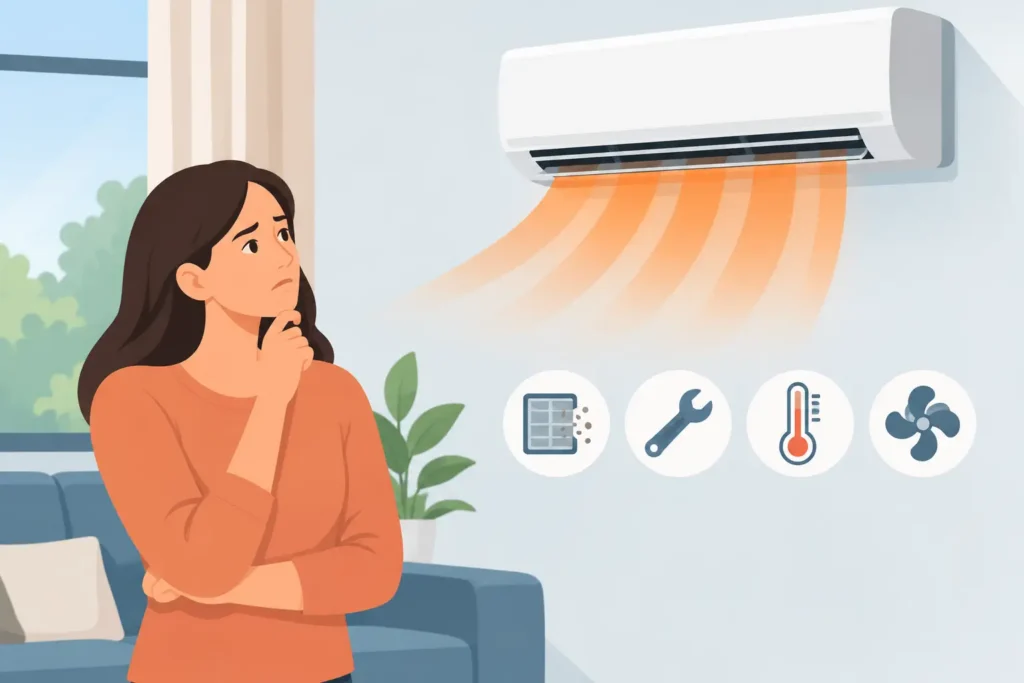
A North Texas AC can feel fine in the morning and suddenly start pushing warm air by midafternoon. When that happens, the question is usually immediate: why AC blows warm when the thermostat is set to cool? The answer may be simple, such as a thermostat setting or clogged air filter, but it can also point to a repair that needs prompt attention. A few safe checks can help you understand what is happening and when it is time to call a qualified HVAC technician.
Start With the Settings and Airflow
Before assuming the system has failed, check the thermostat. It should be set to Cool, with the temperature set several degrees below the current room temperature. Also check the fan setting. If it is set to On, the indoor blower will run continuously, even when the outdoor AC is not actively cooling. Between cooling cycles, that blower may circulate room-temperature air that feels warm at the vents.
Switch the fan setting to Auto and give the system 10 to 15 minutes to respond. If cool air returns, the issue may have been the fan setting rather than the air conditioner itself.
Next, inspect the return air filter. A heavily clogged filter restricts airflow, making it harder for the system to move heat out of your home. In severe cases, restricted airflow can cause the indoor evaporator coil to freeze. Once the coil is covered in ice, air may still come through the vents, but it will not be properly cooled.
If the filter is visibly gray, packed with dust, or overdue for replacement, install the correct size and type of new filter. Avoid using an overly restrictive filter if your system was not designed for it. High-filtration options can be useful for indoor air quality, but they need to match the equipment’s airflow requirements.
Why an AC Blows Warm: Common Mechanical Causes
If the settings are correct and the filter is clean, the problem may be within the cooling system. Air conditioners do not create cold air. They remove heat from indoor air and release it outside. A problem anywhere in that process can leave you with warm air indoors.
Low Refrigerant From a Leak
Refrigerant carries heat between the indoor and outdoor portions of the system. If there is a leak, the system cannot absorb and transfer enough heat to cool your home effectively. You may notice longer run times, rising indoor temperatures, ice on the refrigerant line, or air that is only slightly cool before it becomes warm.
Refrigerant does not get used up like fuel. If your AC is low, it usually has a leak that must be found and repaired. Adding refrigerant without addressing the source may offer a short-term improvement, but it does not solve the underlying problem. Refrigerant work should always be handled by a licensed HVAC professional.
A Dirty Outdoor Condenser Coil
The outdoor unit needs open airflow to release heat. In Fort Worth-area neighborhoods, grass clippings, cottonwood, dust, leaves, and lawn debris can collect on the condenser coil and around the unit. When that heat cannot escape, the system works harder and may eventually deliver warm air inside.
Turn off power to the unit before clearing loose debris from around it. Keep plants and stored items at least a couple of feet away so the unit can breathe. Do not use a pressure washer or bend the delicate coil fins. A technician can safely clean the coil during routine AC maintenance.
A Failed Capacitor, Contactor, or Compressor
The outdoor unit contains electrical and mechanical components that start and operate the compressor and fan. A worn capacitor or contactor may keep the outdoor unit from starting correctly. The indoor blower can still run, making it seem as though the AC is working, but no cooling is taking place.
A compressor issue is more serious and can be costly, especially on an older system. The right repair depends on the equipment’s age, condition, warranty status, and the extent of the damage. A dependable technician should explain the findings clearly and help you compare repair and replacement options without pressure.
Frozen Evaporator Coil
Ice on the indoor coil is a symptom, not the real diagnosis. It can be caused by a dirty filter, low refrigerant, a blower problem, or blocked ductwork. Continuing to run the AC while it is frozen can strain the compressor and create water damage when the ice melts.
If you see ice on the insulated refrigerant line near the indoor equipment or notice water around the air handler, turn the cooling mode off. Set the fan to On to help thaw the coil, then schedule service. Do not chip ice away or open equipment panels yourself.
Check Whether the Outdoor Unit Is Running
With the thermostat calling for cooling, listen for the outdoor unit. You should generally hear the fan and compressor operating outside after a short delay. If the indoor vents are blowing but the outdoor unit is silent, the problem could involve a tripped breaker, disconnect switch, capacitor, contactor, wiring issue, or another electrical fault.
You can check your electrical panel for a tripped AC breaker and reset it once if it has clearly moved to the middle position. If it trips again, leave it off and call for service. Repeated breaker trips are not a nuisance to work around. They are a warning that the system may have an electrical or mechanical problem.
Also check the outdoor disconnect box near the condenser only if you know it has not been switched off. Beyond these basic observations, electrical diagnosis should be left to a professional. HVAC equipment uses high voltage, and a quick-looking fix can become an expensive or unsafe mistake.
Warm Air From Every Vent vs. One Room
The location of the problem matters. If every vent in the home is blowing warm air, the issue is more likely related to the thermostat, refrigerant, outdoor unit, or central equipment. If one room is warm while the rest of the house cools normally, look first at airflow and distribution.
A closed or blocked supply vent, furniture over a return grille, leaking ductwork, poor insulation, or an undersized system can affect one area more than others. Upstairs rooms and west-facing rooms often run warmer during Texas summers because of sun exposure and heat rising through the home. That does not always mean the AC is broken, but a persistent comfort imbalance deserves an assessment.
For commercial properties, warm zones can also result from thermostat placement, occupancy changes, server equipment, rooftop unit issues, or ductwork that no longer matches the layout. The best solution depends on the building and the reason the load changed.
When to Call for AC Repair
Call for service promptly if the AC is blowing warm air after you have checked the thermostat and filter, or if you notice ice, water leaks, burning smells, unusual noises, or a breaker that trips again. A system that runs continuously without lowering the indoor temperature should also be inspected. Waiting through a North Richland Hills heat wave can turn a smaller repair into more strain on the equipment.
At Malcolm’s HVAC, the goal is to identify the cause, explain the repair in plain language, and provide upfront options that fit the condition of your system. Sometimes that means a straightforward repair. Other times, especially with an aging unit facing major compressor or refrigerant problems, replacement and financing may be worth considering for better reliability and efficiency.
Prevent Warm-Air Problems Before Summer Peaks
Most unexpected cooling failures have warning signs: longer cooling cycles, weak airflow, higher utility bills, uneven temperatures, or a system that needs frequent resets. Seasonal maintenance gives a technician the opportunity to check electrical connections, clean components, test performance, inspect drainage, and catch worn parts before the hottest stretch of the year.
Replacing filters on schedule and keeping the outdoor unit clear are two homeowner tasks that make a real difference. The rest is best handled through professional service, particularly when refrigerant, electrical parts, or internal equipment panels are involved.
If your AC is blowing warm air, do not spend another hot night hoping it corrects itself. A timely diagnosis can protect your comfort, your equipment, and your budget.