
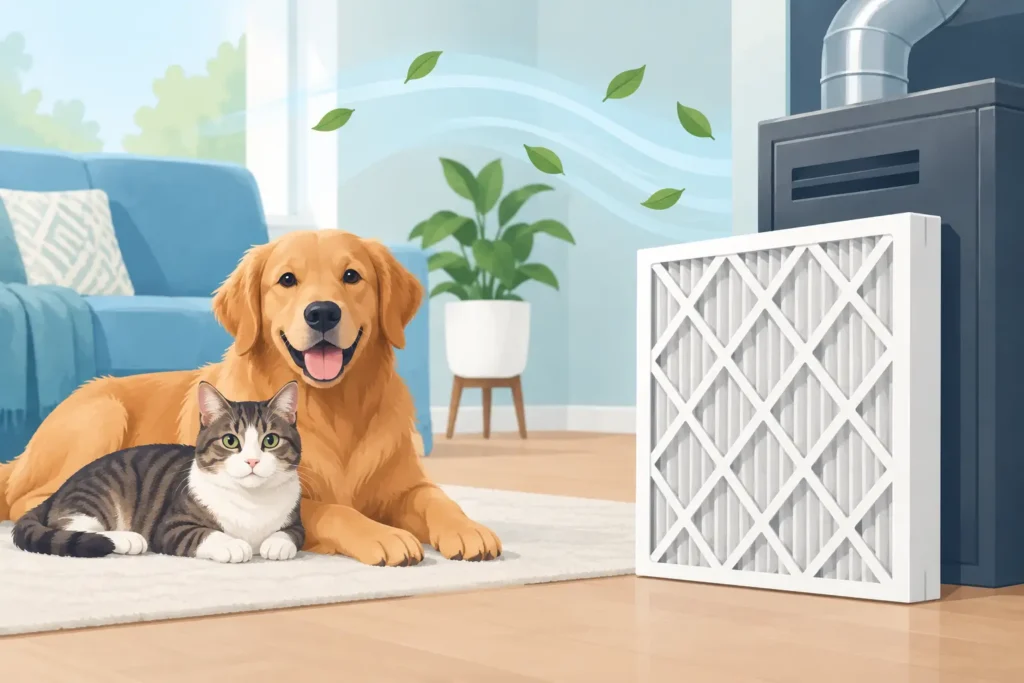
A shedding dog can fill a return vent faster than most homeowners expect. Add cat dander, tracked-in dust, and the occasional pet odor, and your HVAC filter has a much tougher job than it would in a pet-free home. The best furnace filters for pets can help capture the particles that affect indoor air quality without choking off the airflow your furnace and air conditioner need to operate efficiently.
For homeowners in North Richland Hills, Fort Worth, and nearby communities, the right filter is usually not the most expensive one on the shelf. It is the one that matches your system, your pets, and how often you are willing to replace it.
What Makes a Furnace Filter Good for Pets?
Pet hair is the obvious concern, but it is not the only one. Larger hair strands are generally caught by most filters before they reach the blower. The bigger indoor-air issue is pet dander: tiny flakes of skin that can circulate through your home and aggravate allergy or asthma symptoms.
A good pet-friendly filter needs enough filtering power to capture dander, dust, pollen, and other airborne particles. At the same time, it must allow sufficient air through the system. A filter that is too restrictive can reduce comfort, increase energy use, and put added strain on the furnace blower.
That balance is why filter ratings matter. Most residential filters use a MERV rating, short for Minimum Efficiency Reporting Value. The higher the MERV number, the smaller the particles the filter can capture. Higher is not automatically better for every HVAC system.
The Best Furnace Filters for Pets by MERV Rating
For many homes with pets, a pleated filter in the MERV 8 to MERV 11 range is the practical sweet spot. These filters offer meaningful improvement over inexpensive fiberglass filters while remaining compatible with many standard residential systems.
MERV 8: A solid choice for most pet households
A quality MERV 8 pleated filter captures common household particles, including pet hair, dust, pollen, lint, and larger dander particles. It is a sensible option for homes with one or two pets and no significant allergy concerns.
MERV 8 filters are widely available, reasonably priced, and usually easy on system airflow. If your furnace has struggled with airflow in the past, or if you are unsure what your equipment can support, this is often the safest place to start.
MERV 10 or MERV 11: Better for dander and mild allergies
For homes with multiple pets, heavy shedding, or family members bothered by allergies, MERV 10 or MERV 11 is often a worthwhile upgrade. These filters capture finer particles than MERV 8 options and can do more to reduce the dander circulating through the home.
The trade-off is increased resistance to airflow. In a properly sized, well-maintained system, a MERV 11 filter may work very well. In an older furnace or a system with ductwork restrictions, it may be more filter than the equipment can comfortably handle. A technician can check static pressure and help you avoid a filter choice that creates a larger problem.
MERV 13: Best only when your system supports it
MERV 13 filters can capture very fine particles and are often considered when allergy, respiratory, or air-quality concerns are more serious. They can be useful in pet homes, especially when paired with strong housekeeping habits and a properly designed HVAC system.
Still, MERV 13 is not a universal recommendation. Many one-inch filter slots and standard residential systems are not designed for such a restrictive filter. Installing one without checking compatibility can limit airflow, cause uneven heating or cooling, and contribute to unnecessary repair needs. If you are considering MERV 13, have your system evaluated first.
Avoid Cheap Fiberglass Filters in Homes With Pets
The thin blue fiberglass filters sold at a low price are designed mainly to protect HVAC equipment from large debris. They do very little to capture pet dander and fine dust. With pets in the house, they also tend to load up quickly with hair.
A pleated filter is usually the better value. Its larger surface area helps it collect more particles, and its construction provides better filtration than basic fiberglass media. You may pay a little more per filter, but the improvement in cleanliness and equipment protection is usually worth it.
Choose the Right Filter Size and Fit
The best filter rating will not help much if the filter does not fit correctly. Check the size printed on your existing filter, then confirm the actual dimensions if possible. Nominal sizes and actual sizes are often slightly different. For example, a filter labeled 16 x 25 x 1 may measure a little smaller than those exact dimensions.
Install the filter with the airflow arrow pointing toward the furnace or air handler. In most systems, that means the arrow points into the return duct and toward the equipment. A backward filter may still collect debris, but it can affect performance and may cause the filter to bow or shift.
If your filter is difficult to insert, bends at the edges, or leaves gaps around the frame, do not force it. An improperly fitted filter allows unfiltered air and pet hair to bypass the media. That debris can build up on the blower, evaporator coil, and other components that should stay clean.
How Often Should Pet Owners Change Furnace Filters?
Homes with pets generally need more frequent filter changes than homes without them. A one-inch filter in a house with one pet may last around 30 to 60 days. With multiple pets, heavy shedding, or frequent use of the heating and cooling system, monthly changes are often a better routine.
Several factors can shorten filter life: long-haired pets, dogs that spend a lot of time outdoors, carpeted rooms, open windows during pollen season, and homes near construction or busy roads. Texas heat also means the HVAC system runs for long stretches, especially around Fort Worth summers, pulling more air through the filter.
Rather than relying only on the calendar, inspect the filter monthly. Replace it when the surface is visibly coated with dust and hair, when light no longer passes through it easily, or when you notice weaker airflow from vents. A filter change is one of the simplest ways to protect comfort and avoid placing added strain on your equipment.
Filters Help, but They Cannot Solve Every Pet-Air Problem
A high-quality filter is a key part of a cleaner home, but it is not a complete indoor air quality plan. Regular vacuuming with a sealed or HEPA-equipped vacuum, washing pet bedding, grooming pets outside when possible, and cleaning return grilles all reduce the amount of hair and dander that reaches your HVAC system.
If odors remain a problem, a standard furnace filter may not be enough. Particle filters capture dust and dander, but odors are gases and require a different approach. Activated carbon filtration, whole-home air purification, and humidity control may help, depending on the source of the odor and the layout of the home.
Persistent dust, pet odors, frequent allergy symptoms, or filters that become dirty unusually fast can also point to HVAC maintenance concerns. Leaky ductwork, an overdue blower cleaning, poor return-air design, or a clogged indoor coil can all affect how your system handles airborne debris.
When to Ask an HVAC Professional
Call for professional guidance if your furnace becomes noisy after a filter upgrade, rooms heat or cool unevenly, the filter visibly collapses, or airflow seems weaker than usual. Those signs do not always mean the filter is the problem, but they are worth checking before they develop into an equipment issue.
Malcolm’s HVAC can help homeowners across North Richland Hills and the greater Fort Worth area choose filters that support cleaner air without compromising system performance. During routine maintenance, a technician can also inspect the blower, ductwork, and filter cabinet for the buildup that pet households commonly face.
A clean, properly rated filter is a small investment in a more comfortable home. Pick the strongest option your system can handle, check it regularly, and do not wait for a dirty filter to become a preventable heating or cooling repair.