
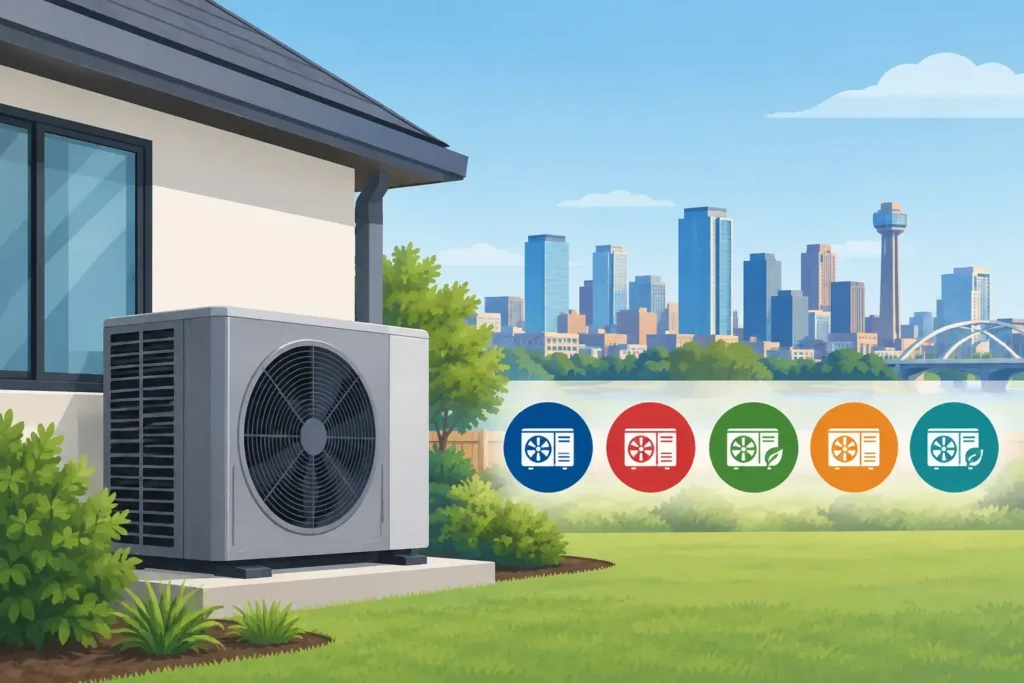
A heat pump replacement is not a purchase most Fort Worth homeowners make on a whim. Your current system may be struggling through another hot Texas summer, making unusual noises, or costing more each month than it should. Comparing heat pump brands is a smart starting point, but the name on the outdoor unit is only one part of a dependable comfort system.
The right choice depends on your home, your budget, your ductwork, and how you use the space. A well-matched midrange system installed correctly can serve a family better than a premium model that is oversized or poorly set up. Here is how to compare your options with confidence.
Heat Pump Brands Are Only Part of the Decision
Major manufacturers build equipment across several price and performance levels. Many also share parent companies, components, or manufacturing resources. That does not mean every unit performs the same. Compressor type, cabinet design, coil construction, controls, warranty terms, and available efficiency ratings can vary significantly from one model to another.
For North Texas homeowners, the best system is usually one that handles long cooling seasons efficiently while providing reliable heat during our shorter cold spells. A heat pump transfers heat instead of generating it through combustion, so it can cool your home in summer and heat it in winter. When temperatures dip, the system may use auxiliary electric heat or work alongside another heat source, depending on how it is designed.
Rather than asking which brand is universally best, ask which specific system fits your home and priorities. A local HVAC professional should look beyond the label and evaluate the full installation.
Common Heat Pump Brands Homeowners Compare
You may see brands such as Carrier, Trane, Lennox, Rheem, Ruud, Goodman, Amana, Daikin, Bosch, American Standard, and Bryant when researching replacement options. Each offers multiple equipment tiers, from straightforward single-stage units to advanced variable-speed systems.
Carrier and Bryant, for example, offer related product families at different price points. Trane and American Standard have a similar relationship. Rheem and Ruud are also closely connected. Goodman and Amana are often considered value-focused options, while Daikin offers equipment across a broad range of efficiency levels. Bosch is frequently considered by homeowners interested in inverter-driven heat pump technology.
These general descriptions are useful, but they should not replace a model-by-model comparison. A brand known for premium equipment may also sell basic units. A value-oriented brand may offer a high-efficiency variable-speed option that suits a particular home very well.
Availability matters, too. A system is easier to maintain over its service life when a qualified local contractor can obtain compatible parts and provide knowledgeable service. That is especially valuable when an unexpected issue affects comfort during a heat wave.
Single-stage, two-stage, and variable-speed systems
Compressor operation has a major effect on comfort and cost. Single-stage systems run at full output whenever they turn on. They are often more affordable upfront and can be a practical fit for a smaller budget or a home with modest comfort demands.
Two-stage equipment can run at a lower capacity much of the time and step up when conditions require it. That can provide steadier indoor temperatures and potentially better humidity control.
Variable-speed or inverter-driven heat pumps can adjust output across a much wider range. They tend to run longer at lower speeds, which can improve comfort, reduce temperature swings, and help remove moisture. They also typically cost more initially and may require more careful system design. For some homes, the comfort improvement is worthwhile. For others, a properly installed two-stage unit offers the better value.
What to Compare Beyond the Brand Name
Efficiency ratings are a reasonable place to begin. Cooling efficiency is commonly measured by SEER2, while heating performance is measured by HSPF2. Higher ratings can reduce energy use, but the savings need to make sense against the additional purchase price. A homeowner planning to stay in the house for many years may value higher efficiency differently than someone preparing a property for sale.
Sound levels deserve attention as well, especially if the outdoor unit sits near a bedroom, patio, or neighbor’s property line. Look at the published decibel rating for the exact model, not just the general brand reputation.
Indoor equipment is equally important. A heat pump works with an indoor air handler or furnace, coil, thermostat, refrigerant lines, drainage system, and ductwork. Mixing components without confirming compatibility can limit performance. The outdoor unit may be excellent, but it cannot overcome undersized return ducts, leaky supply ducts, or a failing indoor blower.
Warranty coverage should be reviewed carefully before installation. Manufacturer warranties often differ by model and may require product registration within a set period. Labor is often separate from a manufacturer parts warranty. Ask what is covered, how long the coverage lasts, whether registration is required, and what local support is available if a repair is needed later.
Why Proper Sizing Matters in Fort Worth
An oversized heat pump can cool a home quickly, but quick cooling is not always good cooling. Short run times can leave humidity behind, create uneven temperatures, and put unnecessary wear on components. An undersized system may run constantly on the hottest days without reaching the desired temperature.
Proper sizing requires more than matching the new unit to the old unit’s tonnage. A qualified technician should consider square footage, insulation, window exposure, ceiling height, household occupancy, duct condition, and the home’s overall heat gain. Recent renovations can change the load as well. New windows, added rooms, attic insulation, or air sealing may mean your old system size is no longer the right answer.
In North Richland Hills, Haltom City, Hurst, Bedford, Euless, Watauga, and Fort Worth, homes vary widely in age and construction. That is why an in-home evaluation is more reliable than a quick recommendation based on square footage alone.
Installation Quality Protects Your Investment
A heat pump is a system, not a box. Correct refrigerant charge, electrical connections, airflow, condensate drainage, thermostat setup, and duct performance all affect how it runs. Even the best equipment can disappoint when installation details are missed.
Before choosing among heat pump brands, ask the contractor how they determine system size and whether they inspect the ductwork. Find out if the estimate includes required electrical work, a new thermostat, pad or mounting upgrades, drain modifications, permits when applicable, and removal of the old equipment. A clear estimate helps prevent surprises after work begins.
It is also worth asking about startup testing. The installer should verify operation in both cooling and heating modes, confirm airflow and refrigerant performance, and explain how to operate and maintain the new system. This is the kind of practical work that affects comfort every day, not just on installation day.
Choosing for Budget, Comfort, and Long-Term Plans
A lower initial price can be the right choice when the system is properly sized, backed by a solid warranty, and installed with care. There is no shame in selecting dependable standard-efficiency equipment when it fits the household budget.
On the other hand, homeowners dealing with hot upstairs rooms, uneven temperatures, high humidity, or frequent thermostat adjustments may benefit from staged or variable-speed equipment. Those systems can offer more precise control, particularly when paired with duct improvements and a compatible thermostat.
Financing can also change the conversation. It may allow a homeowner to choose a more efficient or comfort-focused system without delaying a needed replacement. The key is to compare the total cost, expected energy use, warranty coverage, and monthly payment in plain terms.
For commercial properties, priorities may be different. Equipment uptime, service access, operating cost, zoning, and tenant comfort can matter more than selecting a familiar brand name. A property-specific evaluation is especially helpful when a system serves offices, retail areas, or multiple occupied spaces.
A dependable recommendation should feel clear, not pressured. Malcolm’s HVAC can assess your home or property, explain the equipment options in straightforward terms, and provide upfront pricing for a heat pump replacement that fits your needs. The best time to start the conversation is before a failing system turns a manageable decision into an emergency.