
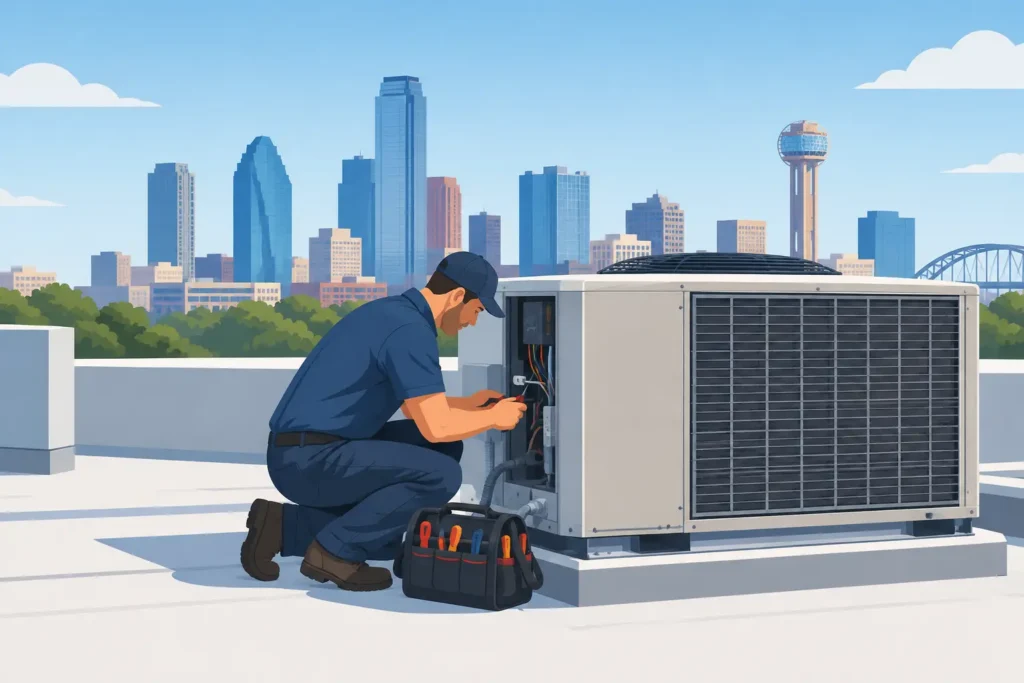
A rooftop unit can fail quietly at first: one office stays warmer than the rest, the system runs longer than usual, or a restaurant dining room feels humid by midafternoon. Then a North Texas heat wave arrives, and a small performance problem becomes an urgent comfort issue. Fort Worth rooftop unit repair is about more than getting air moving again. It requires finding the actual cause, protecting the equipment from further damage, and giving property owners a clear path forward.
Rooftop HVAC units, often called RTUs, combine heating and cooling equipment in one cabinet installed on the roof. They are common on retail spaces, offices, churches, medical practices, warehouses, restaurants, and other commercial properties. Some multifamily and residential applications use rooftop equipment as well. Because the unit is exposed to heat, wind, rain, and debris year-round, it needs service that accounts for both mechanical performance and weather-related wear.
When a Rooftop Unit Needs Attention
An RTU rarely stops working without warning, although the signs can be easy to miss in a busy building. Uneven temperatures, rising utility bills, weak airflow, repeated thermostat adjustments, strange sounds, water near ceiling diffusers, or a system that cycles on and off are all reasons to schedule a professional inspection.
A unit that blows air but does not cool properly may have a refrigerant issue, a failing capacitor, a dirty condenser coil, a compressor problem, or an airflow restriction. A unit that will not heat could have an ignition issue, a failed heat exchanger component, a gas supply concern, or an electrical control problem. The symptom alone does not tell the whole story, which is why a proper diagnosis matters.
Business owners sometimes wait because the building is still partly comfortable. That can be a costly trade-off. A struggling blower motor, clogged filter, or damaged belt can force other components to work harder. Addressing the issue early may prevent a more expensive breakdown during the hottest or coldest part of the year.
What Fort Worth Rooftop Unit Repair Should Include
A dependable repair visit starts with listening. Building managers and owners often know when the problem began, which areas are affected, and whether the unit has had recurring trouble. That information helps a technician work efficiently, but the equipment still needs a full evaluation before repair recommendations are made.
A thorough service call may include checking thermostat operation, electrical connections, contactors, capacitors, blower components, filters, belts, drain lines, refrigerant performance, coils, safety controls, and heating operation when applicable. The technician should also look for damage caused by vibration, weather exposure, nesting pests, or standing water around the unit.
After identifying the problem, the next step should be straightforward: explain what failed, what it affects, and what repair options make sense. Not every issue calls for equipment replacement. Many rooftop units can return to dependable operation with the right part, cleaning, adjustment, or targeted repair. On the other hand, repeated compressor failures, major corrosion, frequent refrigerant leaks, or costly repairs on an aging unit may make replacement the more practical long-term choice.
The right choice depends on the unit’s age, condition, repair history, energy use, parts availability, and the needs of the property. A clear estimate allows you to make that decision without pressure or guesswork.
Common Repairs for Commercial Rooftop Units
Rooftop equipment has many moving and electrical parts, so repair needs vary. Frequent service calls involve failed capacitors and contactors, worn blower motors or belts, dirty evaporator or condenser coils, clogged condensate drains, damaged fan blades, thermostat or control board faults, refrigerant leaks, and ignition or gas heating problems.
Coil cleaning is a good example of why details matter. A dirty coil can restrict heat transfer and make the system run longer, but cleaning alone will not fix a failed fan motor or low refrigerant charge. Likewise, adding refrigerant without locating a leak can provide only temporary relief. The goal should be a repair that addresses the source of the problem, not a short-lived workaround.
Why Roof Access and Local Conditions Matter
Rooftop service is not the same as servicing a ground-level air conditioner. Safe access, roof conditions, unit clearance, electrical disconnects, and the equipment layout all affect how the work is performed. An experienced HVAC team plans for these conditions while keeping disruption to tenants, employees, customers, or residents as limited as possible.
Fort Worth weather adds another layer of wear. Long stretches of extreme summer heat put heavy demand on compressors and electrical components. Spring storms can push debris into condenser coils or damage panels. Wind, sun, and temperature swings can wear down insulation, seals, and wiring over time. Regular inspections help catch these issues before they interfere with cooling or heating.
For property managers, it is also worth paying attention to drainage. A blocked condensate line can lead to water problems inside the building, even when the rooftop unit itself appears to be operating. If ceiling stains, musty odors, or moisture around vents appear, prompt service can help limit damage.
Repair, Replacement, or Maintenance?
A repair is often the sensible answer when the unit has been dependable, the problem is isolated, and the remaining equipment is in good condition. Replacing a capacitor, motor, control component, belt, or damaged wiring can restore performance without the expense of a new system.
Replacement deserves a serious conversation when repairs become frequent, energy bills continue climbing, or a major component fails on an older unit. A newer rooftop system may improve efficiency, reliability, and comfort control, but it is an investment that should be evaluated carefully. Equipment sizing, ventilation needs, building occupancy, and budget all matter. Financing options can make a planned replacement more manageable when repair is no longer the best value.
Preventive maintenance sits between those two choices. Seasonal service can include coil cleaning, filter changes, electrical checks, belt inspections, drain-line service, and performance testing. It cannot prevent every failure, but it reduces avoidable wear and gives you better information about the unit’s condition before an emergency develops.
Steps Property Owners Can Take Before Help Arrives
If a rooftop unit is not keeping up, start with the basics that are safe and accessible. Confirm the thermostat is set correctly, check whether the breaker has tripped, and make sure indoor vents are open and not blocked. If your building maintenance plan allows it, inspect accessible filters and replace them when they are dirty.
Do not attempt to open electrical panels, add refrigerant, bypass safety controls, or climb onto the roof without proper training and authorization. These actions can create safety hazards, damage the system, and complicate the repair. Instead, note any sounds, odors, error messages, water concerns, and temperature changes. Those details help a technician diagnose the issue faster.
If you smell gas, notice smoke or burning odors, or see signs of an electrical problem, turn the system off if it is safe to do so and request immediate professional help. Comfort problems are inconvenient. Safety concerns should never wait.
Dependable Help for Fort Worth Properties
When your HVAC equipment supports customers, employees, tenants, or family members, downtime affects more than the thermostat. You need a local team that can explain the issue plainly, provide upfront options, and work toward a repair that fits your property and budget. Malcolm’s HVAC serves Fort Worth and nearby communities with responsive heating and cooling service for urgent repairs, ongoing maintenance, and replacement planning.
The best time to address an RTU concern is when you first notice it, not when the building becomes uncomfortable enough to interrupt business. A timely inspection can protect your equipment, reduce stress, and help keep the people inside your property comfortable through every Texas season.