
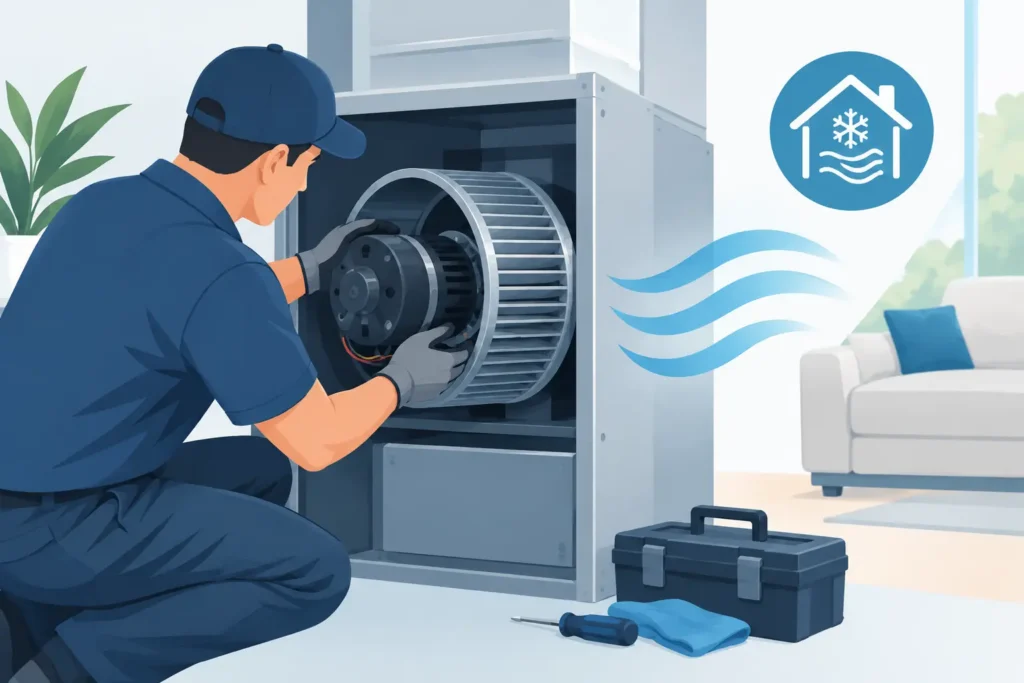
A room that never seems to cool, weak air from the vents, or a furnace that runs longer than it should can all trace back to one hardworking part: the blower motor. This component moves conditioned air through your home or business, so blower motor maintenance has a direct effect on comfort, energy use, and the life of your HVAC system.
In North Richland Hills and across the Fort Worth area, HVAC equipment works through long, hot summers and unpredictable winter cold snaps. A blower motor that is restricted, dirty, or wearing out may not fail all at once. More often, it starts with subtle changes that become more expensive problems when ignored.
What the Blower Motor Does in Your HVAC System
Your blower motor powers the fan that pushes cooled or heated air through the ductwork and into each room. During air conditioning season, it carries cool air from the indoor evaporator coil. During heating season, it distributes warm air from the furnace or heat pump.
Because it serves both sides of your comfort system, a blower motor problem can look like an AC issue, a furnace issue, or an airflow issue. The thermostat may be set correctly, and the equipment may still turn on, but the house can feel uneven, stuffy, or slow to reach the desired temperature.
Modern systems may use variable-speed blower motors, which adjust output to meet changing comfort demands. These motors can improve efficiency and provide steadier airflow, but they also require correct installation and diagnostics. Older single-speed motors are simpler, yet they still depend on clean airflow, sound electrical connections, and properly functioning capacitors or control components.
Why Blower Motor Maintenance Matters
A blower motor does not work alone. It relies on a clean filter, clear return vents, a healthy coil, and ductwork that can move air without major restrictions. When one of those pieces is neglected, the motor often has to work harder to move the same amount of air.
That extra strain can raise monthly utility costs and increase wear on the motor, wheel, and electrical components. Restricted airflow can also contribute to frozen evaporator coils during cooling season or overheating concerns during heating season. The original issue may be a clogged filter, but the longer it continues, the more parts of the system can be affected.
Regular service is usually far less disruptive than waiting for a no-cool or no-heat call. It also gives a technician a chance to identify a weak component before it leaves your family or tenants without dependable comfort.
Signs Your Blower Motor Needs Attention
Some blower motor concerns are easy to notice, while others need a professional inspection to confirm. Pay attention if your HVAC system begins showing any of these changes:
- Airflow from vents feels noticeably weaker than usual.
- Certain rooms are much warmer or cooler than the rest of the building.
- The indoor unit makes squealing, rattling, grinding, or humming sounds.
- The system runs for long periods but does not keep up with the thermostat setting.
- Your energy bill rises without a clear change in weather or household use.
- The blower turns on and off inconsistently, or the fan will not run at all.
- You notice a burning smell, repeated breaker trips, or an HVAC system that shuts down unexpectedly.
A dirty filter can cause several of these symptoms, but it is not always the whole answer. Electrical issues, a failing capacitor, a worn blower wheel, a damaged control board, or a motor nearing the end of its service life can produce similar warning signs. Accurate diagnosis matters because replacing parts without addressing the root cause can lead to repeat repairs.
Practical Blower Motor Maintenance for Homeowners
Homeowners can protect their systems with a few basic habits, starting with the air filter. Check it regularly and replace it based on its condition, the filter type, pets, household occupancy, and seasonal use. In many North Texas homes, checking monthly is a sensible routine during peak cooling months. A filter does not need to look completely black to restrict airflow.
Keep return-air grilles and supply vents open and clear. Furniture, rugs, storage boxes, and heavy drapes can block airflow and force the system to work harder. Closing multiple vents to direct air into one room can create pressure problems in the duct system, so it is better to address the reason a room feels uncomfortable instead of shutting off airflow elsewhere.
It also helps to keep the area around the indoor HVAC unit accessible and clean. Do not store household items against the furnace, air handler, or closet door. The system needs room for safe service and adequate airflow.
What homeowners should not do is open electrical compartments, attempt to lubricate modern sealed motors, or remove the blower assembly without proper training. HVAC equipment contains high-voltage electrical connections, and an incorrect repair can damage the motor, controls, or wiring. A service call is the safer choice when you hear unusual sounds, smell something burning, or experience repeated shutdowns.
What Professional Blower Motor Maintenance Includes
During a seasonal HVAC maintenance visit, a trained technician can inspect the parts homeowners cannot safely or accurately evaluate. The work may include checking motor operation, measuring amp draw, inspecting wiring connections, evaluating capacitors, and confirming that the blower is moving the proper volume of air.
The technician may also inspect the blower wheel for dust buildup. A dirty wheel can reduce airflow and throw the assembly out of balance, which may cause vibration and added wear. Depending on the equipment, the blower compartment, coil area, condensate system, and safety controls may need attention as well.
Maintenance is not a one-size-fits-all task. A newer variable-speed system may need different diagnostic steps than an older furnace with a standard PSC motor. Commercial properties can also have more demanding airflow requirements, longer operating hours, and multiple zones. The right approach depends on the equipment, its condition, and how the building is used.
Repair or Replacement: How to Make the Right Call
Not every blower motor problem requires a full motor replacement. Sometimes the solution is a new capacitor, corrected wiring, a cleaned wheel, or removal of an airflow restriction. If the motor is still in good condition, targeted repair can be the most cost-effective option.
Replacement becomes more reasonable when the motor has failed, the bearings are worn, the motor overheats repeatedly, or repair costs are high compared with the age and condition of the HVAC system. If an older furnace or air handler has multiple failing components, it may be worth discussing whether a broader equipment replacement would offer better reliability and efficiency.
An honest recommendation should account for more than the immediate repair bill. It should consider equipment age, warranty status, expected efficiency, comfort concerns, and your plans for the property. For homeowners and property managers in the Fort Worth area, Malcolm’s HVAC can explain the options clearly and provide upfront pricing before work begins.
Schedule Service Before Peak Weather Arrives
The best time to address blower motor concerns is before the first major heat wave or winter cold front. Spring maintenance gives your air conditioner a chance to be inspected before it is running every day. Fall service helps prepare your heating equipment for the first cold nights of the season.
If your system is already showing weak airflow, unusual noise, or inconsistent temperatures, do not wait for a scheduled tune-up. Prompt service can often prevent a smaller blower issue from becoming a complete comfort emergency. A well-maintained blower motor keeps air moving where it belongs: through your home or business, not into your repair budget.