
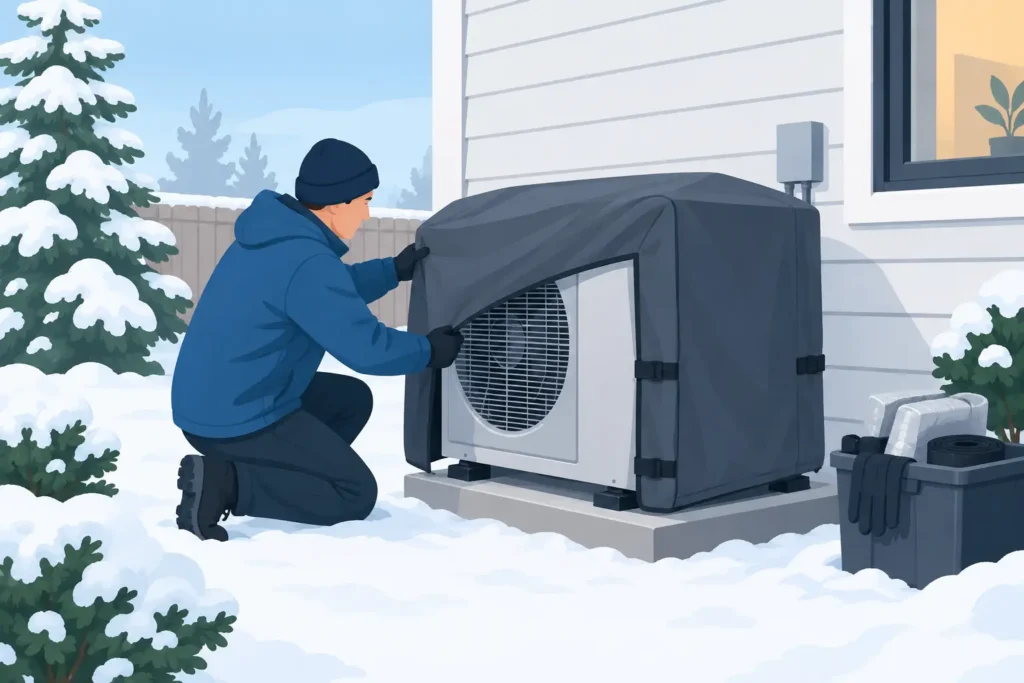
A North Texas cold snap can arrive fast, often after a mild afternoon that makes winter feel far away. Knowing how to winterize outdoor heat pump equipment helps protect your comfort when temperatures dip below freezing, but the right approach is not the same as winterizing a central air conditioner. Your heat pump’s outdoor unit may need to run all winter to heat your home.
That distinction matters. Covering, shutting down, or disconnecting an outdoor heat pump without understanding its role can leave your household without efficient heat on the coldest night of the year. The goal is to protect the system from debris, water problems, and freeze-related damage while keeping it ready to operate.
Should You Winterize an Outdoor Heat Pump?
In most Fort Worth-area homes, a heat pump should remain on through the winter. It pulls heat from outdoor air and transfers it indoors, even when the weather feels cold. Modern heat pumps are designed to operate in low temperatures, and they periodically run a defrost cycle to clear normal frost from the outdoor coil.
For that reason, do not treat a heat pump like an AC condenser that sits unused until spring. A full seasonal shutdown is only appropriate if a qualified technician has confirmed that another heating system will handle the home’s needs and the heat pump will not be used.
What homeowners usually mean when they ask about winterizing is simple: preparing the unit for freezing weather without preventing normal operation. That is the smart approach for most households in North Richland Hills, Haltom City, Hurst, Bedford, and surrounding communities.
What Not to Do Before a Freeze
The most common mistake is placing a solid, full-unit cover over an outdoor heat pump. A cover can trap moisture, restrict airflow, and interfere with the unit if it turns on. Moisture that stays inside the cabinet can contribute to corrosion, while blocked airflow can cause performance issues or equipment damage.
Do not put a tarp, blanket, plywood, or trash bags over the unit. Never run the system with anything covering the top fan grille or sides. It is also best not to turn off the outdoor disconnect just because freezing weather is expected. The system may need power for its controls, crankcase heater, or defrost cycle, depending on the model.
Avoid chipping ice off the coil with a screwdriver, knife, hammer, or other sharp tool. Heat pump fins bend easily, refrigerant lines can be damaged, and a small repair can become a much larger one. If ice is more than a light, temporary coating, the unit needs attention.
Safe Steps to Prepare the Outdoor Unit
Preparing a heat pump for winter is mostly about clearing its working area and checking for conditions that can block drainage or airflow. These tasks are practical for homeowners, as long as the power remains on and you do not open electrical panels or remove major components.
Start by clearing leaves, grass clippings, mulch, and loose debris from around the unit. Heat pumps need open space to draw in and discharge air. Keep shrubs and vegetation trimmed back so they do not crowd the coil or drop debris into the cabinet during windy weather.
Check the top grille and side panels after storms. Remove loose branches or leaves by hand, but do not push material through the coil fins. If you see dirt packed into the coil, bent fins, or signs of physical damage, schedule professional service rather than trying to pressure wash it yourself.
Next, look at the ground around the unit. The pad should be stable and generally level, with enough drainage to keep standing water away from the equipment. In North Texas, heavy rain can be followed by a rapid freeze. Water that pools near the base can freeze, shift the pad, or create ice around the unit where it needs to drain during defrost.
Make sure roof runoff is not pouring directly onto the heat pump. A gutter leak or downspout aimed at the unit can create repeated ice buildup during cold weather. Redirecting water away from the equipment is often a simple fix that prevents a bigger problem later.
Keep Snow and Ice From Blocking Airflow
Snow is less common in Fort Worth than in colder regions, but sleet, freezing rain, and wind-blown debris can still restrict a heat pump. After a winter storm, inspect the outdoor unit from a safe distance. Clear snow from around the base and keep the top grille open so the fan can move air.
A light layer of frost on the coil can be normal. Your system should enter defrost mode periodically, which may produce steam and water around the unit. This can look alarming, especially at night, but it is usually part of normal heat pump operation.
Solid ice covering the coil, fan, or cabinet is different. Turn the thermostat to emergency heat or auxiliary heat if your system has that setting, then contact an HVAC professional. Continuing to force a heavily iced unit to run can strain the compressor and reduce heating performance inside the home.
If the outdoor fan is not spinning, the unit is making loud grinding or banging sounds, or you notice a burning smell, turn the system off at the thermostat and request service. Those symptoms are not a do-it-yourself winter maintenance project.
Change the Filter and Check Indoor Airflow
Winter protection is not limited to the outdoor unit. A heat pump depends on balanced airflow throughout the entire system. A clogged indoor air filter makes the equipment work harder, reduces comfort, and can contribute to operating problems during the heating season.
Check your filter monthly during periods of regular use and replace it according to the manufacturer’s recommendation. Homes with pets, construction dust, or frequent allergy concerns may need more frequent changes. Use the correct filter size and avoid choosing a highly restrictive filter unless your system is designed for it.
Keep supply vents and return grilles open and clear of furniture, rugs, and stored items. Closing too many vents does not save energy. It can disrupt airflow and make certain rooms harder to heat.
Schedule Heating Maintenance Before the Coldest Weather
Homeowner preparation helps, but a professional heat pump tune-up is the best way to catch developing problems before a hard freeze. During seasonal service, a technician can inspect electrical connections, refrigerant performance, defrost controls, the outdoor coil, drainage, the blower system, and thermostat operation.
This is also the time to ask whether your backup heat is working correctly. Many heat pump systems use electric heat strips or another auxiliary heat source when outdoor temperatures fall or the unit enters defrost mode. If auxiliary heat is not available when needed, your home may struggle to stay comfortable during a cold spell.
For commercial properties, maintenance is especially valuable because comfort issues can affect employees, customers, tenants, and operating hours. A planned inspection gives property decision-makers a clearer picture of equipment condition before an urgent repair becomes necessary.
When a Heat Pump Needs Professional Help
Call for service if your heat pump repeatedly freezes over, blows cool air while set to heat, cycles on and off frequently, or cannot maintain the thermostat setting. Higher-than-normal electric bills can also point to a system relying too heavily on auxiliary heat or operating inefficiently.
Age matters, too. An older unit may still be repairable, but repeated winter repairs, poor performance, and rising energy use can make replacement worth discussing. A trustworthy HVAC company should explain the repair options, expected costs, and replacement considerations clearly, without pressuring you into a decision.
At Malcolm’s HVAC, we help homeowners and property managers across North Richland Hills and the greater Fort Worth area prepare heating systems for cold weather with straightforward recommendations and upfront service. Whether you need a winter tune-up, a repair after a freeze, or guidance on an aging heat pump, getting answers early is usually easier and more affordable than waiting for the next cold front.
A clear outdoor unit, a clean filter, and a working defrost cycle go a long way when temperatures fall. If something about your heat pump does not look or sound right, trust that early warning and have it checked before a short Texas freeze turns into a long, uncomfortable night.