
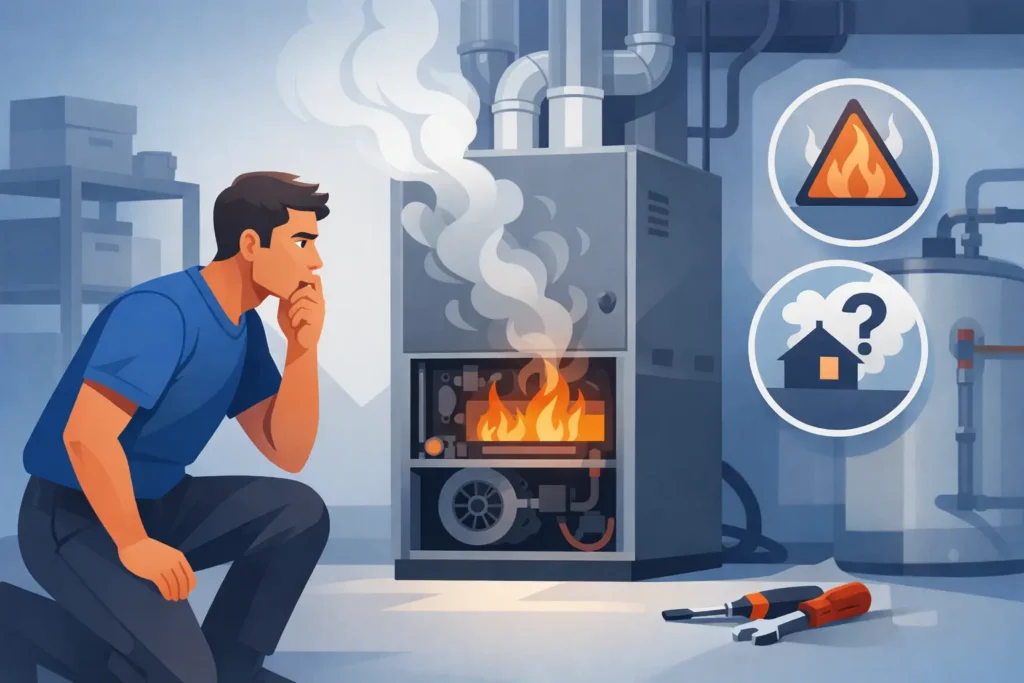
The first time you switch on the heat after a North Texas summer, a faint burning smell can make the whole house feel alarming. So, why does furnace smell burning when it has been sitting unused? In some cases, the answer is simple: dust has collected on hot components and is burning away. In others, that odor is a warning to turn the system off and call for professional help.
The key is knowing what the smell resembles, how long it lasts, and whether it comes with other changes such as smoke, unusual noises, weak airflow, or a furnace that repeatedly shuts down. A little caution can protect your comfort, equipment, and household safety.
Why Does a Furnace Smell Burning When It Starts?
A brief dusty or slightly musty burning odor at the beginning of heating season is common. During the long stretch between heating cycles, dust settles on burners, the heat exchanger, electrical components, and inside the ductwork. When those parts warm up, the dust burns off.
This smell should be mild and should fade within a few heating cycles, often in 30 minutes to a few hours. Opening a window briefly and replacing a dirty air filter can help clear it faster. If the odor disappears and the furnace runs normally, there may be no immediate problem.
However, Fort Worth-area homes can collect plenty of dust, pet hair, and debris through the year. If the smell is strong, returns every time the furnace runs, or lingers beyond the first day of use, it is no longer something to brush off as seasonal dust.
The Type of Burning Smell Matters
Not every burning odor points to the same issue. Paying attention to the smell can help you decide whether to monitor it, schedule service, or shut the furnace down right away.
Dusty or dirty-air smell
This is the most common odor after the furnace has been off for months. It usually smells like warm dust, not melting plastic or smoke. Check the filter first. A clogged filter restricts airflow, allows dust to circulate, and can cause the furnace to overheat.
A clean filter is an affordable first step, but it is not a cure for every problem. If the odor remains after changing the filter and running the system, a technician should inspect the equipment.
Burning plastic, rubber, or electrical smell
An odor like melting plastic, hot wiring, or overheated rubber is a more urgent concern. It may come from damaged electrical wiring, a failing blower motor, an overheated capacitor, a loose connection, or an object too close to a hot component.
Turn the furnace off at the thermostat. If the smell continues, shut off power to the unit at the breaker if it is safe to do so. Do not keep restarting the system to see whether the smell goes away. Electrical problems can worsen quickly and may create a fire hazard.
Burning oil smell
Oil-burning furnaces are less common in the North Richland Hills and Fort Worth area than gas or electric systems, but homes that have one should take an oil smell seriously. It can indicate a burner issue, an oil leak, or incomplete combustion. Turn off the system and arrange service before using it again.
Smoke or a sharp burning odor
Visible smoke is never normal. Neither is a harsh odor that stings your eyes or throat. Shut the furnace off, leave the home if smoke is building, and call emergency services if there is any sign of fire. Once the immediate danger is handled, an HVAC professional can determine what caused the issue.
A Dirty Filter Can Make a Furnace Overheat
A furnace needs steady airflow to operate safely. When the filter is packed with dust, airflow slows down. Heat builds up inside the system, and the furnace may trip its high-limit safety switch to protect itself from overheating.
You may notice a hot, burning-dust smell along with short cycling, where the furnace starts and stops repeatedly. The air coming from vents may feel hotter than usual before the system shuts down. In some cases, the blower will continue running after the burners stop because the unit is trying to cool itself down.
Replacing the filter may solve the issue if restriction is the only problem. But if the furnace has overheated several times, it is wise to have it checked. Repeated overheating puts stress on the blower motor, limit switch, and heat exchanger.
Other Reasons a Furnace May Smell Like Burning
A burning odor can also come from parts that are wearing out or from problems outside the furnace itself. The source is not always obvious from the living space.
A damaged blower motor can overheat and produce an electrical smell. Worn bearings may also cause squealing, grinding, or rattling before the motor fails. A belt-driven system may produce a rubbery smell if the belt is slipping, though many newer furnaces use direct-drive motors instead.
Debris in the ductwork or an item resting against a floor vent can also heat up and create an odor. Check that furniture, rugs, boxes, and curtains are clear of supply and return vents. Never store paint, cleaning products, gasoline, or other flammable materials near the furnace or water heater.
For electric furnaces, heating elements can develop issues that create a metallic or electrical burning odor. For gas furnaces, dirty burners, venting concerns, and combustion problems require trained diagnosis. The right repair depends on the equipment type and the source of the smell, which is why guessing can be costly.
What to Do When Your Furnace Smells Burning
Start with a quick, safe assessment. If the odor is mild and clearly resembles dust during the first seasonal use, replace the filter if needed and let the system run while you monitor it. Keep an eye out for smoke, worsening odor, or unusual performance.
If the odor is strong, smells electrical or like melting materials, or does not fade, turn the thermostat to off. Do not remove furnace panels, touch wiring, or attempt to reset safety switches yourself. Those components are there to prevent damage and should be inspected rather than bypassed.
If you smell natural gas, the situation is different. Natural gas is often described as smelling like rotten eggs or sulfur, not like burning dust. Leave the building immediately, avoid operating switches or appliances, and contact your gas utility or emergency services from a safe location. Do not return until it is safe to do so.
Every home with fuel-burning equipment should also have working carbon monoxide detectors. Carbon monoxide has no smell, so a burning odor is not a reliable way to detect it. Test detectors regularly and replace batteries as recommended by the manufacturer.
When to Call for Furnace Repair
Schedule furnace service promptly if the burning smell lasts longer than the first few heating cycles, returns often, or comes with reduced heat, loud noises, frequent shutdowns, or a tripped breaker. These symptoms can point to an airflow issue, electrical repair, motor problem, or component that needs replacement.
For property managers and business owners, acting early matters even more. A furnace problem can affect tenant comfort, disrupt operations, and turn a manageable repair into downtime during a cold snap. Preventive maintenance helps identify overheating components, dirty burners, loose electrical connections, and airflow restrictions before they become urgent.
A qualified technician can inspect the filter, blower assembly, wiring, burners, safety controls, venting, and overall operation. At Malcolm’s HVAC, the goal is to explain what is causing the problem clearly, recommend the repair that fits the equipment’s condition, and provide upfront options for homes and businesses across North Richland Hills, Fort Worth, and nearby communities.
Prevent Burning Odors Before Heating Season
The best time to address furnace concerns is before the first cold front arrives. An annual heating tune-up gives a technician the chance to clean key components, check electrical connections, test safety controls, and verify that the system is heating efficiently.
Homeowners can help between visits by checking the filter monthly, replacing it as needed, keeping the furnace area clear, and listening for changes in operation. A system that heats evenly and quietly is easier to maintain than one that is allowed to run with restricted airflow or recurring shutdowns.
A furnace smell may be nothing more than dust finally meeting a hot surface. But when the odor is sharp, persistent, or paired with smoke or performance problems, trust the warning and get it checked before the next cold night turns a small concern into a larger repair.