
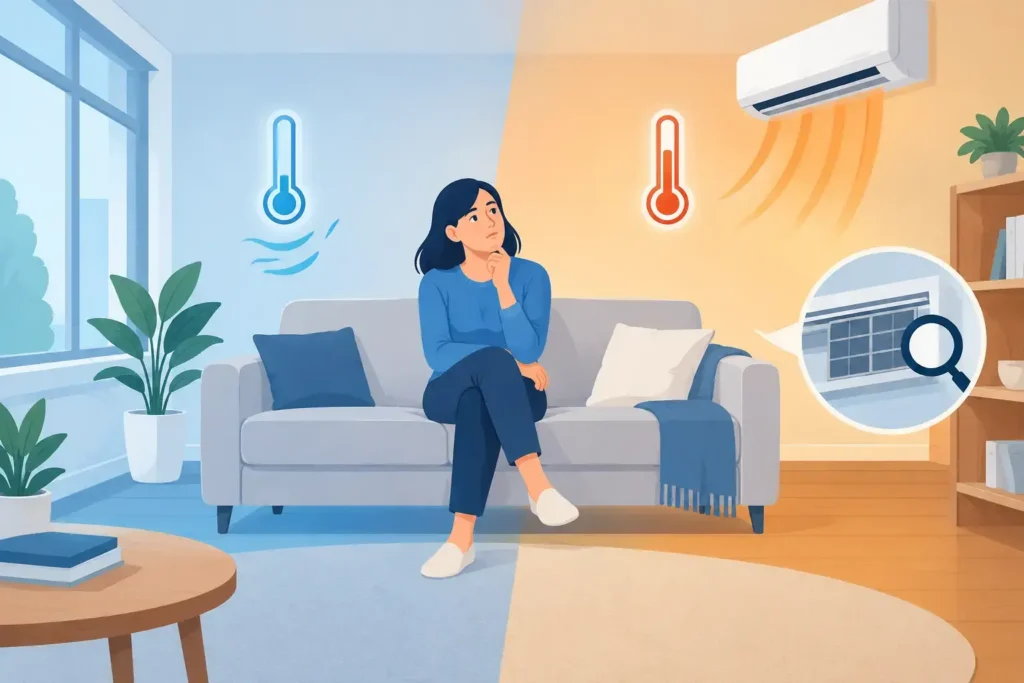
A bedroom that stays warm while the living room feels like a refrigerator is more than a minor annoyance. In North Richland Hills and Fort Worth, long hot summers and quick winter temperature swings can expose weak spots in a home’s heating and cooling system fast. Learning how to troubleshoot uneven room temperatures can help you identify simple airflow problems, recognize when your system needs service, and avoid spending money on the wrong fix.
The goal is not necessarily to make every room the exact same temperature. Upstairs rooms, west-facing spaces, and rooms with more windows naturally behave differently. The goal is consistent, comfortable performance without one area being persistently too hot or too cold.
Start With the Simple Airflow Checks
Before assuming your air conditioner, furnace, or heat pump is failing, check the items that most often limit airflow. These are simple checks, but they can make a noticeable difference when addressed correctly.
Check the thermostat location and settings
A thermostat only responds to the temperature where it is installed. If it is located near a sunny window, exterior door, kitchen, or supply vent, it may sense a temperature that does not reflect the rest of the house. For example, a thermostat in a cool hallway may shut off the AC before a warm back bedroom has reached a comfortable temperature.
Confirm that the thermostat is set to the correct mode and that the fan is set to Auto rather than On for normal operation. Keeping the fan on continuously can help mix air in some homes, but it may also circulate warm air after the cooling cycle ends or raise energy use. It depends on your system, duct layout, and the source of the temperature difference.
Replace a dirty air filter
A clogged filter restricts the air moving through your HVAC system. That restriction can reduce comfort throughout the house, but it often shows up first in rooms farthest from the indoor unit. Check the filter monthly during heavy-use seasons and replace it when it is visibly dirty or according to the manufacturer’s recommendation.
Do not assume a higher-rated filter is always better. Some dense filters can create excess resistance if the system was not designed for them. A technician can recommend the right filter type for your equipment and indoor air quality needs.
Open and clear supply and return vents
Walk through each room and make sure supply registers are open and not blocked by furniture, rugs, curtains, or storage. A closed register does not always force more conditioned air into other rooms. In many systems, closing too many vents increases pressure in the ductwork and can create new airflow problems.
Return vents need even more attention. A return pulls indoor air back to the system to be heated or cooled again. If a return grille is blocked by a sofa, cabinet, or piles of laundry, the room may feel stuffy and slow to condition. Keep at least several inches of clear space around returns whenever possible.
How to Troubleshoot Uneven Room Temperatures by Location
Where the problem occurs offers useful clues. One uncomfortable room suggests a local issue, while an entire floor that runs hot or cold may point to ductwork, insulation, equipment capacity, or system design.
One room is always hotter or colder
Start by comparing airflow at the register in that room with airflow in nearby rooms. Weak airflow can indicate a disconnected duct, crushed flexible duct, loose damper, duct leak, or blockage. If the airflow feels normal but the room still cannot hold temperature, look for heat gain or loss through windows, exterior walls, attic space, and doors.
Bedrooms are common trouble spots because their doors are often closed. A closed door can prevent air from returning to the system, especially in homes with a central return grille. The room receives conditioned air but cannot release air efficiently, causing pressure changes and uneven comfort. A properly designed return path, such as a dedicated return or transfer solution, may be needed.
The upstairs is warmer in summer
Warm upstairs rooms are especially common in Texas homes. Heat rises, but attic heat, roof exposure, ductwork in the attic, and sun-facing windows are usually bigger contributors. If insulated ducts run through a very hot attic and have leaks or damaged insulation, cooled air can gain heat before it reaches the upstairs registers.
Check whether attic insulation is even and sufficient, particularly around recessed lighting, attic access doors, and exterior wall edges. A poorly sealed attic hatch can allow a surprising amount of heat into a hallway or landing. Window coverings can reduce solar heat gain, but they will not solve a major duct or insulation problem on their own.
One side of the home feels different
A west-facing room may heat up in the late afternoon, while a shaded side of the home stays cooler. This can be normal to a degree, especially with older windows or limited shade. However, a large difference may mean the system needs balancing or that supply ducts to that area are undersized, leaking, or poorly routed.
Manual dampers, usually located near the indoor unit or along accessible duct runs, can sometimes direct more air toward a problem area. Damper adjustments should be small and measured. Moving one damper too far can starve another part of the home and place unnecessary pressure on the system.
Look Beyond the HVAC Equipment
Your heating and cooling system cannot fully overcome a home that is losing conditioned air or gaining excessive outdoor heat. Comfort depends on the equipment, airflow, ductwork, insulation, windows, and the way each room is used.
Leaky ducts are a frequent hidden cause of uneven temperatures. Duct joints can separate over time, flexible ducts can sag or become compressed, and poorly sealed connections can spill conditioned air into an attic, crawlspace, or wall cavity. Rooms at the end of a duct run are often affected first.
Air leaks around windows, exterior doors, plumbing penetrations, and recessed fixtures can also make a room feel different from the rest of the home. On a windy day, you may notice drafts near trim or outlets on exterior walls. Weatherstripping and air sealing can help, though major comfort problems still deserve an HVAC inspection to rule out equipment and duct issues.
Room use matters, too. A home office with computers, monitors, and several people can run noticeably warmer than a guest room. Kitchens produce heat from cooking, and laundry rooms may feel warmer due to appliances and limited ventilation. These rooms may benefit from better airflow, a thermostat adjustment, or a zoning solution rather than a larger central system.
Know When System Sizing or Age Is the Issue
If uneven temperatures began after a new HVAC installation, the system may need an airflow or duct design review. Bigger equipment is not automatically better. An oversized air conditioner can cool the thermostat area quickly and shut off before air has circulated to distant rooms. It may also remove less humidity, leaving parts of the home cool but clammy.
An undersized system can run for long periods during peak Texas weather and still struggle to keep up. That does not always mean replacement is the first answer. Restricted airflow, dirty coils, refrigerant problems, attic duct losses, and poor insulation can produce similar symptoms.
Older equipment can also lose performance as components wear down. A failing blower motor, dirty evaporator coil, weak capacitor, refrigerant leak, or furnace airflow issue may reduce the amount of conditioned air reaching the rooms that need it most. Professional diagnostics help separate a repairable problem from a system that is no longer efficient or reliable.
When to Call an HVAC Professional
Call for service when basic checks do not improve comfort, when one room has little or no airflow, or when the problem has become worse over time. A trained technician can measure temperature split, static pressure, airflow, refrigerant performance, and duct conditions instead of guessing at the cause.
You should also schedule an inspection if your utility bills have climbed, the system runs constantly, rooms are humid during cooling season, or you hear rattling, whistling, or banging in the ductwork. These signs can point to problems that are not visible from the register.
For heating concerns, act quickly if you smell gas, notice soot, hear unusual furnace noises, or have a carbon monoxide alarm. Turn the system off if it is safe to do so, leave the area if you smell gas, and seek immediate professional help.
At Malcolm’s HVAC, the right recommendation starts with understanding the home, the equipment, and the rooms causing trouble. In some cases, a repair or maintenance visit restores airflow. In others, duct repair, insulation improvements, thermostat upgrades, zoning, or system replacement may be the more dependable long-term solution.
A comfortable home should not require everyone to choose a different room just to feel right. Address the easy airflow issues first, pay attention to where and when the temperature difference occurs, and bring in a local HVAC professional when the pattern points to a larger problem.