
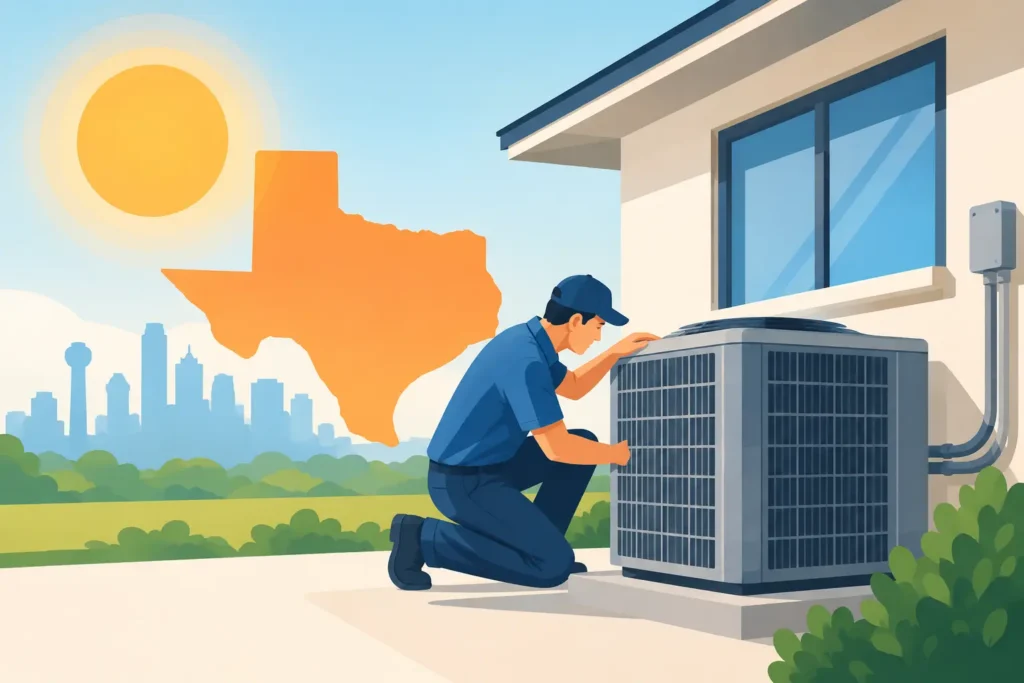
A North Texas heat wave does not give an air conditioner much room for error. When outdoor temperatures stay above 100 degrees for days, a system that seemed merely a little noisy or slow can quickly turn into a no-cooling call. Texas heat wave HVAC readiness means checking the small issues now, before your home or business is relying on the system every hour of the day.
For families in North Richland Hills, Fort Worth, Haltom City, Hurst, Bedford, Euless, and nearby communities, preparation can lower the chance of an interruption, control energy use, and make a real difference in indoor comfort. It also helps you make a repair decision on your schedule instead of during the hottest afternoon of the season.
Why Heat Waves Are Hard on Air Conditioners
Your AC is designed to remove heat from inside the building and release it outdoors. During normal summer weather, it cycles on and off as it reaches the temperature set on the thermostat. In a prolonged heat wave, the outdoor unit has to reject heat into already-hot air while the home gains more heat through the roof, windows, doors, and attic.
Longer run times are not automatically a problem. A properly sized system may run for much of the afternoon during extreme weather. The concern is a unit that runs continuously without bringing the temperature down, freezes up, trips a breaker, leaks water, or makes new noises. Those symptoms can point to airflow restrictions, refrigerant issues, electrical trouble, a failing capacitor, or worn components that need professional attention.
Older equipment has less margin during these conditions. So does a system that is undersized, overdue for maintenance, or serving a building with poor insulation and major air leaks. The right solution depends on the cause. A repair may restore reliable performance, while repeated breakdowns and high utility costs may justify discussing replacement options and financing.
Texas Heat Wave HVAC Readiness Checklist
A few simple checks can support your system without putting you at risk or requiring technical work. Start with the air filter. A clogged filter restricts airflow, makes the blower work harder, and can contribute to frozen evaporator coils. Check it monthly during heavy-use months and replace it when it looks dirty. Homes with pets, construction dust, or high household traffic may need more frequent changes.
Walk outside and inspect the condenser unit. Turn off the system before removing leaves, grass clippings, or loose debris from around it. Keep shrubs, storage items, and fencing far enough away for air to move freely around the cabinet. Do not cover a running outdoor unit or spray high-pressure water into its coils. A light rinse can help remove surface debris, but bent fins and heavy buildup are better handled by a technician.
Inside, make sure supply vents and return grilles are open and unobstructed. Closing vents in unused rooms often seems like an easy way to save money, but it can upset airflow and increase pressure in the ductwork. Keep furniture, rugs, and curtains away from returns so the system can pull air back properly.
Finally, look at the drain area near the indoor unit. A clogged condensate drain can cause water damage or trigger a safety switch that shuts down cooling. If you see standing water, a full drain pan, or water stains near the air handler, schedule service rather than waiting for the problem to spread.
Set the Thermostat for Realistic Comfort
During a Texas heat wave, setting the thermostat far below the outdoor temperature will not cool the house faster. It only tells the system to run longer. Choose a temperature that is comfortable for your household and keep it steady during the hottest part of the day. For many homes, a setting in the mid-to-upper 70s balances comfort and energy use, though preferences, insulation, occupancy, and health needs vary.
A programmable or smart thermostat can help when used carefully. Raise the setting modestly when the building is empty, then return it to your preferred temperature before people come home. Avoid large setbacks during severe heat. Asking an already-strained system to pull a hot house down several degrees late in the day can lead to long run times and limited comfort.
If certain rooms are consistently hotter than others, do not assume the thermostat is the only issue. Uneven temperatures can come from duct leaks, inadequate attic insulation, poor airflow, oversized windows, zoning needs, or an improperly sized system. A professional evaluation can identify whether the answer is a repair, airflow adjustment, insulation improvement, or equipment upgrade.
Reduce the Heat Your System Has to Fight
HVAC maintenance matters, but the house itself also determines how hard the equipment must work. Close blinds or curtains on sun-facing windows before the afternoon heat builds. Use ceiling fans in occupied rooms to improve comfort, but remember that fans cool people, not empty spaces. Turn them off when rooms are vacant.
Limit heat-producing activities during peak hours when possible. Ovens, dryers, and long hot showers all add heat and humidity indoors. Running these appliances earlier in the day or later in the evening can give your AC a little more breathing room. Check weatherstripping around exterior doors and visible gaps around windows as well. Even small air leaks matter when the temperature difference between indoors and outdoors is large.
For commercial properties, readiness also includes reviewing occupied hours, thermostat access, and ventilation needs. A restaurant, office, retail space, or rental property may need a different plan than a single-family home. High occupancy, kitchen equipment, server rooms, and frequent door traffic can add substantial cooling demand. Property managers should address comfort complaints early, before one struggling zone affects customers, tenants, or employees.
Warning Signs That Should Not Wait
Some problems need a prompt service call, especially when extreme weather is expected. Pay attention if your system is blowing warm air, cycling on and off repeatedly, producing a burning smell, making grinding or buzzing sounds, or causing an electrical breaker to trip. Ice on the refrigerant line or indoor coil is another sign to act on. Continuing to run a frozen system can damage the compressor.
Weak airflow is also worth addressing. It may be as simple as a dirty filter, but it can also indicate a blower issue, duct problem, or dirty evaporator coil. If the indoor temperature continues rising while the system runs, turn the thermostat off and contact an HVAC professional. Running an AC that is not cooling properly can turn a manageable repair into a larger expense.
If a household member is vulnerable to heat, make a backup plan before a failure happens. Know where you can safely cool down, keep water available, and do not rely on fans alone during dangerous indoor temperatures. Comfort is more than convenience when heat exposure becomes a health concern.
Schedule Maintenance Before the Emergency Call
A seasonal maintenance visit gives a technician time to inspect the parts homeowners cannot safely or accurately assess. This typically includes checking electrical connections, capacitors, refrigerant performance, coils, blower operation, drain components, thermostat function, and overall system condition. Maintenance cannot guarantee that every part will last through a heat wave, but it can find wear that would otherwise show up when demand is highest.
It is also the best time to get clear answers about an aging system. If repairs are becoming frequent, a technician can explain the condition of the equipment, likely repair costs, efficiency options, and whether replacement makes financial sense. Honest recommendations should account for your budget, how long you plan to stay in the property, and whether the current system is keeping up with your comfort needs.
Malcolm’s HVAC helps homeowners and property decision-makers across the Fort Worth area prepare for summer strain with straightforward diagnostics, upfront pricing, repair service, maintenance, and replacement guidance. If your AC has been showing warning signs, addressing them before the next heat wave can protect your comfort when you need it most.
A prepared system still deserves attention during extreme weather. Check your filter, keep the outdoor unit clear, watch for changes in performance, and call for help at the first sign that cooling is falling behind. A quick response today can keep a difficult Texas afternoon from becoming a full household emergency.