
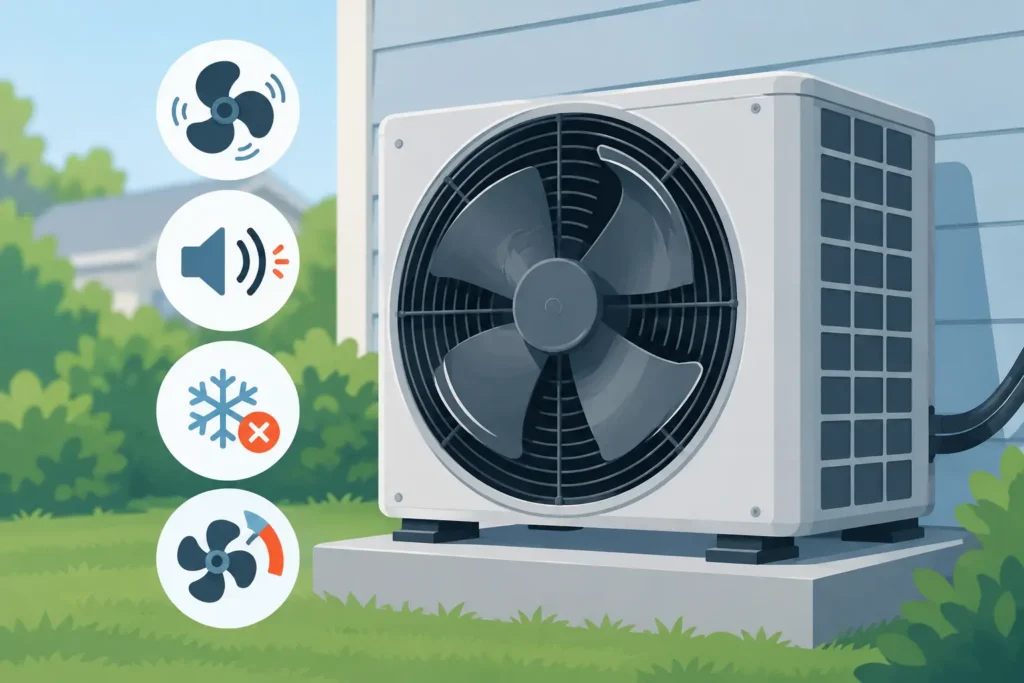
When your outdoor AC unit is running but the house still feels warmer by the hour, the problem may be outside at the condenser fan. Knowing the signs your condenser fan is failing can help you act before a small part issue turns into a major compressor repair – especially during a North Texas heat spell.
The condenser fan is the large fan in the outdoor portion of your air conditioning system. Its job is to pull air across the condenser coil and release heat from your home. If that fan cannot move enough air, heat gets trapped in the unit. Your AC may lose cooling power, run longer, shut down unexpectedly, or suffer damage from overheating.
What the Condenser Fan Does for Your AC
Your air conditioner does not create cold air. It removes heat from inside your home and sends that heat outdoors through refrigerant. The condenser coil releases that heat, while the condenser fan keeps outdoor air moving across the coil.
When the fan fails, the system cannot get rid of heat efficiently. Refrigerant pressure rises, the compressor works harder, and cooling performance drops. Because the compressor is one of the most costly components in an AC system, a fan problem is worth addressing promptly rather than waiting to see if it improves on its own.
Do not confuse the condenser fan with the indoor blower fan. The indoor blower moves conditioned air through your vents. The condenser fan is located in the outdoor cabinet and usually sits beneath a protective fan grille.
7 Signs Your AC Condenser Fan Is Failing
1. The outdoor fan is not spinning
This is the clearest warning sign. If your thermostat is calling for cooling and the outdoor unit is running or humming but the fan blades are not turning, turn the system off at the thermostat. Continuing to run the AC without a working condenser fan can overheat the compressor.
In some cases, the fan may start after a delay. However, repeated delays or a fan that only starts occasionally should still be checked by an HVAC technician.
2. The AC is blowing warm or weakly cool air
A failing condenser fan can leave you with air coming from the vents, but it may not be as cold as it should be. The indoor blower may still be operating normally while the outdoor unit struggles to reject heat.
This symptom can also point to low refrigerant, a dirty coil, duct problems, or a compressor issue. That is why a professional diagnosis matters. The fan may be the cause, but it should not be assumed without testing the system.
3. You hear grinding, screeching, rattling, or buzzing outside
Healthy condenser fans make a steady, familiar sound. New mechanical noises deserve attention. Grinding or squealing can indicate worn motor bearings. Rattling may mean loose fan blades, a damaged mounting bracket, or debris inside the cabinet. A loud electrical buzz can be associated with a failing capacitor, contactor, or motor.
If the sound is sharp, loud, or different from normal operation, shut the AC off and schedule service. A loose blade can cause further damage if it strikes the grille or other parts.
4. The fan turns slowly or starts and stops
A condenser fan should reach a consistent operating speed. If it rotates slowly, struggles to get started, or stops before the cooling cycle is complete, the motor or capacitor may be failing.
A weak capacitor is a common cause. This component gives the fan motor the electrical boost it needs to start and run. Capacitors can hold an electrical charge even after power is shut off, so this is not a safe do-it-yourself repair.
5. Your outdoor unit shuts off before cooling is complete
Modern systems have safety controls designed to prevent severe damage. When heat and pressure build up inside the condenser, a safety switch may shut the unit down. You may notice that the system starts, runs briefly, then stops while the thermostat still calls for cooling.
Short cycling can have several causes, including thermostat trouble or refrigerant concerns. But if it happens alongside a motionless or slow outdoor fan, the condenser fan needs immediate attention.
6. Your energy bills rise without a clear reason
A fan that is losing efficiency forces the AC system to work harder and run longer. You may notice rooms taking longer to cool, longer cooling cycles in the afternoon, or an electric bill that climbs even though your habits have not changed.
Texas summer heat will always increase AC demand, so a higher bill alone does not prove the fan is failing. Still, when higher energy use appears with poor cooling or unusual outdoor-unit sounds, it is a strong reason to have the equipment inspected.
7. The outdoor unit feels extremely hot or has a burning odor
The top of an operating condenser can feel warm, but excessive heat is different. If the cabinet is unusually hot, the unit is shutting down on hot afternoons, or you smell burning insulation or hot electrical parts, turn the system off.
A burning smell may come from an overheating fan motor, wiring problem, or failing capacitor. Waiting can put added stress on the compressor and may create an electrical safety concern.
Why Condenser Fans Fail
Condenser fan failures are often caused by normal wear, particularly in older equipment that works through long Fort Worth summers. Motor bearings can wear out, electrical connections can loosen, and capacitors can weaken over time. Outdoor exposure also takes a toll. Dirt, leaves, grass clippings, hail damage, and pests can interfere with the fan or restrict airflow through the condenser coil.
Electrical problems are another possibility. A damaged contactor may not send reliable power to the motor. A failing capacitor may leave the fan unable to start. In other cases, the motor itself has reached the end of its service life.
The right repair depends on the condition of the full system. Replacing a capacitor is often a straightforward repair. Replacing a fan motor may make sense when the AC is otherwise in good condition. If the equipment is older, needs frequent repairs, and has additional problems such as compressor trouble or refrigerant leaks, it may be wiser to compare repair costs with replacement options.
What You Can Safely Do Before a Technician Arrives
If you suspect a condenser fan problem, avoid opening the outdoor unit or trying to spin the blades by hand. The fan can start unexpectedly, and electrical components inside the cabinet can remain dangerous even after the thermostat is turned off.
You can safely take a few useful steps:
- Turn the cooling system off at the thermostat if the fan is not running, the unit is overheating, or you smell burning.
- Check whether leaves, branches, lawn furniture, or other visible debris are blocking the outside of the condenser.
- Make note of what the system is doing, including sounds, whether the fan moves, and whether the indoor air feels warm.
- Confirm that your air filter is not heavily clogged, since restricted indoor airflow can add stress to the system as well.
Do not hose down electrical components, remove panels, or replace a capacitor yourself. A proper service visit includes checking the motor, capacitor, wiring, contactor, fan blade condition, refrigerant pressures, coil cleanliness, and overall system operation.
When to Schedule AC Repair
A non-spinning condenser fan, burning smell, repeated shutdown, or warm air during an active cooling cycle should be treated as a prompt repair need. Turning the system off while you wait may help protect the compressor from additional damage.
For homeowners and property managers in North Richland Hills, Fort Worth, Haltom City, Hurst, Bedford, Euless, Watauga, and nearby communities, Malcolm’s HVAC can diagnose the cause and explain the repair clearly before work begins. Upfront information matters when you are deciding whether a targeted repair or a larger system investment makes the most financial sense.
A condenser fan rarely fails at a convenient time. Paying attention to the first unusual sound, slow start, or drop in cooling can keep a hot afternoon from becoming a much bigger AC problem.