
A new cooling system is one of the largest comfort decisions a North Texas homeowner can make. A useful central air comparison is not about picking the highest efficiency number or the lowest estimate. It is about choosing equipment that can handle long Fort Worth summers, fit your home’s layout, and stay within your budget for installation and long-term operation.
Central air remains a strong choice for many homes in North Richland Hills, Hurst, Watauga, Bedford, and surrounding communities. Still, not every central system is built the same, and central air is not always the only answer. The right choice depends on your ductwork, insulation, existing equipment, comfort priorities, and the condition of the home itself.
What “Central Air” Actually Means
Central air conditioning cools your home from one main outdoor unit and an indoor coil. A blower moves cooled air through ductwork and out through supply vents in each room. Most homes pair the air conditioner with a gas furnace, which handles heating during colder weather and provides the blower used for air circulation year-round.
This setup differs from a window unit or portable AC because it cools the whole home through a connected system. It also differs from ductless mini-splits, which use individual indoor units to condition separate rooms or zones.
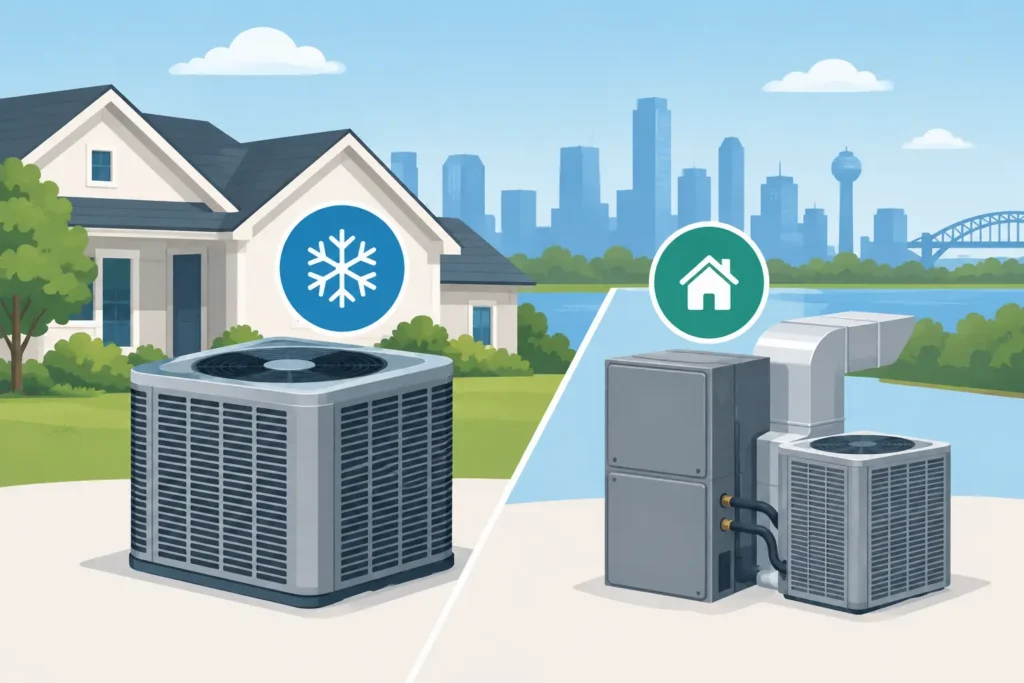
One point often causes confusion: a heat pump can also be a central system. It uses the same style of indoor equipment and ductwork but can provide both heating and cooling. When comparing options, it helps to separate the distribution method, such as central ducted air, from the equipment type, such as a traditional air conditioner or heat pump.
Central Air Comparison: Traditional AC vs. Heat Pump
For homes with existing ductwork, the biggest decision is often whether to install a conventional central air conditioner with a furnace or a heat pump system.
A traditional central AC system is a familiar, dependable option. It cools the home in summer, while a separate furnace produces heat in winter. This arrangement makes sense when a home already has a newer, efficient furnace or when the homeowner prefers gas heat during the occasional North Texas cold snap.
A heat pump cools like an air conditioner in summer but reverses operation to move heat indoors during winter. Because it transfers heat instead of creating it through combustion, it can be very efficient in the mild-to-moderate winter temperatures common around Fort Worth. Many heat pumps include auxiliary heat for the coldest days.
The better option depends on the condition of your current furnace, local utility costs, and your comfort preferences. If both the AC and furnace are aging, replacing them with a heat pump may simplify the system and improve efficiency. If your furnace is relatively new and working well, a central AC replacement may be the more practical investment.
Efficiency Ratings Matter, But They Are Not the Whole Story
When comparing central air units, efficiency is usually shown through a SEER2 rating. A higher SEER2 rating generally means the system uses less electricity over a cooling season. In a region with hot, extended summers, that can make a noticeable difference in operating costs.
However, the highest-rated equipment is not automatically the best value. A premium variable-speed system may deliver quieter operation, better humidity control, and more even temperatures, but it comes with a higher upfront cost. A properly installed mid-efficiency system can be a smarter fit for a homeowner who plans to move soon or has a limited replacement budget.
Equipment performance also depends on installation quality. Incorrect refrigerant charge, undersized return ducts, leaking ductwork, or poor airflow can keep even an efficient system from reaching its potential. The unit’s label tells part of the story. The home and the installation tell the rest.
Single-Stage, Two-Stage, and Variable-Speed Systems
Single-stage systems operate at full capacity whenever they run. They are often the most affordable equipment option and can work well in smaller, well-insulated homes with straightforward cooling needs.
Two-stage systems can run at a lower capacity most of the time and use full power when outdoor temperatures climb. That longer, lower-speed operation can improve temperature consistency and moisture removal.
Variable-speed systems adjust output more precisely. They are typically quieter and offer the strongest humidity control, which can make a home feel more comfortable even at a slightly higher thermostat setting. They also cost more and should be matched with compatible indoor equipment and controls. For homeowners who notice hot and cold rooms or sticky indoor air, the added comfort may justify the investment.
Central Air vs. Ductless Mini-Splits
Ductless mini-splits are worth considering when ductwork is missing, damaged, difficult to access, or too expensive to replace. They use an outdoor unit connected to wall-mounted, ceiling-mounted, or concealed indoor air handlers. Each indoor unit can be controlled separately, allowing room-by-room temperature adjustment.
This zoning is useful for garage conversions, additions, upstairs rooms that never cool evenly, and smaller homes without ducts. Ductless systems also avoid the energy loss that can occur through leaky ductwork.
The trade-off is appearance and coverage. Some homeowners do not want indoor wall units visible in living spaces. A whole-home ductless design can also require multiple indoor units and careful planning. If your ducts are in good condition and already serve the home well, a central system may offer a cleaner and more cost-effective whole-house solution.
Packaged Units and Split Systems
Most residential central air systems in the Fort Worth area are split systems. The condenser sits outside, while the evaporator coil and blower are installed indoors, often near the furnace in an attic, closet, or utility space.
A packaged unit places the major components in one outdoor cabinet, commonly on the ground or roof. These systems are often used in homes with limited indoor mechanical space and in many commercial properties. They can be a sensible choice, but they are not automatically less expensive or easier to service. Access, duct connections, roof placement, and equipment configuration all affect the final cost.
For commercial property managers, packaged equipment may fit the building design better. For most homes, split systems provide more options for efficiency levels, indoor equipment combinations, and comfort upgrades.
Size Is More Than Square Footage
A system that is too small may run constantly during peak summer heat and struggle to maintain the set temperature. A system that is too large can cool the home quickly but shut off before removing enough humidity. That short cycling can leave rooms clammy, increase wear on components, and create uneven comfort.
Square footage is a starting point, not a final answer. Proper sizing should account for ceiling height, window direction, insulation, attic conditions, air leakage, occupancy, appliances, and duct capacity. A home with west-facing windows and weak attic insulation may need a different solution than a similar-sized home shaded by mature trees.
Before replacing equipment, ask for a load calculation rather than accepting a size based only on the old unit. The existing system may have been oversized, undersized, or installed before renovations changed the home’s cooling needs.
Installation Costs: What Changes the Price
Central AC replacement costs vary because the equipment itself is only one part of the job. A straightforward replacement using compatible equipment and sound ductwork will generally cost less than a full system redesign.
Pricing can change based on equipment efficiency, system capacity, electrical upgrades, thermostat controls, refrigerant line condition, attic accessibility, drain improvements, duct repairs, and whether the furnace or air handler also needs replacement. Indoor air quality additions, such as filtration upgrades or air purification equipment, can also be installed during a replacement project.
The lowest quote is not always the least expensive choice over time. It may exclude needed duct corrections, permit requirements, startup testing, or warranty registration. A clear estimate should explain what equipment is included, what work is required, and what situations could create additional costs. Upfront pricing is especially valuable when comparing bids that seem far apart.
When Repair Makes More Sense Than Replacement
Replacement is not always necessary. If your central air system is relatively young, has a repairable issue, and has been maintained, repair may be the sensible path. Problems such as failed capacitors, contactors, thermostats, drain clogs, and some electrical issues can often be corrected without replacing the system.
Replacement deserves a closer look when the unit needs major repairs, uses an outdated refrigerant, breaks down repeatedly, or no longer keeps the home comfortable. It can also make financial sense when the repair cost is high compared with the system’s remaining life. A technician should explain both options plainly, including the likely repair, expected system condition, and replacement choices.
Choosing the Right Fit for Your Home
The best central air system is the one that matches your home instead of simply checking a box on an estimate. Start with a professional evaluation of your existing equipment, ducts, airflow, insulation concerns, and comfort complaints. Then compare options based on the features that matter most to your household: lower upfront cost, stronger humidity control, quieter operation, energy savings, or better room-to-room comfort.
For homeowners and property managers in North Richland Hills and greater Fort Worth, Malcolm’s HVAC can help make that decision clearer with straightforward recommendations, dependable installation, and financing options when a replacement cannot wait. A well-chosen system should do more than turn on when the temperature rises. It should give your family a home that feels reliably comfortable through the hottest Texas afternoons.