
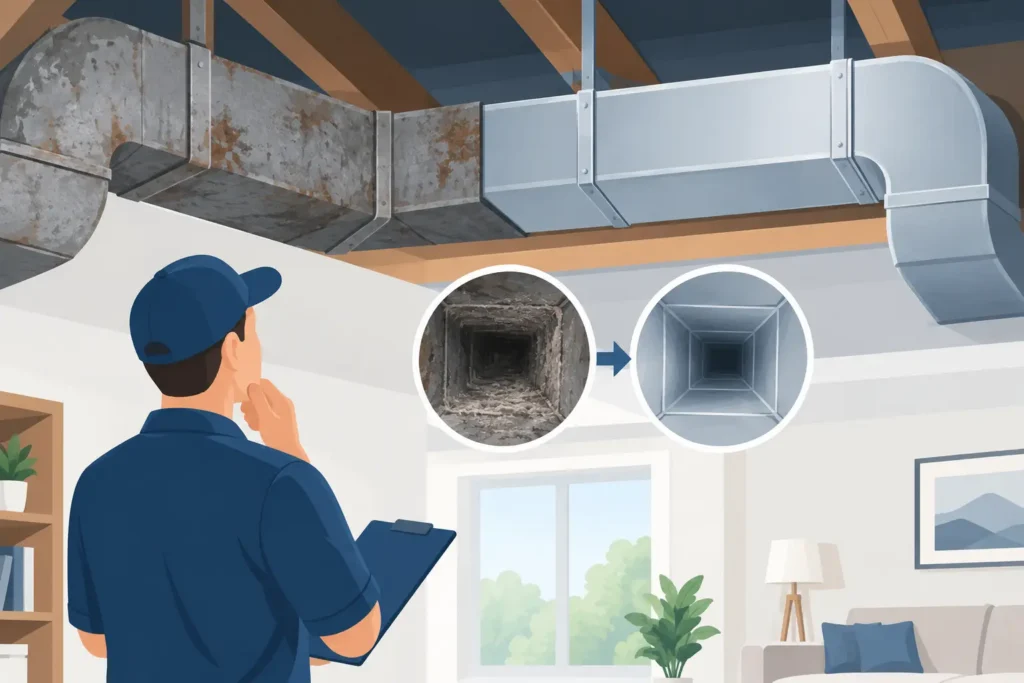
A new air conditioner or furnace can only perform as well as the ductwork carrying conditioned air through your home. If certain rooms stay hot during a North Texas summer, your energy bills keep climbing, or dust seems to return as soon as you clean, the problem may be above the ceiling or inside the attic. Homeowners often ask, “when should ductwork be replaced?” The answer depends on its condition, design, and ability to deliver steady airflow – not simply its age.
Duct replacement is a bigger investment than a simple repair, so it should be recommended for a clear reason. A professional inspection can show whether sealing, insulating, repairing, or replacing your ducts is the most practical way to restore comfort and protect your HVAC equipment.
When Should Ductwork Be Replaced?
Most well-installed metal ductwork can last 20 to 30 years or longer. Flexible ducts, duct board, and older materials may have a shorter service life, especially when they have been exposed to intense attic heat, pests, moisture, or repeated repairs. In Fort Worth-area homes, high summer temperatures can make attic conditions especially hard on duct insulation, connections, and flexible duct runs.
Replacement is usually the right choice when ducts have widespread damage, major airflow restrictions, poor original design, or material deterioration that cannot be reliably repaired. It may also make sense during an HVAC replacement if the existing ducts are undersized or leaking enough to limit the performance of your new system.
Age alone does not automatically mean your ductwork needs to go. A 25-year-old duct system that is properly sized, clean, sealed, and structurally sound may only need maintenance. On the other hand, ducts that are only 10 or 15 years old may need attention if they were installed poorly or damaged by animals, water, or remodeling work.
Signs Your Ductwork May Need Replacement
A single loose connection or small leak can often be repaired. Replacement deserves a closer look when several of these issues are present throughout the system:
- Uneven temperatures from room to room. If one bedroom is consistently hot while the living room feels comfortable, damaged or poorly designed ducts may not be delivering enough airflow where it is needed.
- High utility bills without a clear equipment problem. Leaky ducts can release cooled or heated air into an attic, garage, crawlspace, or wall cavity. Your system then runs longer to reach the thermostat setting.
- Visible damage or deteriorated insulation. Crushed, sagging, torn, disconnected, or heavily patched duct runs can restrict airflow and waste energy. Insulation that is falling apart also allows more heat gain in the attic.
- Excessive dust, musty odors, or signs of pests. Ducts with holes, loose joints, or contamination from rodents and moisture should be evaluated carefully. Cleaning alone may not solve an ongoing entry point or damaged duct lining.
- Noisy airflow. Whistling, rattling, booming, or rushing sounds can point to leaks, loose sections, undersized ducts, or pressure problems that affect comfort and equipment operation.
Poor airflow can also look like an air conditioner or furnace failure. Before replacing major equipment, it is wise to have the entire system evaluated. The issue may be a failing blower motor, a dirty filter, or a thermostat setting, but duct performance should be part of the diagnosis.
Repair, Reseal, or Replace: What Makes Sense?
The best solution depends on how isolated the problem is. If a few connections have come loose or small sections are leaking, professional sealing and targeted repair may provide a cost-effective improvement. Reconnecting a separated run, replacing damaged insulation, and sealing joints with approved materials can often reduce air loss without replacing every duct.
Replacement becomes more valuable when repairs would be scattered across the system or when the underlying layout is wrong. For example, flexible ducts that are severely kinked, too long, unsupported, or undersized may continue to cause problems even after sealing. Replacing those runs with correctly sized, supported ductwork can improve airflow more than another temporary patch.
A duct system may also need redesigning after a home addition, garage conversion, or major renovation. Adding living space without adjusting the duct layout can leave new rooms uncomfortable and put extra strain on the HVAC system. A qualified technician can calculate airflow needs, check return-air capacity, and recommend changes that fit the home rather than guessing based on the old system.
Why Leaky or Failing Ducts Matter
Your ducts are responsible for moving every bit of cooled and heated air produced by your HVAC equipment. When that air escapes before it reaches the rooms where your family lives and sleeps, comfort drops and operating costs rise. In summer, an attic leak means your air conditioner is paying to cool one of the hottest spaces in the house.
Duct problems can also create pressure imbalances. A room that does not receive enough supply air or lacks a proper return path may feel stuffy, drafty, or hard to cool. In some cases, pressure issues can pull unconditioned attic air, dust, or humidity into the home through gaps around doors, windows, and ceiling fixtures.
For commercial properties, weak duct performance can lead to hot offices, uncomfortable customers, and complaints from tenants or employees. The same principles apply, though commercial systems may require a more detailed review of zoning, equipment capacity, and occupancy changes.
What Happens During a Ductwork Inspection?
A thorough evaluation should go beyond a quick look at accessible ducts. The technician should inspect visible duct runs, connections, insulation, support straps, return ducts, registers, and the areas around the air handler. They may also assess temperature differences, airflow at vents, static pressure, and signs of leakage or contamination.
The goal is to identify the cause of the problem before recommending work. If poor comfort is caused by a blocked return grille or a heavily soiled filter, duct replacement would not be the right answer. If multiple duct runs are disconnected in the attic, crushed, or too small for the equipment, the findings should be explained clearly along with repair and replacement options.
Older homes deserve special care. Some older duct materials or surrounding insulation may require safe handling procedures. Do not cut into, move, or disturb questionable materials on your own. A professional can help determine the appropriate next step.
Timing Duct Replacement With HVAC Installation
Replacing ductwork when installing a new air conditioner, furnace, or heat pump can be a smart decision, but it is not mandatory for every project. The advantage is that both the equipment and air-distribution system can be sized to work together. This helps avoid installing high-efficiency equipment that cannot reach its expected performance because of poor airflow.
There is a budget consideration, of course. If the duct system is in generally good condition, targeted improvements may allow you to prioritize the new equipment first. If the ducts are clearly failing, replacing them at the same time can prevent extra labor later and reduce the risk of comfort problems after installation. Financing options may also make a larger, planned upgrade easier to manage than repeated emergency repairs.
Get a Clear Answer Before You Commit
Ductwork is out of sight, but it should not be out of mind when your home feels uncomfortable or your HVAC system is working harder than it should. A dependable inspection gives you a clearer picture of what is happening behind the walls and above the ceiling, along with practical options that fit your property and budget.
For homeowners and property managers in North Richland Hills, Fort Worth, Haltom City, and nearby communities, Malcolm’s HVAC can evaluate duct concerns, explain the findings in straightforward terms, and help you choose a repair or replacement plan that supports reliable year-round comfort.