
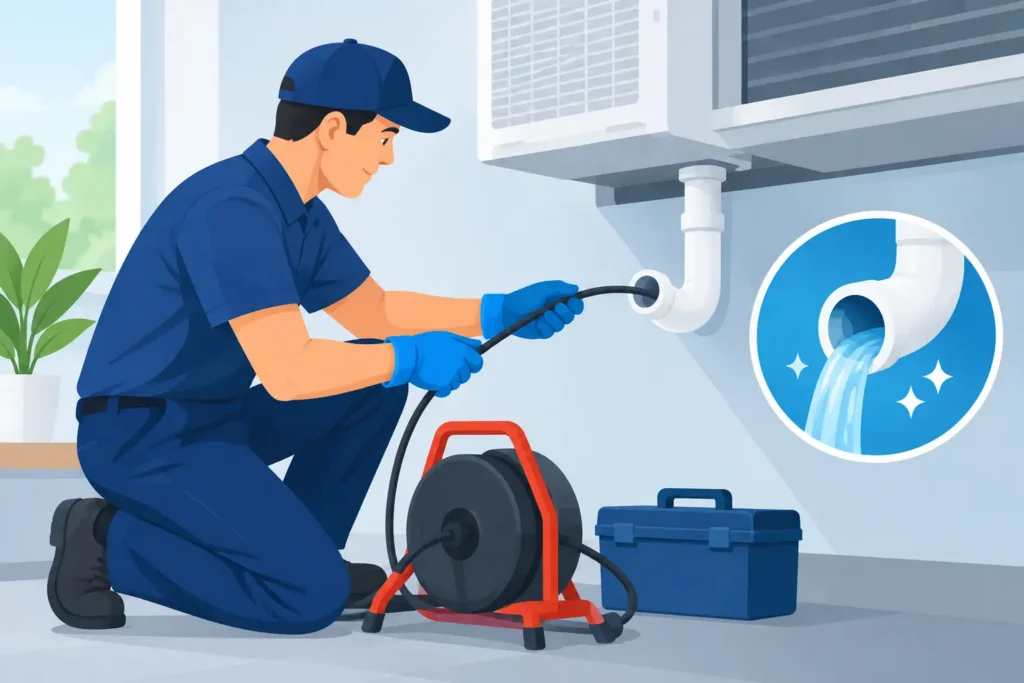
A small drip line can create a big air conditioning problem. Condensate drain cleaning removes the algae, dust, sludge, and other buildup that can stop your AC from draining properly. In North Richland Hills and the Fort Worth area, where air conditioners run hard through long, humid stretches, a clogged condensate line can lead to water damage, high indoor humidity, and an unexpected system shutdown.
Your AC does more than cool the air. As warm indoor air moves across the cold evaporator coil, moisture collects on that coil and drains into a pan. From there, the condensate line carries the water safely outside or to a nearby plumbing drain. When that pathway plugs up, the water has nowhere to go but back into the equipment or your home.
What Happens When an AC Drain Line Clogs
The first sign is often water around the indoor unit, especially near an attic air handler, utility closet, or garage system. Some homeowners notice a musty smell from the vents before they see any water. Others find that the thermostat is on, but the system will not cool because a safety float switch has shut the AC down to prevent an overflow.
A clog may develop slowly. Dust can enter the drain pan, while naturally occurring algae and biofilm grow in the moist line. Over time, that material restricts water flow. In homes with pets, older ductwork, or heavy seasonal AC use, the problem can appear more frequently.
Ignoring the issue is rarely a money-saving choice. Overflowing condensate can stain ceilings, damage drywall, soak insulation, affect flooring, and create conditions that encourage microbial growth. If water reaches electrical components, the repair can become more involved. A float switch that keeps tripping is doing its job, but it is also telling you the drain needs attention.
Signs You Need Condensate Drain Cleaning
Not every cooling issue comes from the drain line, but a few symptoms make it more likely. Pay attention if you see standing water near the indoor HVAC equipment, hear gurgling from a drain pipe, or notice water dripping from an emergency drain outlet. A white PVC pipe that drips near an exterior wall may be part of the condensate system, although the exact setup varies by home.
A sour, damp, or mildew-like odor when the AC starts can also point to moisture sitting in the drain pan or line. If your indoor humidity feels unusually high even though the AC is running, poor drainage may be part of the problem. The same is true when the unit shuts off without an obvious thermostat issue and a float switch is installed.
For commercial property managers, warning signs can look different. Water around a rooftop unit access point, ceiling stains below a fan coil, tenant complaints about odors, or repeated cooling interruptions all deserve prompt attention. One blocked drain can affect a suite, storage area, server room, or common space faster than expected.
Why Texas AC Systems Need Regular Attention
Air conditioning systems in North Texas handle a demanding workload. During the hottest months, a system may remove gallons of moisture from indoor air each day. That steady flow of condensate gives buildup more opportunity to collect in the drain system.
The right cleaning interval depends on the equipment, household conditions, and how much the system runs. A home with one occupant and light AC use may need less frequent attention than a busy household with pets and a system that runs nearly all day. Properties with older units or a history of drain clogs deserve a closer maintenance schedule.
For most homes, having the drain inspected during routine AC maintenance is a practical approach. It allows a technician to check the pan, trap, line, and safety switch while also evaluating refrigerant performance, electrical connections, filters, and the overall condition of the system. Preventive service costs less than repairing water damage or responding to an AC shutdown during a summer heat wave.
Can You Clean a Condensate Drain Yourself?
Some basic steps are safe for a homeowner, but there is a line between simple upkeep and a repair that needs a trained HVAC technician. If you can identify the exterior drain outlet and see a small amount of debris near the opening, gently clearing the visible obstruction may help. Replacing a dirty air filter on schedule also reduces the dust that can reach the indoor equipment.
Be cautious with chemical drain cleaners. Strong products can damage parts of the HVAC system, create harmful fumes, or leave behind residue that causes more trouble later. Pouring large amounts of liquid into an unfamiliar drain opening can also overflow the pan or send water where it does not belong.
A wet/dry vacuum can sometimes remove a minor blockage from an accessible exterior drain line, but it will not diagnose a cracked drain pan, a poorly pitched line, a failed condensate pump, or an improperly installed trap. If the system is in an attic, if water is already leaking through a ceiling, or if the AC has shut down on a safety switch, it is better to stop running the equipment and request service.
What Professional Drain Cleaning Includes
Professional condensate drain cleaning is more than flushing a pipe and hoping for the best. A technician starts by locating where the blockage is occurring and checking whether the system has been damaged by the backup. The drain pan is inspected for cracks, rust, standing water, and debris. The drain line is then cleared using the appropriate equipment and method for the system.
The technician should also verify that water flows freely from the pan through the line and that the drain trap is working correctly. On systems with a condensate pump, the pump and its discharge tubing need to be checked as well. A pump can fail even when the main drain line is clear.
If your equipment has a float switch, it should be tested after the drain issue is corrected. This small safety device can prevent a major overflow, but only when it is installed and operating as intended. A thorough visit also looks for the source of recurring clogs, such as an uninsulated line, an incorrect slope, excess dust from a neglected filter, or drain components that need replacement.
How to Reduce Future Drain Clogs
The most effective prevention starts with regular HVAC maintenance and clean filters. A clogged filter does not directly plug a drain line, but it can allow more debris to collect around the evaporator coil and drain pan. It can also reduce airflow, contribute to coil issues, and make your system work harder.
Keep the area around the indoor unit clear so a technician can inspect it quickly. If your air handler is in the attic, check the area periodically for signs of moisture, especially after periods of heavy AC use. Do not block exterior drain outlets with landscaping, storage, or mulch.
Ask your HVAC professional whether a drain treatment is appropriate for your system. The answer depends on the equipment and the condition of the line. A preventive treatment can help in some cases, but it is not a substitute for clearing a line that is already restricted or correcting an installation issue.
When to Call for HVAC Service
Call promptly if you have active water leaking around your indoor unit, a ceiling stain below attic equipment, or an AC system that shuts down repeatedly. Turn the thermostat off if water is near electrical components or if the overflow is significant. Quick action can limit damage and help protect your equipment.
For homeowners and businesses in North Richland Hills, Fort Worth, Haltom City, Richland Hills, Watauga, Bedford, Euless, and Hurst, Malcolm’s HVAC can inspect the full condensate system, explain what caused the problem, and provide clear options before work begins. Whether the fix is a simple line clearing or a repair to a pan, pump, or safety switch, the goal is the same: get your cooling system draining correctly and your space comfortable again.
A clean drain line is easy to overlook when the AC is working well. Giving it attention before the next backup protects your home, avoids inconvenient cooling interruptions, and helps your system handle the Texas heat with fewer surprises.